

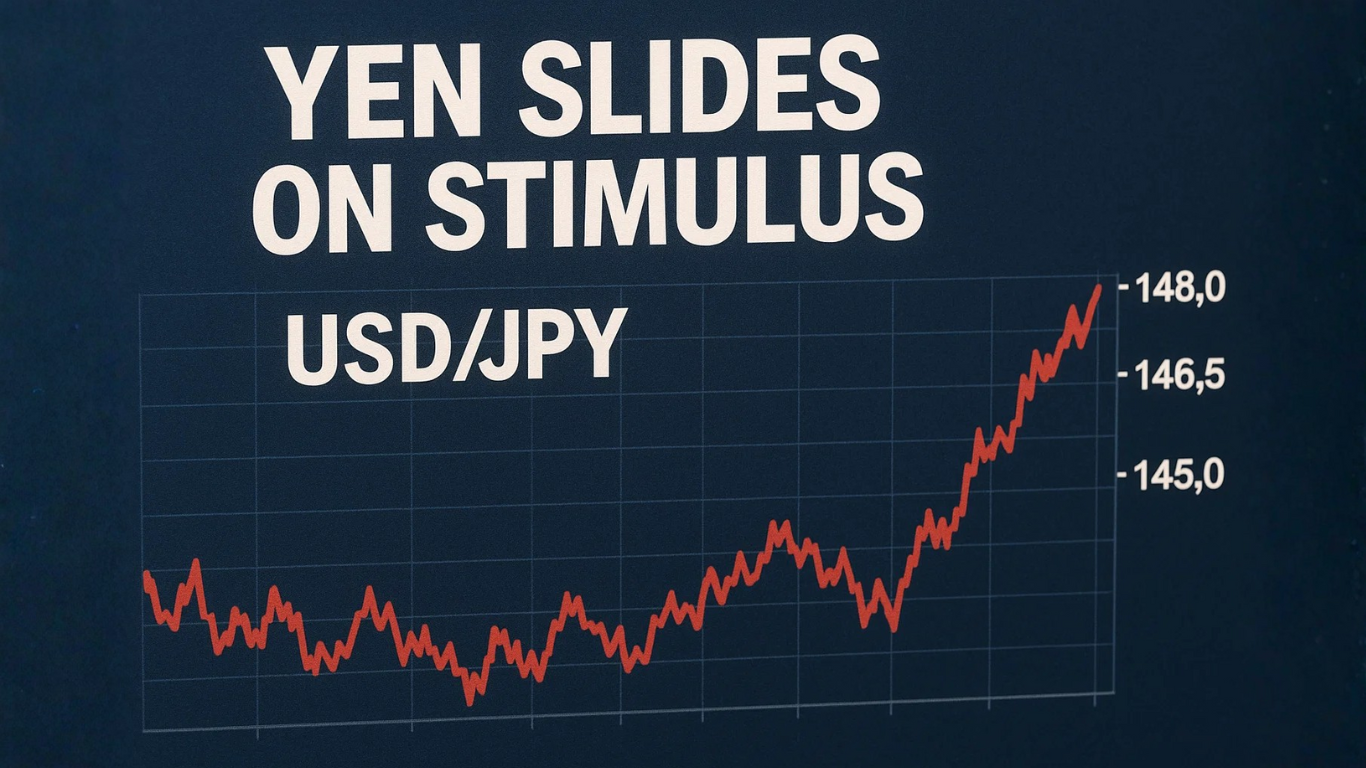
Japan’s currency continued its downward slide on Thursday, falling to its weakest level since mid-February as traders positioned for a larger fiscal push under Prime Minister Sanae Takaichi. The persistent Yen weakness comes amid expectations that Tokyo will unveil a spending package approaching ¥23 trillion, deepening concerns about Japan’s fiscal trajectory and delaying prospects for tighter monetary policy.
Japan’s economy contracted in the third quarter for the first time in six quarters, reinforcing expectations that the Bank of Japan will maintain near-zero rates. Investors now see a limited probability of any policy tightening before March, despite a Reuters poll showing a narrow majority expecting the benchmark rate to reach 0.75% by December.
Adding pressure, the US Dollar climbed back to levels last seen in late May as traders pared back expectations of another Federal Reserve rate cut this year. Recent FOMC minutes revealed divided views on the path forward, boosting demand for the USD and pushing USD/JPY toward fresh highs.
Key Levels Drive Volatile USD/JPY Trade
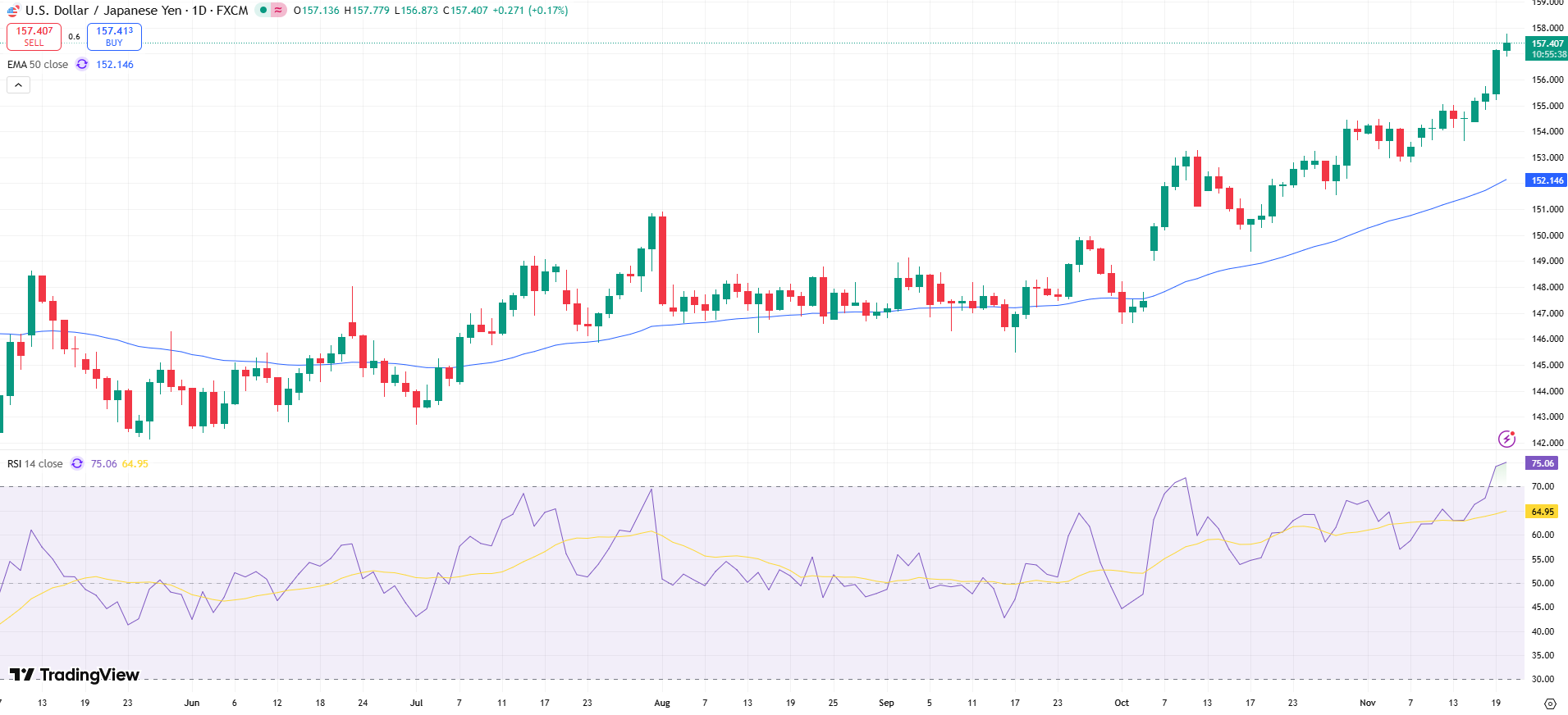
The USD/JPY pair trades near territory that technical analysts describe as “stretched,” with the daily Relative Strength Index flashing slightly overbought conditions. This has encouraged traders to wait for consolidation before committing to additional long-Dollar positions.
Short-term technical markers:
- Support: 156.65–156.60, followed by 156.00
- Resistance: 157.40–157.45, then the 158.00 round figure
- Upside target: January’s swing high near 159.00
Despite repeated warnings from Japanese authorities about one-sided Yen moves, verbal intervention has done little to slow momentum. Chief Cabinet Secretary Minoru Kihara said markets must reflect fundamentals, reiterating a “high sense of urgency,” though traders remain skeptical without concrete action.
Policy Delays and Liquidity Concerns Add Pressure
The steepening of Japan’s yield curve suggests growing expectations of heavier bond issuance to fund the Takaichi administration’s expansionary plans. Policymakers, including Goushi Kataoka, argue that any rate hikes should wait until the fiscal package demonstrably lifts domestic demand—signaling a preference for prolonged accommodation.
Meanwhile, global liquidity trends continue to influence FX flows. Reduced expectations for immediate Fed easing have strengthened the Dollar’s appeal, overshadowing broader risk-on sentiment that traditionally benefits the Yen.
Market attention now turns to the delayed US Nonfarm Payrolls report, which could reshape expectations around the Fed’s December meeting and define near-term direction for USD/JPY.

