

Chinese semiconductor shares retreated on Monday after reports indicated the Trump administration was considering easing export controls to allow Nvidia to sell its H200 artificial intelligence processor in China. The prospect of renewed access to one of Nvidia’s most powerful chips sparked immediate concern among domestic chipmakers already under pressure to accelerate technological self-sufficiency.
Semiconductor Manufacturing International Corp., China’s largest foundry, slid up to 7%, while Cambricon Technologies fell around 2% before rebounding later in the session. Sentiment across the sector remained fragile. Hua Hong Semiconductor dropped nearly 6% in Hong Kong, while NAURA Technology Group gained 2.6%, reflecting a market split between fabrication and equipment suppliers. The Hang Seng Chipmakers Index edged 0.1% lower.
Market nerves intensified following a Friday report suggesting the White House was discussing whether to permit Nvidia to resume sales of the H200 chip—an AI processor estimated to deliver roughly double the performance of the H20, the most advanced GPU currently allowed for sale in China.
Early-session pressures were driven by:
- Fears of heightened competition from Nvidia’s H200
- Concerns over weakened demand for domestic AI hardware
- Signals of a possible U.S.–China trade thaw
Nvidia’s H200 Raises Competitive Pressures
Nvidia unveiled the H200 two years ago. While the chip was barred from China under earlier export restrictions, the U.S. loosened its stance this year as part of a broader trade agreement. Sales of the H20 had briefly been halted before the policy shift restored limited access for Chinese customers.
Allowing the H200 would mark a far more significant concession. For Chinese chipmakers, the move could redirect domestic investment away from homegrown AI processors and toward Nvidia’s more capable architecture. Analysts warn such a shift could undercut Beijing’s push for a fully independent semiconductor ecosystem.
The U.S. is also motivated by strategic concerns. The administration views improved trade cooperation as essential to securing long-term supplies of rare earth elements—materials critical to defense, energy, and chipmaking industries.
Regulatory Risks Limit Near-Term Clarity
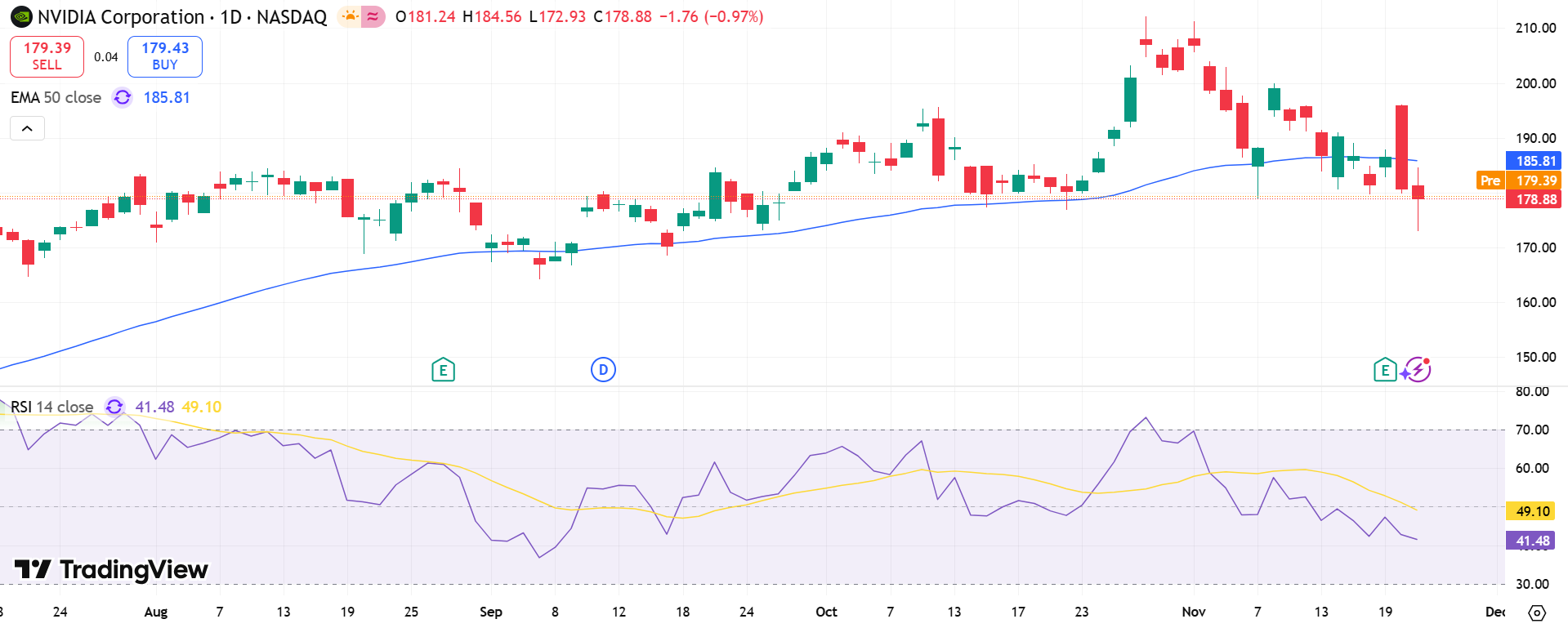
Despite growing speculation, last week’s report emphasized that no imminent decision has been made. The potential policy shift comes as several members of Congress push for stricter technology controls. The bipartisan GAIN AI Act proposes new requirements that would force American chipmakers to prioritize domestic buyers before obtaining approval to export advanced hardware to China.
Beijing, meanwhile, has ramped up legislation aimed at achieving self-reliance in AI and semiconductor technologies. Chinese authorities have repeatedly criticized Washington’s export restrictions as barriers to fair competition and national development.
For now, investors remain wary. The prospect of Nvidia’s H200 re-entering the Chinese market adds uncertainty to a sector already navigating geopolitical tension, regulatory pressure, and an intense race for AI leadership.

