

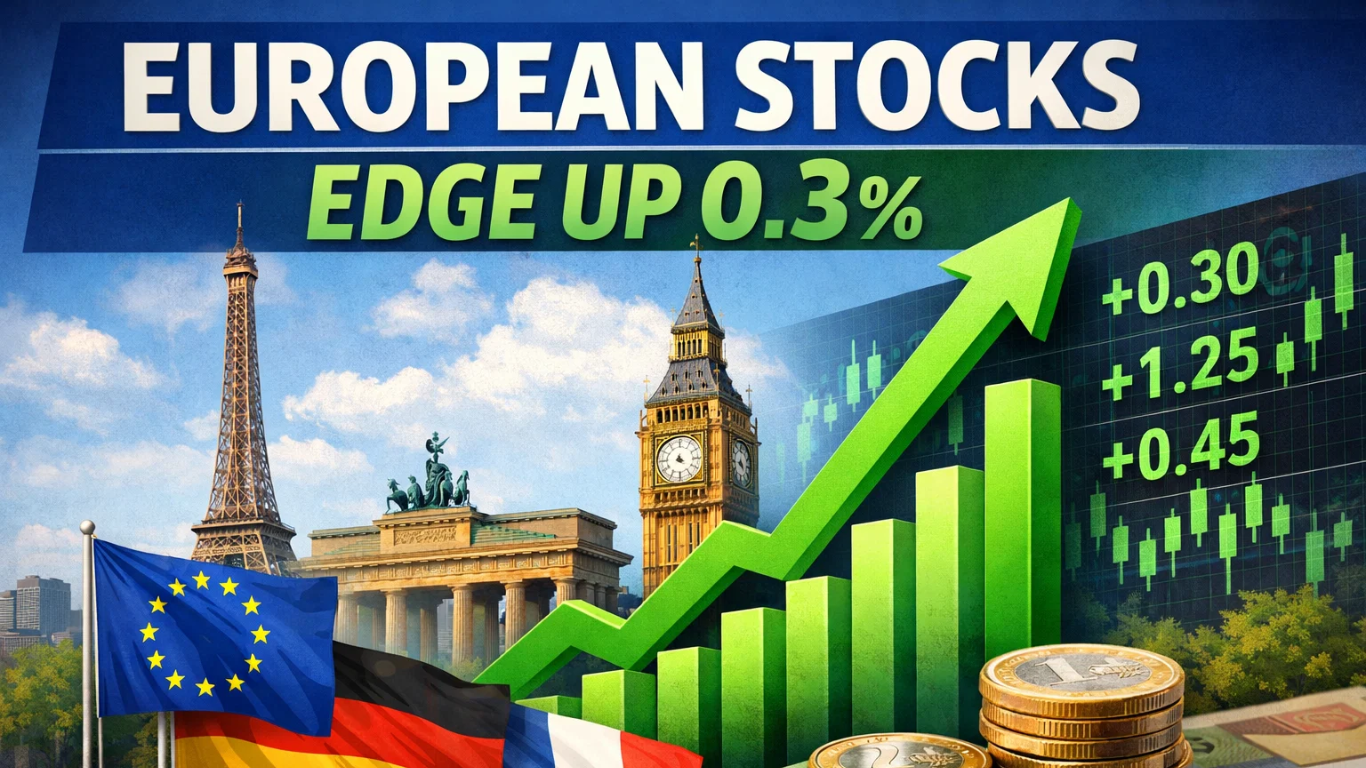
European equities drifted modestly higher on Friday, with gains capped as investors avoided bold moves ahead of pivotal U.S. economic data and political developments. Germany’s DAX rose 0.1%, France’s CAC 40 gained 0.5%, and the FTSE 100 advanced 0.3%, reflecting a broadly cautious tone across regional markets.
The restrained advance underscored how global investors remain sensitive to signals from the United States, particularly as monetary policy expectations for 2026 remain unsettled. While recent data suggest slowing growth, markets have yet to see evidence of a sharp downturn that would clearly justify aggressive easing by the Federal Reserve.
In Europe, there were modest signs of resilience. German industrial production rose 0.8% month-on-month in November, defying expectations for a contraction and hinting at stabilization in the eurozone’s largest economy. Still, upcoming eurozone retail sales data are expected to show that consumers remain under pressure from elevated prices and weak income growth.
US Payrolls and Fed Policy in Focus
Attention is firmly fixed on the U.S. nonfarm payrolls report, due later in the session, which could shape expectations for the Federal Reserve’s next policy steps. Economists forecast the U.S. economy added about 57,000 jobs in December, down from 64,000 in November, pointing to a cooling labor market rather than a collapse.
The Fed cut interest rates at each of its final three meetings of 2025, prioritizing labor market risks over persistent inflation pressures. However, policymakers are widely expected to hold rates steady this month, with divisions emerging over how much further easing is warranted this year.
Key market sensitivities include:
- The pace of U.S. job creation and wage growth
- Signals on inflation persistence versus labor weakness
- Expectations for the timing and scale of future rate cuts
For European investors, the payrolls data matter because U.S. policy shifts often ripple through global equity, bond, and currency markets.
Tariffs Ruling, Mining Deal, and Oil Prices
Political risk is also influencing sentiment. Investors are watching for a Supreme Court ruling on the legality of global tariffs imposed under emergency powers, a decision that could affect roughly $150 billion in duties already paid by importers. Any rollback could reshape trade expectations and corporate margins.
Corporate news added another layer of interest. Mining stocks were in focus after Rio Tinto, valued near $142 billion, confirmed early-stage talks to acquire Glencore, which has a market value of about $65 billion. A deal would create the world’s largest mining group, though cultural and strategic differences remain a key uncertainty.
Meanwhile, oil prices rose for a second straight day, with Brent near $62.50 a barrel and WTI around $58.20, putting crude on track for a third weekly gain. Supply concerns tied to Iranian unrest and U.S. actions in Venezuela have outweighed worries about rising global inventories, at least for now.

