

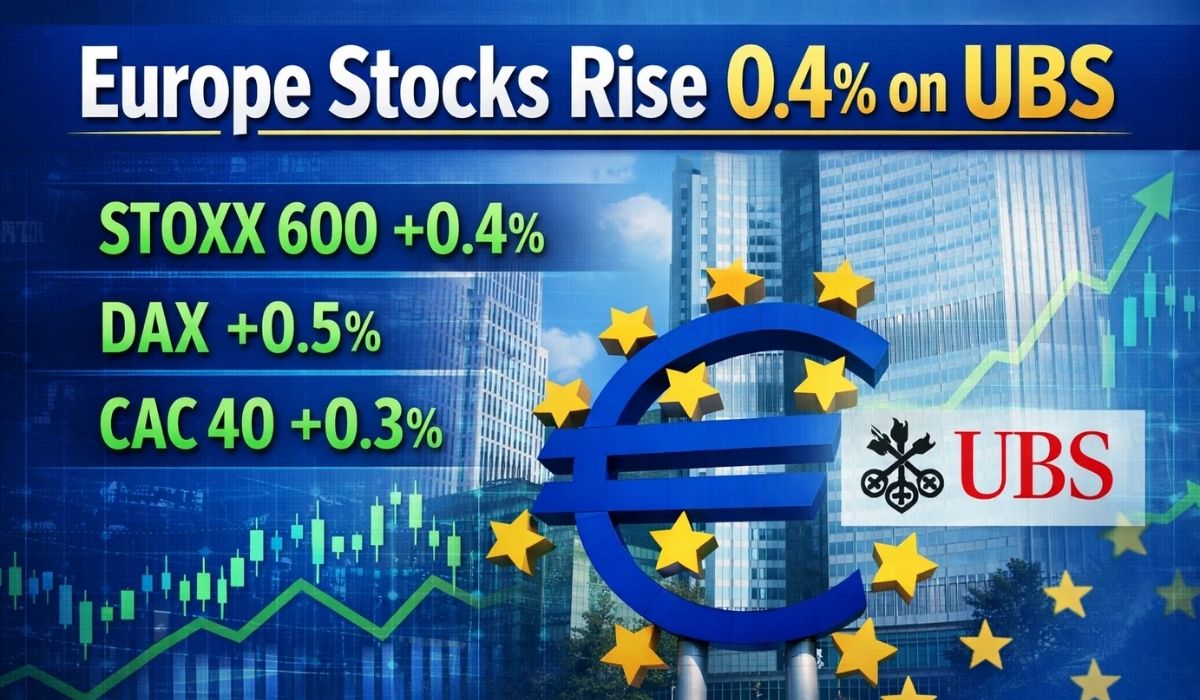
European equities nudged higher on Wednesday as a dense corporate earnings calendar overshadowed macro uncertainty ahead of key inflation data. By mid-morning trading, Germany’s DAX had climbed 0.2%, France’s CAC 40 was up 0.4%, and London’s FTSE 100 added 0.3%, reflecting cautious optimism rather than conviction buying.
The session was defined by results from UBS, which delivered one of its strongest performances since the Credit Suisse takeover. The Swiss lender reported a 56% jump in net profit, driven by resilient client inflows in wealth management and a sharp rebound in investment banking revenues as dealmaking gradually revived. Management committed to repurchasing at least $3 billion of shares in 2026—matching last year’s buyback—and signaled that figure could rise if markets remain supportive.
Investors interpreted the move as a vote of confidence in UBS’s balance sheet and integration strategy. For a sector still wrestling with higher funding costs and tighter regulation, the announcement stood out as unusually aggressive capital return policy.
Banks, pharma and Big Tech in focus
Beyond UBS, earnings painted a mixed picture across Europe’s corporate landscape. Banco Santander posted a 12% rise in attributable profit for 2025, marking a fourth straight year of record results thanks to sturdy net interest income and record fee generation. In contrast, Credit Agricole’s fourth-quarter net income fell 24% after a hefty consolidation charge linked to its Banco BPM stake, even as annual revenues hit a record and dividends were lifted.
In pharmaceuticals, the tone was more cautious. GSK issued a subdued 2026 sales outlook under new CEO Luke Miels as the company prepares for looming patent cliffs on its blockbuster HIV franchise. Novartis warned that operating profit would slip in the low single digits this year, citing intensifying competition from generic versions of its heart drug Entresto.
Across the Atlantic, attention also turned to Alphabet, expected to report $111.37 billion in quarterly revenue—a projected 15.5% year-on-year rise—after the U.S. market close. Traders will scrutinize capital-spending plans, cloud demand trends, and whether AI infrastructure bottlenecks are easing.
What investors are tracking this week:
- Bank capital returns and buybacks
- Pharma pipeline strength versus patent expiries
- Big Tech AI spending and margins
- European sector rotation flows
- Cross-border currency impacts on earnings
Inflation test before ECB meeting
Macro focus now shifts to preliminary January inflation for the eurozone, due later Wednesday. Economists expect consumer prices to cool to 1.7% from 2.0% in December, comfortably below the European Central Bank’s target.
The reading arrives just a day before the ECB’s policy decision, where rates are widely expected to remain at 2% for a fifth consecutive meeting. A softer-than-expected print could intensify debate inside the Governing Council, particularly after officials last month flagged concerns about the euro’s rapid appreciation against the dollar—a move that risks suppressing inflation further.
Energy markets added another layer of volatility. Brent crude edged up 0.1% to $67.40 a barrel, while WTI gained 0.2% to $63.38, building on nearly 2% gains from Tuesday. Prices were underpinned by reports that U.S. forces shot down an Iranian drone near an aircraft carrier in the Arabian Sea, alongside sightings of Iranian gunboats approaching a U.S.-flagged tanker in the Strait of Hormuz.
With talks between Washington and Tehran scheduled this week, any escalation could tighten global supply and complicate Europe’s already fragile energy outlook.
Taken together, Wednesday’s trading captured the essence of today’s European market: earnings-driven gains balanced against geopolitical risk and a pivotal inflation test that could shape policy—and sentiment—for months ahead.

