

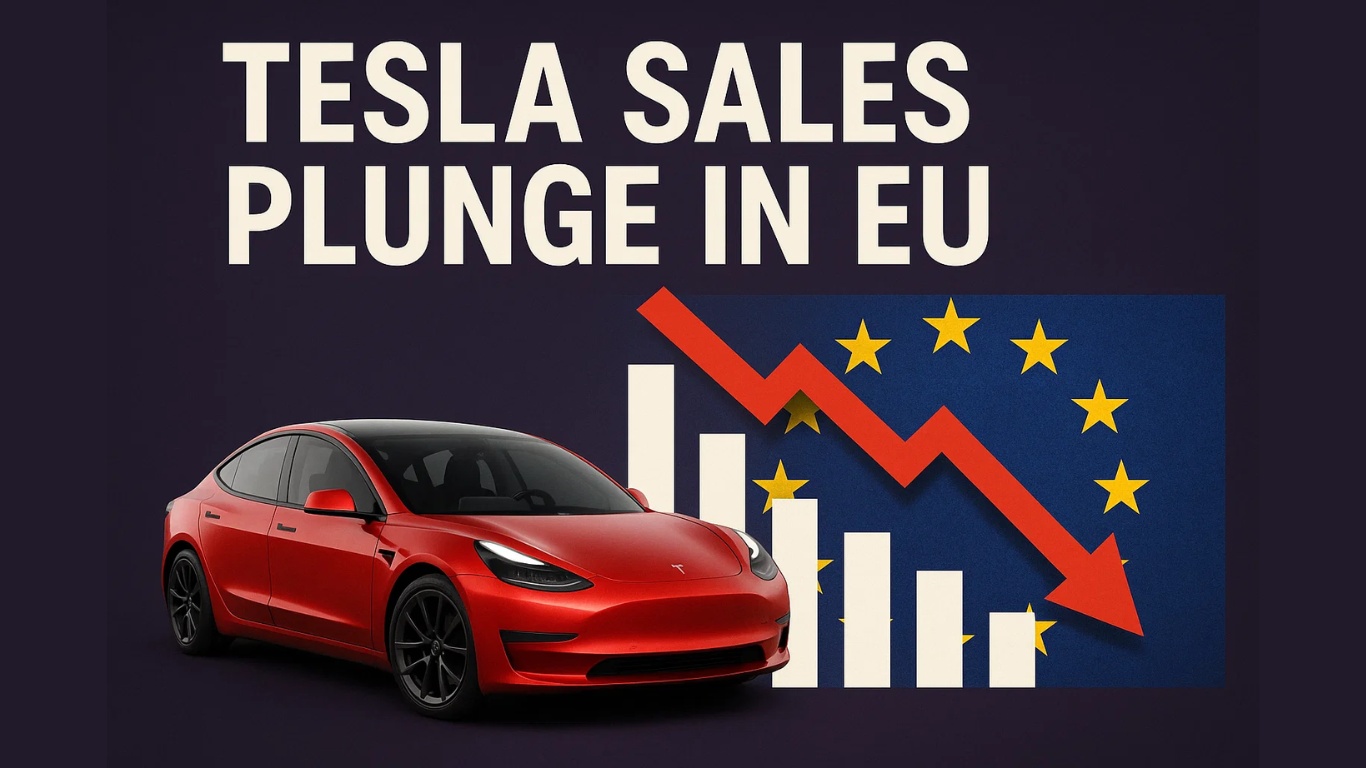
Tesla suffered a sharp setback in Europe in October, posting one of its weakest monthly performances in years. New registrations across the European Union, the Euro Free Trade Association, and the UK fell 48.5% year-on-year to 6,964 units, according to data released by the European Automobile Manufacturers Association (ACEA). The drop pushed Tesla’s regional market share down to 0.6%, half of its 1.3% share a year earlier.
The decline extends a broader trend in 2025, with Tesla facing mounting challenges from intensifying competition and growing consumer objections linked to CEO Elon Musk’s political stances. The company’s refreshed lineup—including new lower-cost versions of the Model Y and Model 3—has yet to revive demand meaningfully. Similar headwinds are also weighing on Tesla’s performance in key markets such as China.
BYD Accelerates With 206% Sales Surge
In stark contrast, Chinese rival BYD continued its rapid European expansion. The company sold 17,470 vehicles across the region in October, a 206.8% year-on-year increase, lifting its market share to 1.6%—more than double Tesla’s.
BYD benefits from a broader lineup and a pricing advantage, particularly in the plug-in hybrid segment, which remains one of Europe’s most resilient categories. Its expansion has continued despite the European Union’s steep tariffs on Chinese electric vehicles introduced in 2024. BYD mitigated the impact by leaning on hybrid offerings that fall outside the highest tariff brackets.
Key highlights:
- BYD outsold Tesla by more than 10,500 units in October
- Plug-in hybrids helped BYD offset tariff pressures
- BYD’s market share is now nearly 3x Tesla’s in the region
Hybrids Lead Market Growth as EV Demand Softens
Overall vehicle sales across Europe rose 4.9% to 1.09 million units in October, underscoring steady consumer demand even as fully electric vehicle registrations plateau. Hybrid electric vehicles remained the dominant growth driver, with sales climbing 7.5% to 373,171 units.
BYD’s advantage stems from participating in both the hybrid and battery-electric segments, while Tesla remains fully reliant on pure EV demand—a market experiencing growing price sensitivity and increased competition from European, Chinese, and Korean manufacturers.
As the fourth quarter begins, Tesla faces continued pressure to defend its market position. Rising competition, shifting consumer preferences, and regulatory challenges in global markets are reshaping the EV landscape. BYD’s accelerating momentum suggests the competitive gap may widen further unless Tesla finds new ways to reignite demand.

