

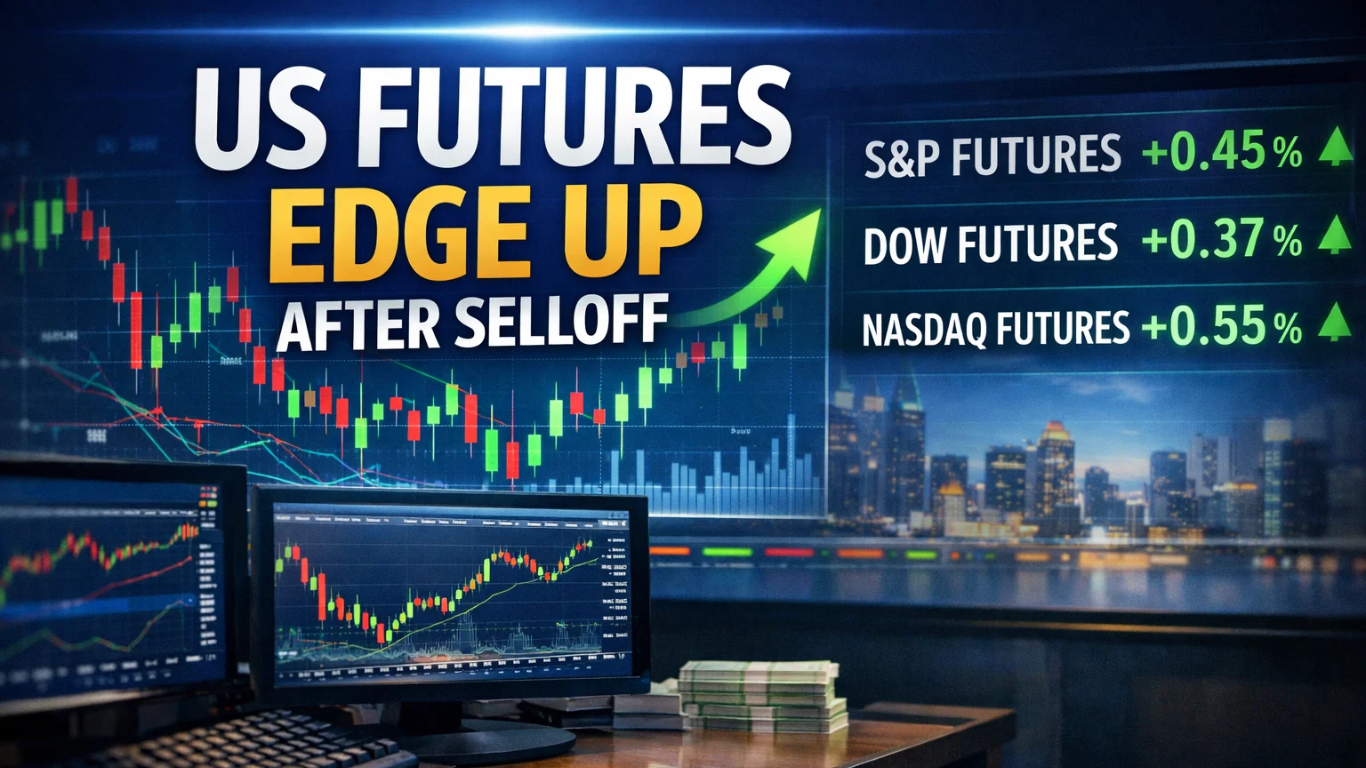
U.S. stock index futures ticked modestly higher Tuesday evening, attempting to stabilize after Wall Street suffered its steepest single-day decline in nearly three months. The rebound was tentative, reflecting lingering investor unease over escalating geopolitical tensions linked to President Donald Trump’s renewed push to acquire Greenland.
By 23:27 GMT, S&P 500 futures rose 0.1% to 6,838, while Nasdaq 100 futures climbed 0.1% to 25,152.75. Dow Jones futures also gained 0.1%, reaching 48,727. The muted gains followed a session that wiped out an estimated $1.3 trillion in U.S. equity market value, according to market-wide capitalization data.
Investors remain cautious as tariff threats aimed at European nations revived fears of a broader trade confrontation. With risk appetite weakened, markets showed limited conviction despite the small futures bounce.
Netflix Drops 4.8% as Earnings Season Widens
After-hours trading was dominated by Netflix, which slid 4.8% despite reporting better-than-expected earnings for the December quarter. The decline stemmed from weaker-than-anticipated guidance for the first quarter and a subdued outlook extending into 2026.
Netflix cited declining engagement with non-branded licensed content, signaling pressure outside its flagship original programming. The results added to a growing sense of uneven corporate performance as earnings season unfolds.
The broader earnings calendar remains packed, with several market-moving companies scheduled to report:
- Wednesday: Johnson & Johnson, Charles Schwab, Prologis
- Thursday: Procter & Gamble, GE Aerospace, Intel, Abbott Labs
- Healthcare and industrials expected to shape sector sentiment
In contrast, United Airlines gained 5% in late trading after issuing strong earnings and upbeat forward guidance, benefiting from sustained demand in premium travel and international routes.
Greenland Dispute Fuels Global Market Anxiety
Markets were rattled earlier Tuesday as Wall Street reopened following a long weekend, reacting sharply to heightened geopolitical risk. The S&P 500 fell 2.1%, the Nasdaq Composite dropped 2.4%, and the Dow Jones Industrial Average slid 1.8%, reflecting broad-based selling.
The selloff was triggered by President Trump’s threat to impose trade tariffs on eight European countries unless progress is made toward U.S. control of Greenland, a semi-autonomous Danish territory. European leaders swiftly rejected the proposal, intensifying diplomatic friction.
Trump is scheduled to address the World Economic Forum in Davos and meet European leaders later this week, but uncertainty remains high. The president has not ruled out military options, further unsettling investors already sensitive to geopolitical shocks following a U.S. incursion in Venezuela earlier this year.
For markets, the concern is not Greenland itself, but the broader implications: trade disruption, diplomatic instability, and renewed volatility across global equities.

