

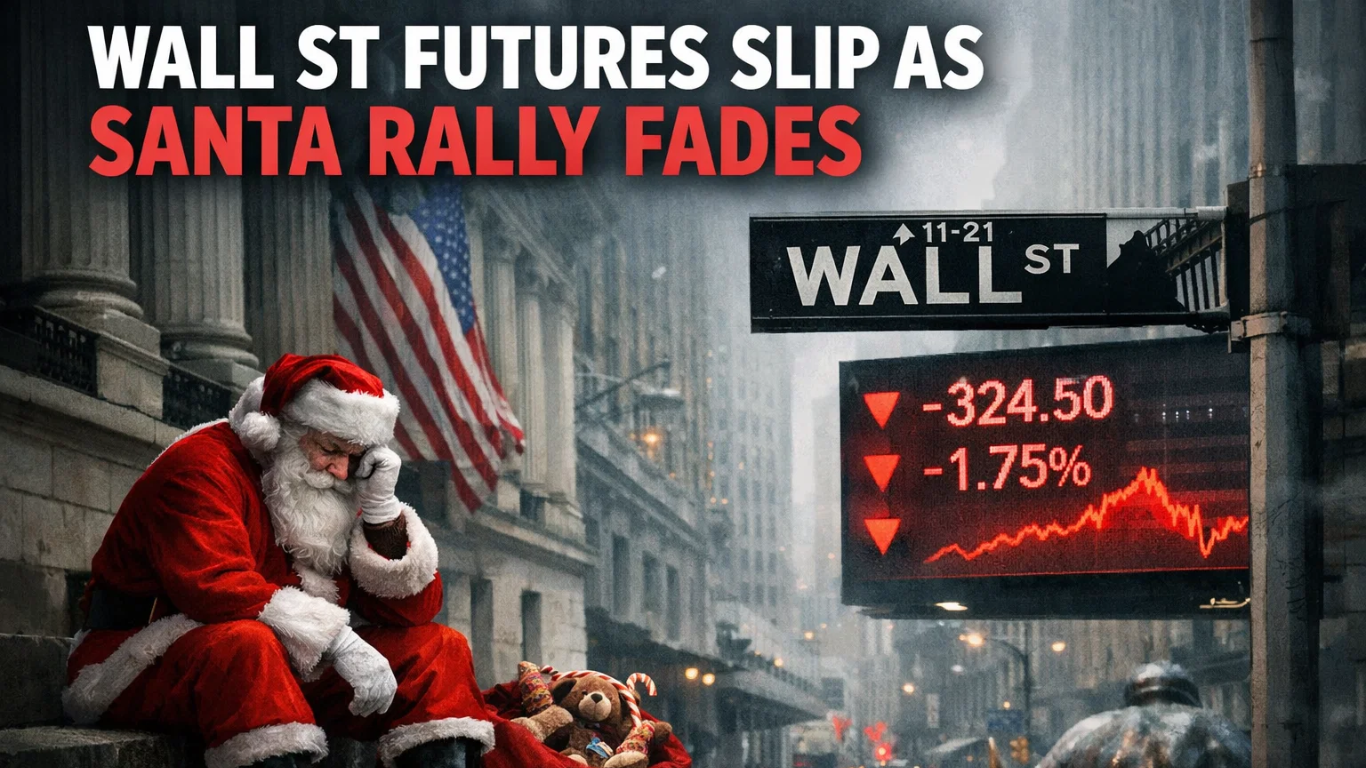
U.S. stock index futures edged lower late Tuesday as Wall Street headed into its final trading session of the year, weighed down by thin liquidity and fading seasonal optimism. S&P 500 futures slipped 0.2% to 6,933.75, Nasdaq 100 futures fell 0.2% to 25,621, and Dow Jones futures eased 0.1% to 48,617, reflecting a cautious tone ahead of the New Year holiday.
Cash markets had already closed weaker for a third straight session. The S&P 500 ended Tuesday down 0.1%, while both the Dow Jones Industrial Average and the Nasdaq Composite declined 0.2%. With U.S. bond markets scheduled for an early close on Wednesday and many institutional investors away, trading volumes remained well below seasonal averages.
Low liquidity often amplifies small price moves, and that dynamic has been evident in late-December sessions. Market participants are largely focused on portfolio rebalancing and risk management rather than initiating new positions, limiting upside momentum even after a strong year for equities.
Fed Minutes Reinforce Policy Uncertainty
Investor caution was reinforced by the release of minutes from the Federal Reserve’s December policy meeting, which revealed growing divisions among policymakers over the future path of interest rates. Although the Fed delivered a 25-basis-point rate cut, officials expressed differing views on how long easing should continue.
Several members warned that inflation remains sticky, arguing that premature or excessive easing could reignite price pressures. Others countered that keeping policy too restrictive for too long risks slowing economic growth unnecessarily in 2026.
Key takeaways shaping market sentiment include:
- Persistent concern about inflation proving slower to return to target
- Unease over balancing growth risks against price stability
- Lack of consensus on the timing and scale of future rate cuts
- Greater sensitivity to incoming data in early 2026
These signals have reinforced expectations that monetary policy will remain cautious, limiting enthusiasm for risk assets at year-end.
Santa Rally Expectations Lose Momentum
Hopes for a traditional “Santa Claus rally” — typically defined as gains in the final five trading days of December and the first two of January — have weakened as equities drift lower instead. Historically, this period has delivered positive returns more often than not, but 2025 is ending on a softer note.
Analysts point to narrow market leadership and profit-taking after a strong annual run as key drags. With few major economic releases scheduled during the holiday-shortened week, markets are being driven more by technical positioning, policy expectations, and calendar effects than by fresh fundamentals.
Still, many strategists caution against reading too much into thin year-end trading. Liquidity conditions can exaggerate moves, and direction in early January often provides a clearer signal of investor conviction.
As 2026 approaches, attention is expected to shift quickly toward inflation data, labor-market trends, and the Federal Reserve’s next policy signals — factors likely to determine whether the early-year tone turns defensive or reaccelerates risk appetite.

