


Oil prices moved higher on Wednesday as political tension in the Middle East kept traders nervous and unwilling to sell. Investors fear that any breakdown in U.S.–Iran talks could disrupt shipments through the Strait of Hormuz, one of the world’s most important oil routes. That fear is adding a “risk premium” to prices — meaning buyers are paying extra just in case supplies get interrupted.
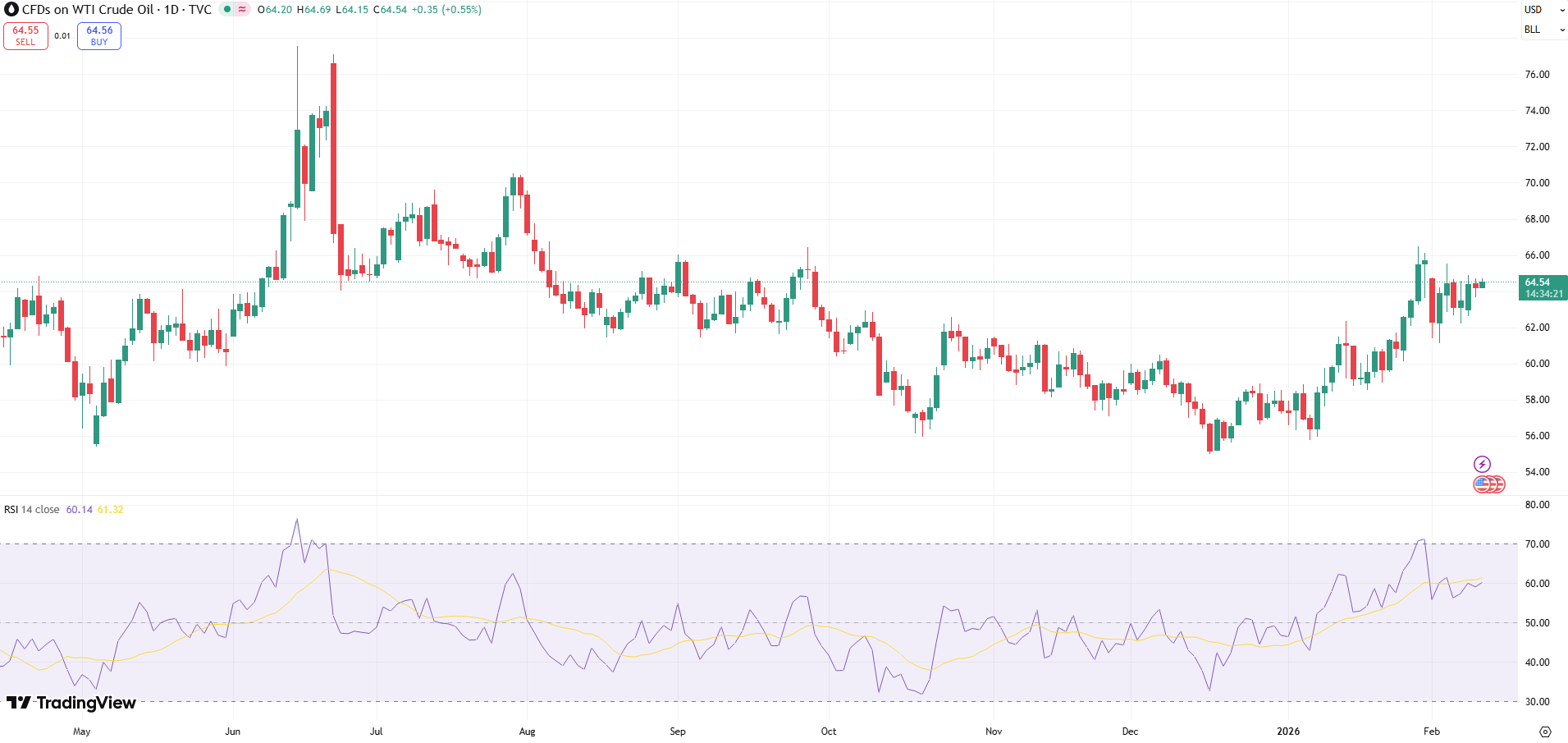
By 03:56 GMT, Brent crude was up 55 cents (0.80%) at $69.35 per barrel, while U.S. West Texas Intermediate (WTI) gained 57 cents (0.89%) to $64.53. These gains came even though prices had briefly dipped earlier in the week, showing how sensitive oil markets are to news from Washington and Tehran.
Iran’s foreign ministry said on Tuesday that recent nuclear talks with the United States were useful and showed “enough consensus” to keep diplomacy alive. Diplomats from both countries met in Oman last week, shortly after President Donald Trump moved a U.S. naval flotilla into the region — a step that raised fears of military escalation.
At first, oil eased after Oman’s foreign minister called the discussions “productive.” But optimism faded when reports emerged that the U.S. might send a second aircraft carrier to the Middle East if talks collapse. Trump later confirmed he was considering that option, keeping markets on edge. Analysts say sanctions pressure, possible tariffs linked to Iranian trade, and a stronger U.S. military presence are all keeping prices supported.
India demand tightens supply
Beyond geopolitics, fundamentals are also helping oil. Markets are gradually absorbing surplus barrels that built up in the last quarter of 2025, reducing the glut that had weighed on prices.
Vortexa analyst Xavier Tang said that “mainstream oil on water” — crude sitting in tankers at sea — has returned to more normal levels, while demand from India is rising, which should keep prices firm in the near term.
Indian refiners have started buying less Russian oil as New Delhi seeks a trade deal with Washington. To replace those barrels, they are purchasing more crude from the Middle East and West Africa, tightening supply in those regions and giving prices additional support.
Inventories and next signals
Traders are now waiting for the U.S. Energy Information Administration (EIA) weekly report on Wednesday for clearer supply signals. Ahead of that release, estimates are mixed.
Reuters’ survey of analysts expects that in the week to February 6:
- U.S. crude inventories rose by about 800,000 barrels
- Distillate stocks fell by 1.3 million barrels
- Gasoline stocks fell by 400,000 barrels
However, American Petroleum Institute (API) data — reported a day earlier — showed a much bigger jump: crude inventories rose by 13.4 million barrels in the week ended February 6. If the EIA confirms such a build, it could limit further price gains, even with geopolitical risk in play.
For now, oil sits in a tug-of-war between rising Indian demand and still-ample U.S. supplies, with Middle East politics acting as the wild card.
Key market numbers (quick view)
- Brent: +$0.55 to $69.35/bbl (+0.80%)
- WTI: +$0.57 to $64.53/bbl (+0.89%)
- API crude build: +13.4 million barrels
- Expected EIA crude build: +800,000 barrels

