

Oil prices regained modest ground on Wednesday after sliding to one-month lows, as investors assessed growing signals that Ukraine and Russia may be closing in on a U.S.-supported peace framework. A breakthrough deal could reshape global oil flows by lifting sanctions that have constrained Russian supply for nearly two years.
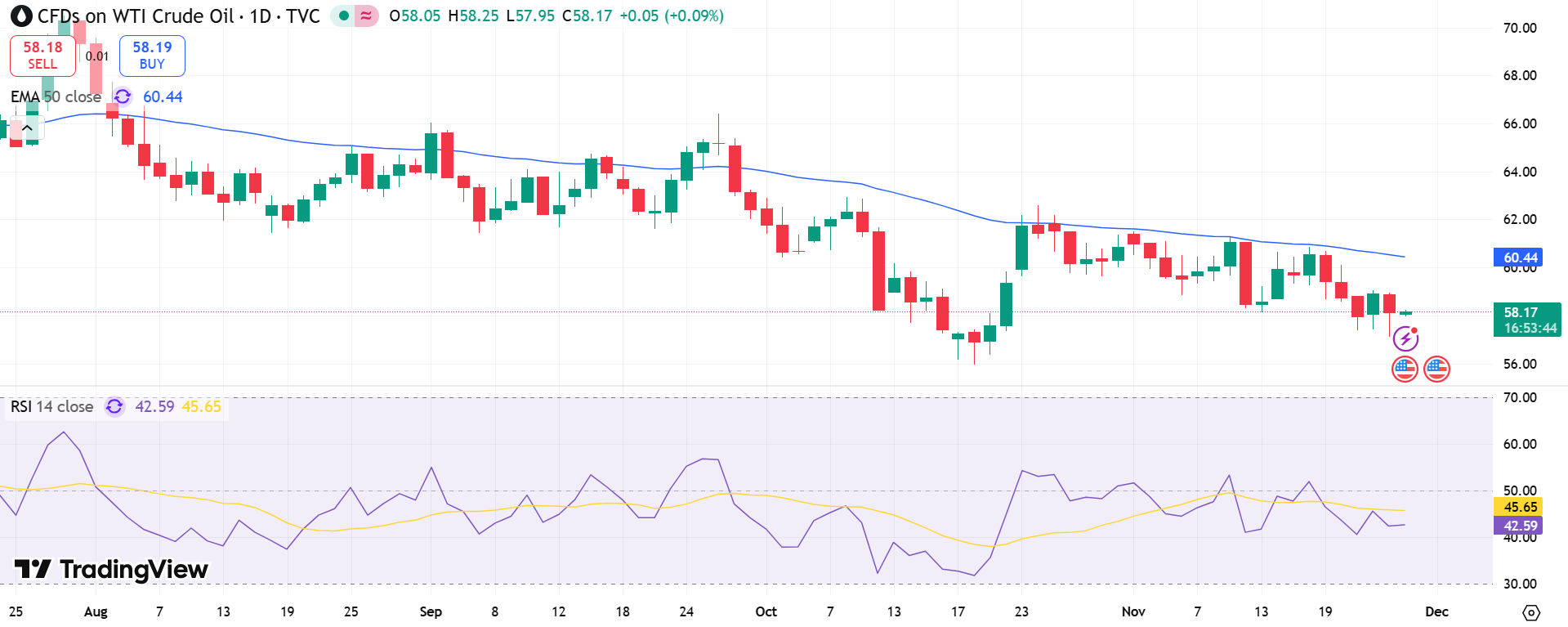
Brent crude inched up 19 cents, or 0.3%, to $62.67 per barrel, while U.S. West Texas Intermediate rose 14 cents, or 0.24%, to $58.09. Both benchmarks had slipped 89 cents in the previous session.
Ukrainian President Volodymyr Zelenskiy told European leaders he is prepared to advance negotiations, noting that “only a few open issues remain.” Markets interpreted the remarks as the strongest indication yet that a coordinated peace agreement may be approaching.
Sanctions Outlook Pressures Prices
Analysts warn that a completed deal could rapidly dismantle Western restrictions on Russian oil exports, potentially injecting millions of barrels back into the market.
IG market strategist Tony Sycamore wrote that WTI could drift toward $55 per barrel if sanctions ease without offsets from OPEC or allied producers.
Additional geopolitical signals added momentum:
- The U.S. President directed envoys to hold separate discussions with Russian and Ukrainian leaders.
- Ukrainian officials indicated a possible Zelenskiy visit to Washington within days to finalize negotiation terms.
- Russian crude shipments to India, once Moscow’s largest post-sanction outlet, are set to fall to a three-year low in December.
The market reaction reflects the starting stages of broader recalibration, as traders price in a scenario that once seemed improbable: full normalization of Russian output in global trade.
Rate-Cut Hopes Offer Some Support
Even as geopolitical developments pressure crude prices, expectations for a December U.S. Federal Reserve rate cut are helping soften the downside. Recent data showing weaker-than-forecast retail spending and cooler inflation raised the likelihood of monetary easing.
Lower rates would boost economic activity, potentially lifting energy demand in key consuming regions such as the United States, Europe and parts of Asia.
Still, analysts emphasize that near-term price direction hinges primarily on whether peace talks maintain momentum.
- A finalized accord would shift global supply dynamics.
- A breakdown could force markets to re-price geopolitical risk premiums upward.
For now, crude remains in a narrow holding pattern as investors wait for clarity on one of the most consequential geopolitical negotiations of the decade.

