

Oil prices retreated on Monday as signs the civil unrest in Iran was subsiding reduced the market’s geopolitical risk premium. Brent crude futures traded near $63.48 a barrel, down about 1% from the previous session, while U.S. West Texas Intermediate (WTI) hovered around $58.77–$58.84 for front-month contracts, also off roughly 1%.
The sell-off followed initial gains driven by fears that sanctions and unrest in Iran — the fourth-largest producer in the Organization of the Petroleum Exporting Countries (OPEC) — could disrupt crude shipments. As tensions eased, the probability of direct U.S. military intervention declined, tempering near-term supply fears that had lifted prices.
Iranian protests, which erupted amid economic hardship and political grievances, were met with a harsh crackdown. Officials have reported thousands of fatalities, and while external intervention had been a market concern, recent statements from U.S. leadership suggesting a de-escalation helped cool trading.
Analysts note that crude remains sensitive to political developments in the Middle East due to the region’s outsized role in global oil flows. Any shift in sentiment around supply disruptions — whether real or perceived — can quickly feed through into prices.
Broader Market Drivers and Supply Signals
Beyond geopolitical headlines, market participants monitored other supply and demand indicators. U.S. crude inventories posted a notable build, easing pressure on benchmark prices and reinforcing the downside momentum.
Meanwhile, focus remains on global output balances: the prospect of Venezuelan oil re-entering international markets has the potential to add significant barrels, even as analysts remain cautious about how soon that might materialize.
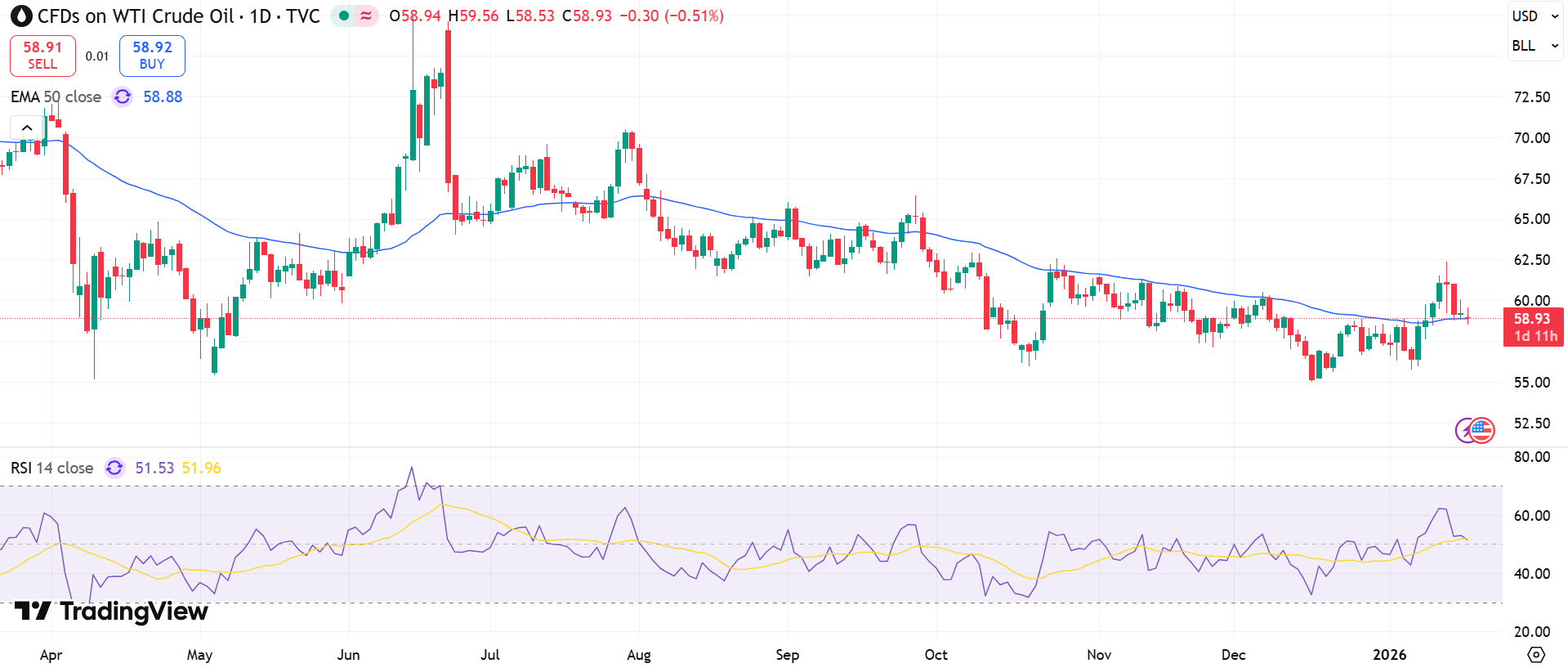
Oil’s recent volatility has also reflected broader macroeconomic concerns, including demand expectations tied to the global economy’s performance. With U.S. markets closed for Martin Luther King Jr. Day, trading volumes were lighter, but movements in benchmark futures still highlighted market sensitivity to news flows.
Key Factors Influencing Oil Movements
- Geopolitical tension in Iran: easing protests reduced the immediate risk premium on oil.
- Inventory data: rising U.S. crude stocks pressured prices lower.
- Venezuela exports: potential return of Venezuelan barrels could lift global supply.
Collectively, these forces helped drive oil’s pullback on Monday. While geopolitical risk has receded in the short term, analysts caution that the situation remains fluid, and any renewed instability in major producing regions could quickly reverse the current trend.

