

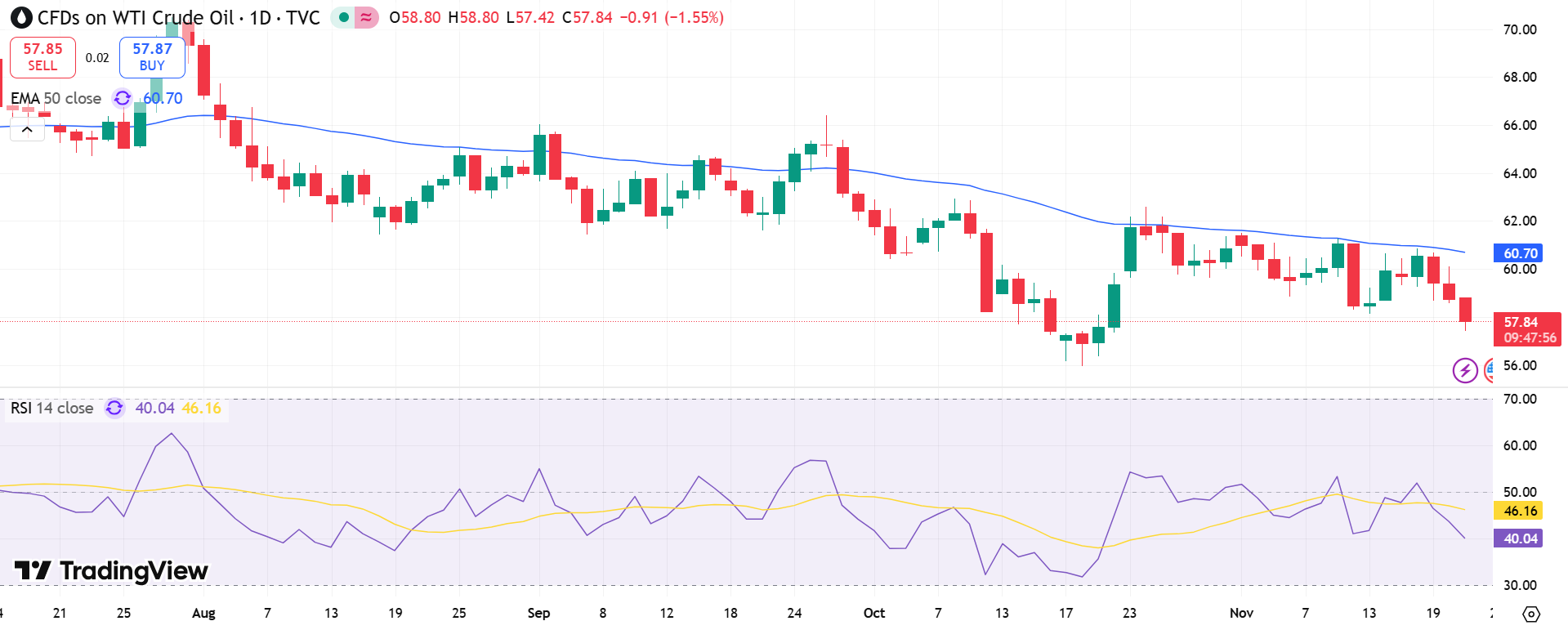
Oil prices continued their decline on Friday as diplomatic momentum between Washington and Kyiv fueled expectations of a potential Russia-Ukraine peace framework. Brent crude slipped 2.2% to $61.98 a barrel, while U.S. West Texas Intermediate crude lost 2.5% to $57.52. Both benchmarks are on track for a weekly drop of about 4%, fully reversing the previous week’s rebound.
Market positioning shifted quickly after U.S. officials intensified efforts to steer both sides toward negotiations aimed at ending the three-year conflict. A durable settlement could ultimately restore flows disrupted by sanctions and geopolitical risk, raising the prospect of a more balanced global supply outlook.
The timing is significant. Fresh U.S. sanctions targeting Russian majors Rosneft and Lukoil come into force Friday. Yet traders remain uncertain about whether these measures will meaningfully restrict output or merely add short-term friction to already-adjusted supply routes.
Ukrainian President Volodymyr Zelensky signaled willingness to coordinate with Washington on next-step frameworks, though the path to any agreement remains fraught with political and territorial disputes.
Peace Prospects and Sanctions Uncertainty
Analysts were quick to caution that optimism may be premature.
Key market concerns include:
- No clear timeline for talks or formal negotiations
- Ukraine’s rejection of Russia’s core demands
- Doubts about the effectiveness of new U.S. sanctions
- A deadline of Dec. 13 for Lukoil to divest its international assets
Deutsche Bank’s Jim Reid noted that news of dialogue offered initial relief on the risk of severe supply disruption, but added that the broader outlook depends heavily on how the sanctions evolve once implemented.
ANZ analysts emphasized that “an accord is far from certain,” underscoring that Kyiv has dismissed multiple Russian proposals as unacceptable. This keeps oil markets in a holding pattern: sensitive to diplomatic developments but still anchored by concerns over potential supply shifts.
Dollar Strength Adds Pressure
Beyond geopolitics, a strengthening U.S. dollar added another headwind. The currency is poised for its strongest weekly performance in more than a month as investors scale back expectations of a December Federal Reserve rate cut.
According to CME FedWatch, the probability of a December rate cut has fallen to 35%, sharply lower than the 90% odds priced in a month earlier. A firmer dollar typically weighs on crude by making oil more expensive for non-U.S. buyers, reinforcing Friday’s price weakness.

