

Crude oil suffered one of its sharpest single-day selloffs of the year on Monday as geopolitical risks receded, the U.S. dollar surged, and weather forecasts turned less supportive for fuel demand. The shift marked a rapid reversal after a January rally that had been powered largely by Middle East tensions and extreme winter conditions in North America.
Brent crude futures slid $3.02—down 4.4%—to settle at $66.30 per barrel, while U.S. West Texas Intermediate (WTI) fell $3.07, or 4.7%, to close at $62.14. The declines erased a significant portion of the prior month’s gains and underscored how quickly sentiment can pivot in energy markets.
De-escalation rattles crude markets
The immediate catalyst for the drop was renewed diplomatic momentum between Washington and Tehran. President Donald Trump said Iran was “seriously talking” with U.S. officials, signaling a potential thaw after weeks of hostility that had kept traders on edge. Both governments later confirmed that nuclear negotiations would resume later this week.
For much of January, repeated U.S. threats toward Iran had created a persistent risk premium in oil prices, with traders fearing supply disruptions from a key OPEC producer. Analysts at Phillip Nova noted that as those fears faded, speculative positions were rapidly unwound.
Dollar and weather deepen the slide
A stronger U.S. dollar amplified the move lower. Currency markets rallied after Trump nominated former Fed governor Kevin Warsh to lead the Federal Reserve, pushing the dollar higher against major peers. Because oil is priced in dollars, a stronger greenback makes crude more expensive for international buyers and tends to weigh on demand.
Milder weather forecasts across the United States also hurt sentiment. Diesel futures—closely tied to heating and power generation—fell more than 6% as expectations for a prolonged cold snap evaporated. Energy research firm Ritterbusch & Associates said the market had been pricing in sustained winter demand that now looks unlikely to materialize.
Supply picture comes back into focus
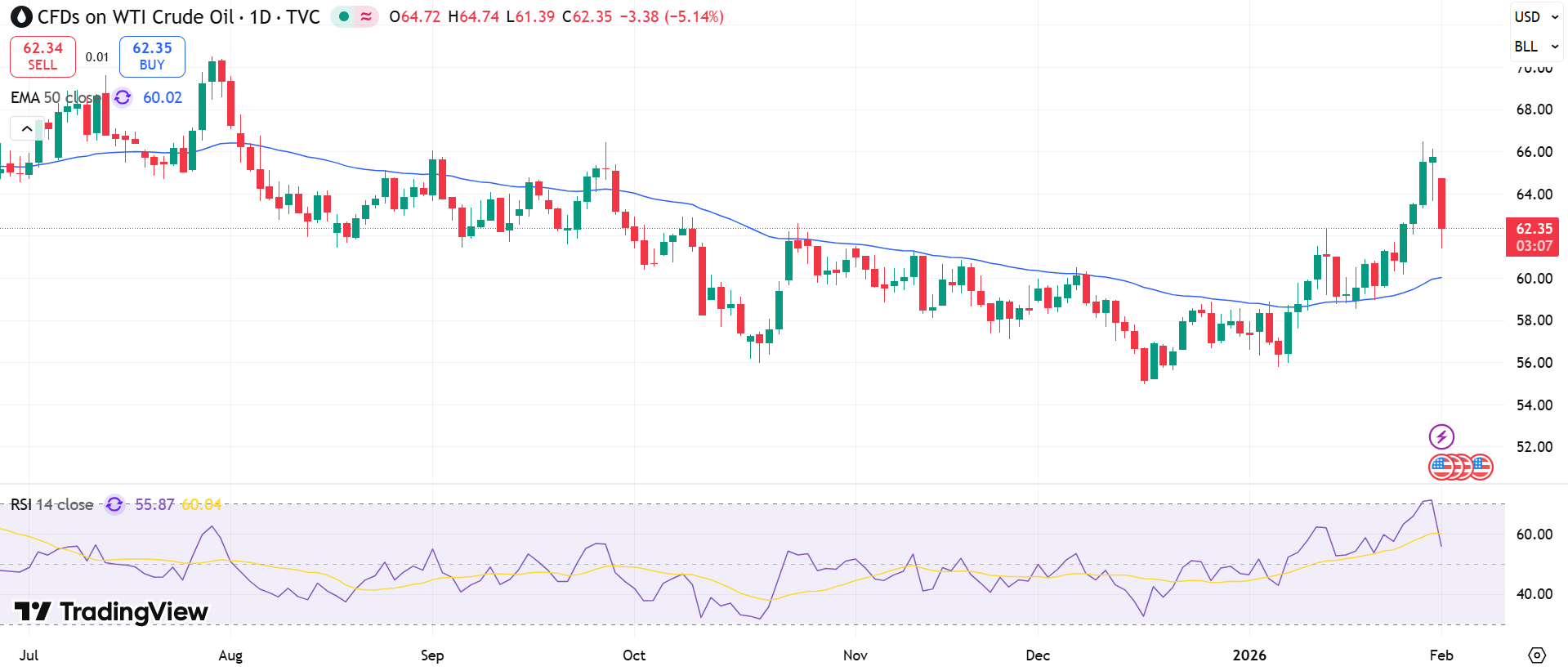
With geopolitics and weather easing, traders are refocusing on fundamentals that point to higher global inventories in 2026. PVM analysts said that the same forces that lifted WTI by 14% and Brent by 16% in January have largely run their course.
OPEC+ met on Sunday and chose to keep production unchanged for March, maintaining its cautious approach to the market. The alliance had already frozen planned output increases from January through March 2026, citing seasonally weaker consumption.
Across key benchmarks:
- Brent crude: $66.30/bbl (−4.4%)
- WTI crude: $62.14/bbl (−4.7%)
- U.S. diesel futures: down more than 6%
For now, energy markets appear to be transitioning from a risk-driven narrative to one dominated by supply, demand, and the prospect of rising stockpiles—a shift likely to keep prices volatile in the weeks ahead.

