

Oil prices were steady early Wednesday, recovering slightly from a nearly 1% drop in the previous session. Traders balanced concerns about an emerging global supply surplus with cautious optimism over diplomatic progress in the Russia-Ukraine conflict.
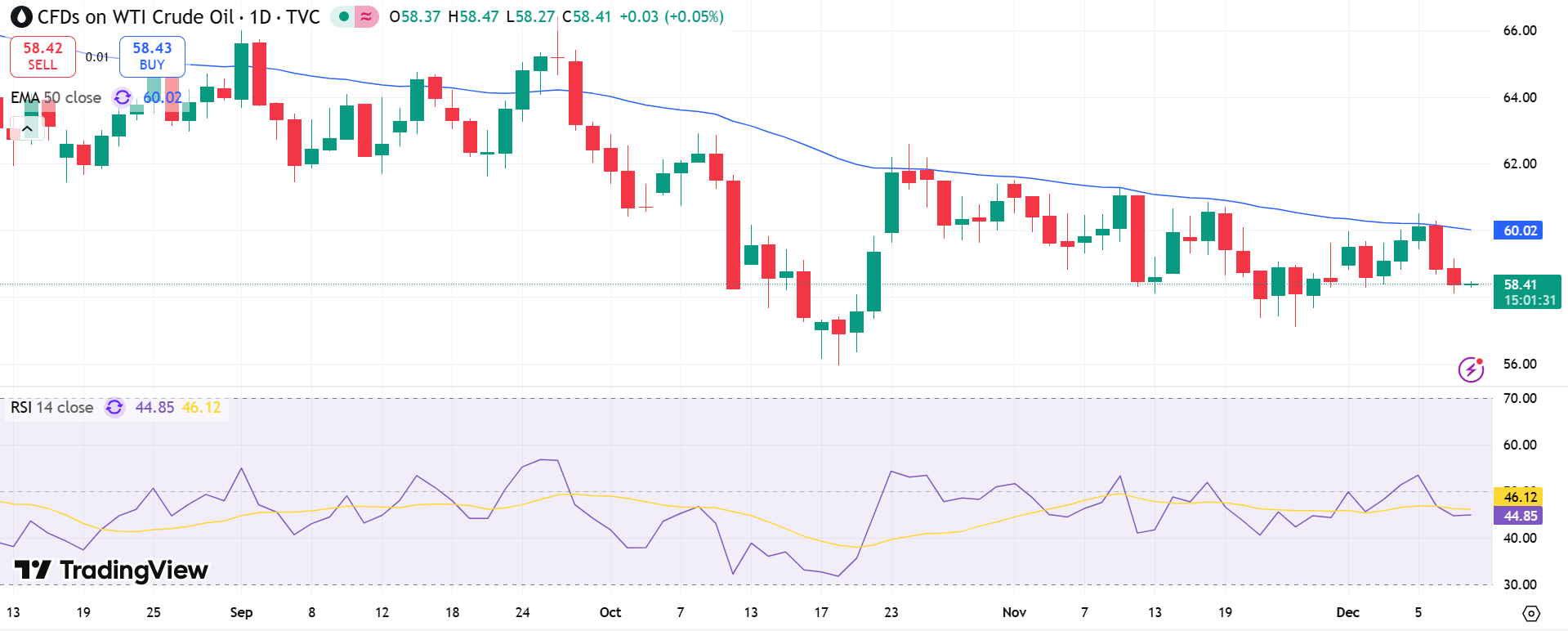
By 02:41 GMT, Brent crude rose $0.11 (0.2%) to $62.05 per barrel, while West Texas Intermediate added $0.13 (0.2%) to trade at $58.38. Both benchmarks remain under pressure as rising inventories and softening demand forecasts cloud the near-term outlook.
Analysts at ING said the oil market is moving “deeper into an expected glut,” though Russia continues to represent a key wildcard. The bank noted that while Moscow’s seaborne exports have remained resilient, buyers are increasingly scarce—raising the risk of production declines if volumes continue struggling to find a home.
Peace Diplomacy Could Reshape Oil Supply
Expectations around a potential peace framework between Ukraine and Russia have added a new layer of uncertainty for energy markets. Ukrainian President Volodymyr Zelenskiy said Kyiv and its European partners will soon deliver “refined documents” to Washington outlining a proposed peace plan, following several days of high-level diplomatic engagement.
A breakthrough could have immediate implications for the global oil market:
- Easing sanctions may allow Russian companies to restore restricted output
- Improved trade flows could help stabilize price volatility
- Broader geopolitical calm may temper risk premiums baked into crude benchmarks
At the same time, analysts caution that any peace progress remains fragile, and markets have yet to fully price in the possibility of a sustained détente.
U.S. Output Forecasts Add Downward Pressure
Fresh projections from the Energy Information Administration (EIA) added another headwind for crude. The agency now expects U.S. oil production to hit a larger record in 2025, raising its output forecast by 20,000 barrels per day to an average of 13.61 million bpd.
However, the EIA trimmed its 2026 outlook by 50,000 bpd, projecting production of 13.53 million bpd, highlighting uncertainty around shale growth, drilling investments, and long-term demand trends.
These forecasts reinforce views that supply is outpacing consumption, at least in the short term—limiting the potential for sustained price gains even as geopolitical developments offer occasional boosts.
Still, traders remain focused on whether peace negotiations gain momentum and how quickly excess supply builds in coming months. With multiple global producers planning elevated output levels, any material increase in Russian barrels could deepen the anticipated surplus.

