

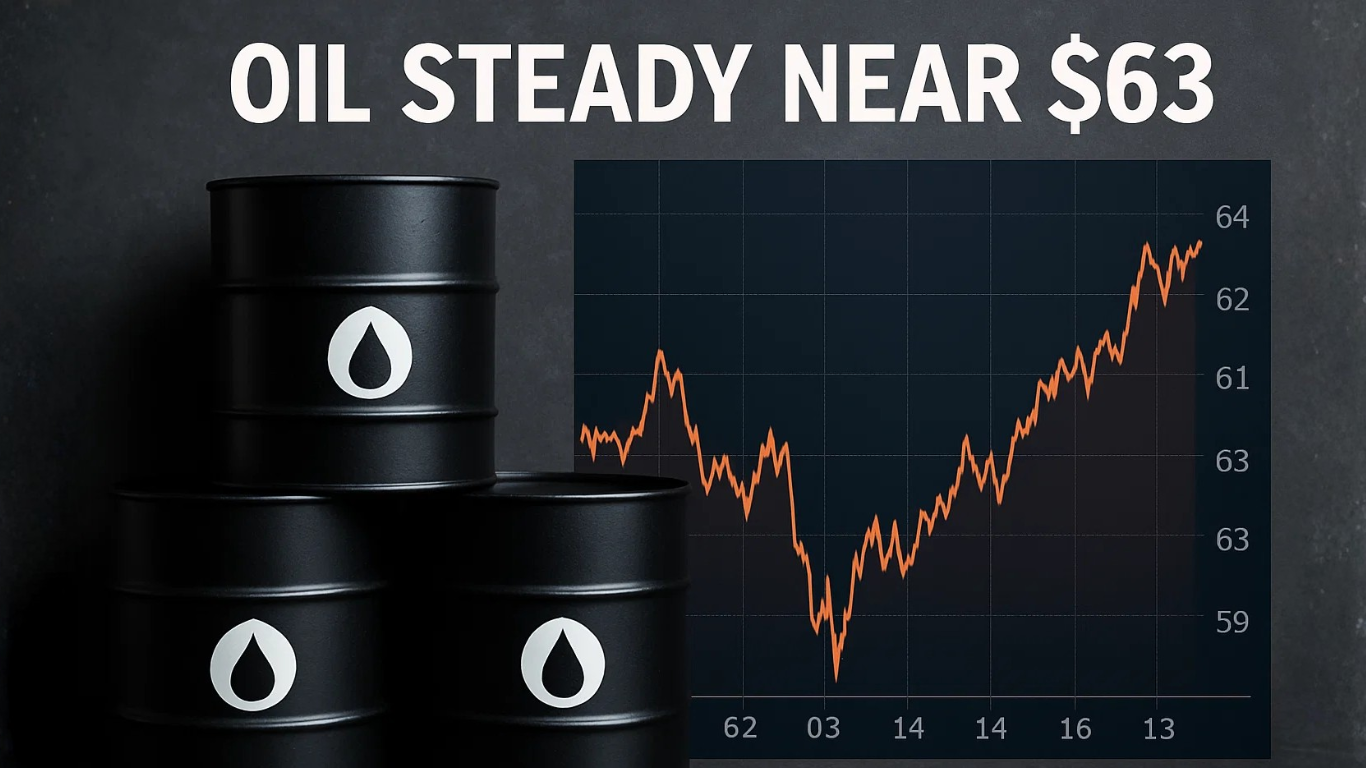
Oil prices were largely unchanged in Friday’s Asian session as traders assessed geopolitical developments and anticipated a pivotal weekend meeting of OPEC+. As of 21:27 ET (02:27 GMT), Brent January futures traded at $63.35, while WTI gained 0.6% to $59.02. Both benchmarks were positioned to finish the week more than 1% higher, supported by rising expectations of a Federal Reserve rate cut next month.
The modest advance follows several weeks of volatility driven by shifting demand outlooks and tighter financial conditions. Investors now see central bank easing as a potential catalyst for a more stable consumption environment in early 2026.
Peace Efforts Could Reset Geopolitical Risk
The U.S. has intensified its diplomatic push to revise a peace framework between Ukraine and Russia, a conflict now approaching its fourth year. Talks held in Geneva focused on phased security guarantees, territorial arrangements, and possible mechanisms that could later support broader negotiations with Moscow.
Russian President Vladimir Putin acknowledged that the U.S.-Ukraine proposal could serve as a basis for future talks, though he emphasized that no final text has been agreed and reiterated Moscow’s unwillingness to offer major concessions. Any meaningful diplomatic progress could slowly unwind sanctions-related constraints on Russian crude, reducing part of the geopolitical risk premium embedded in current prices.
Key developments to watch include:
- U.S. Special Envoy Steve Witkoff’s planned visit to Moscow next week.
- Kremlin confirmation that senior U.S. officials will participate in discussions.
- Market expectations of limited near-term breakthroughs, despite ongoing dialogue.
Analysts say even incremental diplomatic movement could introduce modest downward pressure on crude by reducing perceived supply threats.
OPEC+ Meeting to Shape Early-2026 Market Outlook
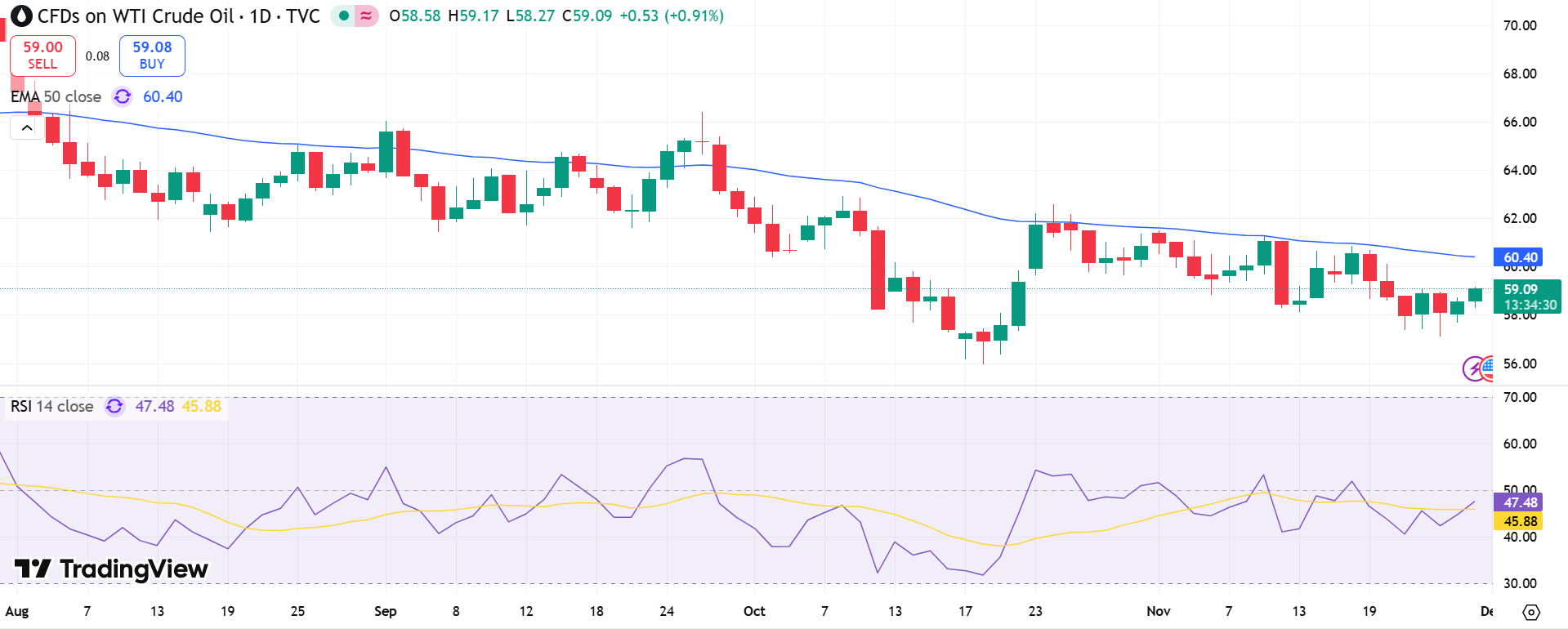
Market attention is now turning to the OPEC+ meeting, where delegates are widely expected to maintain current output levels. Officials have signaled that the group will instead prioritize a capacity review mechanism—a long-planned tool intended to manage rising non-OPEC supply against uneven global demand.
ING analysts noted the fundamental outlook “remains similar to the group’s last meeting,” reinforcing expectations that policy continuity will dominate the agenda.
With geopolitical negotiations still fluid and supply dynamics delicately balanced, traders will be watching for even minor signals that could reset forecasts for early-2026 oil markets.

