


Oil prices pushed higher Thursday, extending a sharp rally as investors weighed the growing risk of a military clash between the United States and Iran. The concern is simple: if conflict disrupts oil flows in the Middle East, global supply could tighten quickly, lifting prices worldwide.
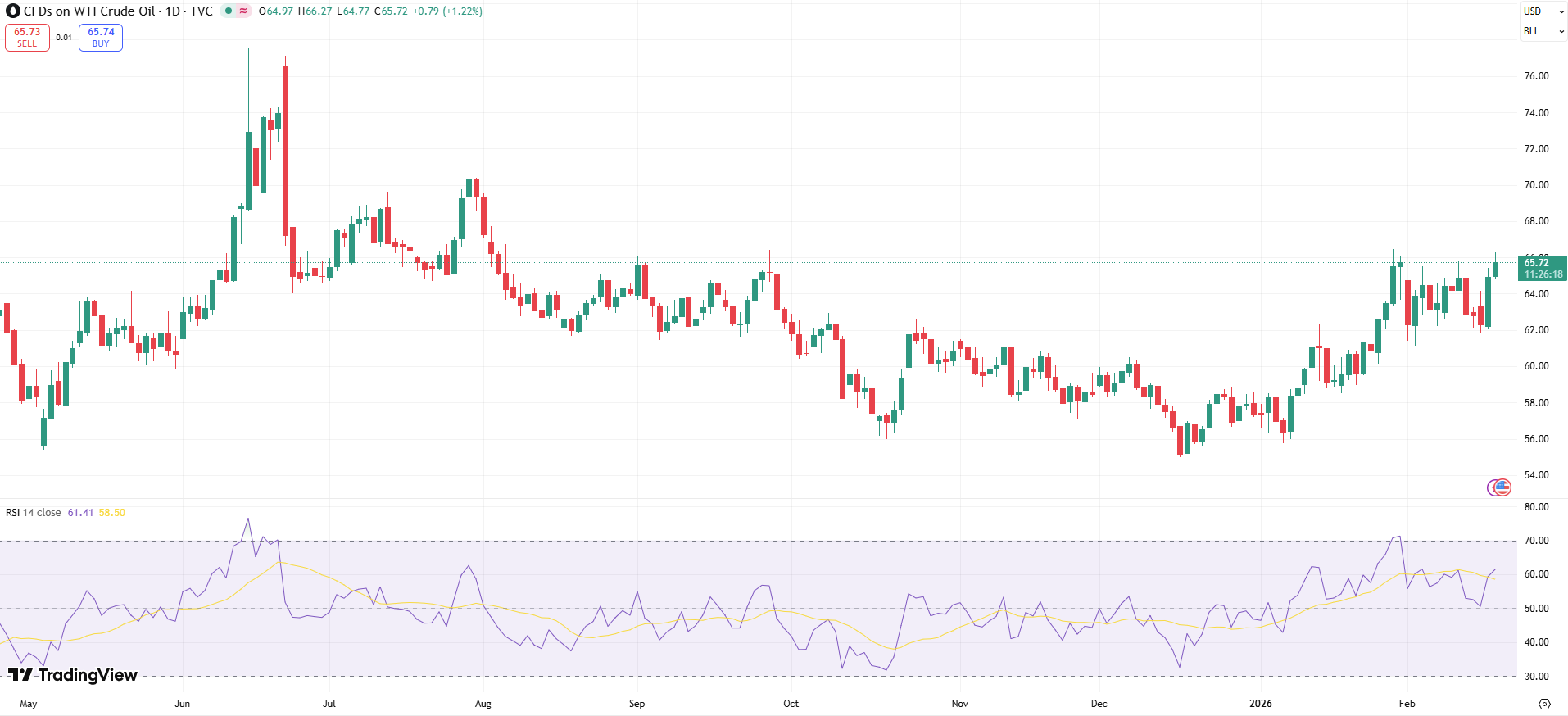
Brent crude futures rose $1.11, or 1.58%, to $71.46 a barrel by 0905 GMT. U.S. West Texas Intermediate (WTI) gained $1.05, or 1.6%, to $66.24. Both benchmarks hovered near six-month highs after surging more than 4% on Wednesday, as traders priced in the possibility of supply disruptions.
Hormuz at the Center of Risk
The market’s focus has zeroed in on the Strait of Hormuz, a narrow but critical waterway between Iran and Oman. Roughly 20% of the world’s oil supply passes through this corridor each day. If shipping is blocked—even briefly—the impact can ripple across energy markets.
Iranian state media reported the Strait was shut for several hours on Tuesday, though it remained unclear whether traffic fully resumed. Even temporary closures can unsettle traders because tankers moving crude from Saudi Arabia, Iraq, Kuwait and the United Arab Emirates rely on that route.
ING analysts noted that markets are not only concerned about Iranian oil exports but also broader Persian Gulf flows. Any disruption would squeeze global supply at a time when demand remains steady.
Key developments shaping oil prices:
- Brent at $71.46, up 1.58%
- WTI at $66.24, up 1.6%
- Both benchmarks up over 4% Wednesday
- 20% of global oil flows via Hormuz
Military Moves and Diplomacy
Tensions escalated as both sides increased military activity. Iran issued a notice to airmen (NOTAM) planning rocket launches across southern regions from 0330 GMT to 1330 GMT, according to the U.S. Federal Aviation Administration website. At the same time, Washington deployed warships near Iranian waters.
U.S. Vice President JD Vance said the administration is weighing whether to continue diplomatic talks with Tehran or consider alternative measures. Meanwhile, negotiations in Geneva showed limited progress. The White House acknowledged some advances but said significant gaps remain, expecting Iran to return with more details within weeks.
In Europe, peace talks between Ukraine and Russia concluded without a breakthrough. Ukrainian President Volodymyr Zelenskiy accused Moscow of delaying U.S.-mediated efforts to end the four-year conflict, adding another layer of geopolitical strain.
U.S. Inventories Add Support
Supply data provided further momentum. According to market sources citing American Petroleum Institute figures, U.S. crude, gasoline and distillate inventories fell last week. That contrasted with expectations in a Reuters poll projecting a 2.1 million-barrel crude build for the week ending February 13.
Official data from the Energy Information Administration are due Thursday and could confirm whether stockpiles are tightening.
For now, oil markets remain driven by risk calculations. If tensions ease, prices may stabilize. If they intensify, traders expect volatility to persist—because when 20% of the world’s oil is at stake, even small disruptions matter.

