

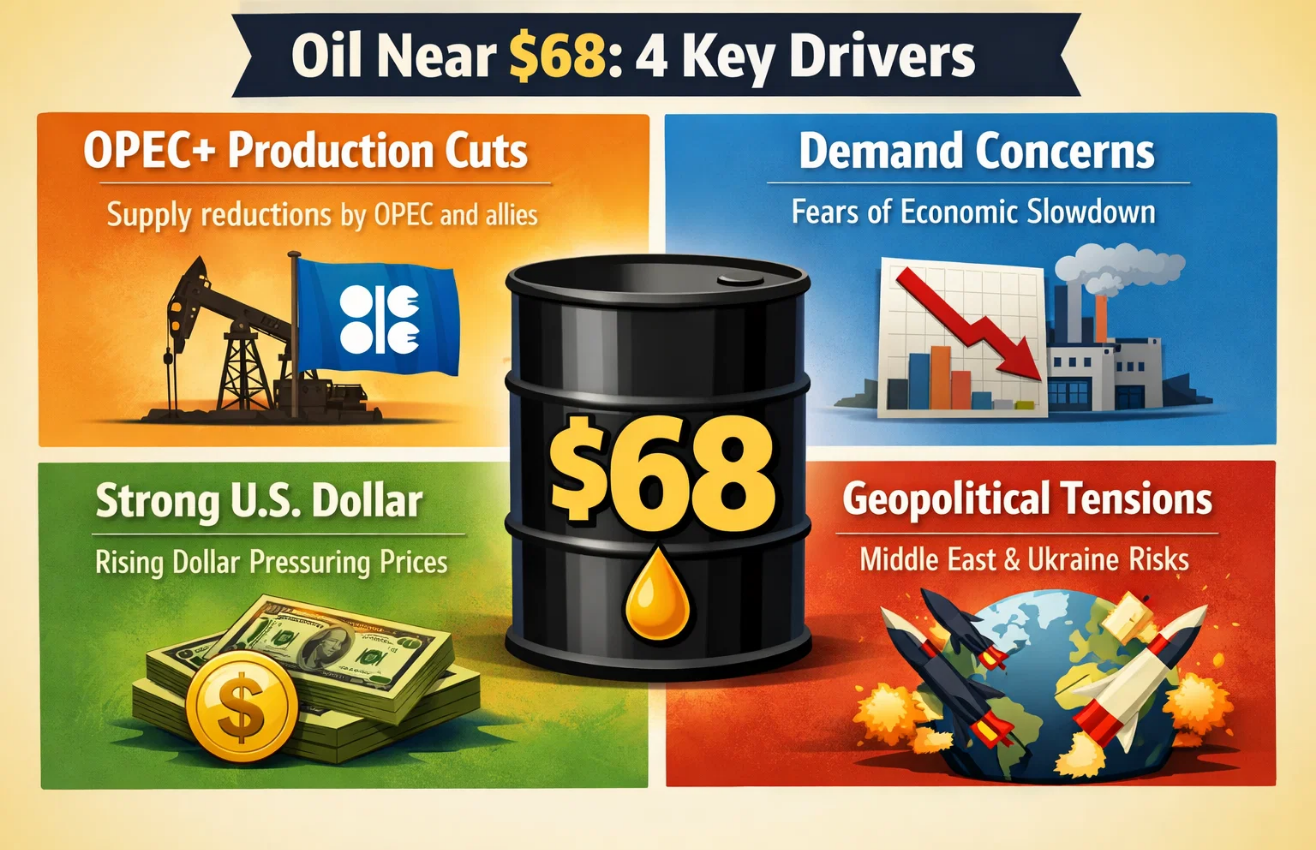
Oil prices have climbed toward $68 per barrel, the highest level in nearly four months, as severe winter weather disrupted U.S. output and a soft dollar made oil more attractive to global buyers. This upward trend reflects a mix of supply limitations and broader macroeconomic forces.
The U.S. Gulf Coast, a major crude export hub, saw output sharply curtailed by a powerful winter storm that cut up to 2 million barrels per day — roughly 15% of national production — over the weekend. This disruption temporarily halted exports and strained refinery operations, tightening short-term supply.
The U.S. dollar weakened to its lowest levels in nearly four years, a trend that typically boosts dollar-priced commodities like oil by lowering costs for foreign purchasers. This currency dynamic has lent additional support to crude futures even as traders discounted some of the weather-related impacts.
Despite these gains, oil benchmarks retraced slightly on Wednesday after earlier strength. Brent crude dipped back from intraday highs near $68 while U.S. West Texas Intermediate (WTI) stayed above $62, reflecting both optimism and caution in the market.
Supply Constraints in Kazakhstan and OPEC+ Policy
Beyond U.S. weather issues, supply disruptions in Kazakhstan have played a significant role in supporting prices. The country’s key Tengiz oilfield — one of its largest — remains partly offline after a fire and power outage, with forecasts suggesting output may reach only about 46% of normal levels by early February.
The slower than expected recovery has kept global markets attentive to bottlenecks outside North America. Meanwhile, pipeline operator CPC has restored full loading capacity at its Black Sea export terminal, but the overall supply picture remains tight.
Looking ahead, OPEC+ producers are set to maintain a pause on increasing production into March, according to sources familiar with the group’s plans. This continued discipline aims to balance global supply against demand concerns, even as some forecasts point to a modest supply surplus later in 2026.
Geopolitics, Inventory Signals, Market Outlook
Oil markets are also sensitive to geopolitical developments, particularly in the Middle East. The presence of a U.S. aircraft carrier and support vessels in the region has amplified risk premiums tied to potential supply disruptions, especially around Iran — a key energy exporter.
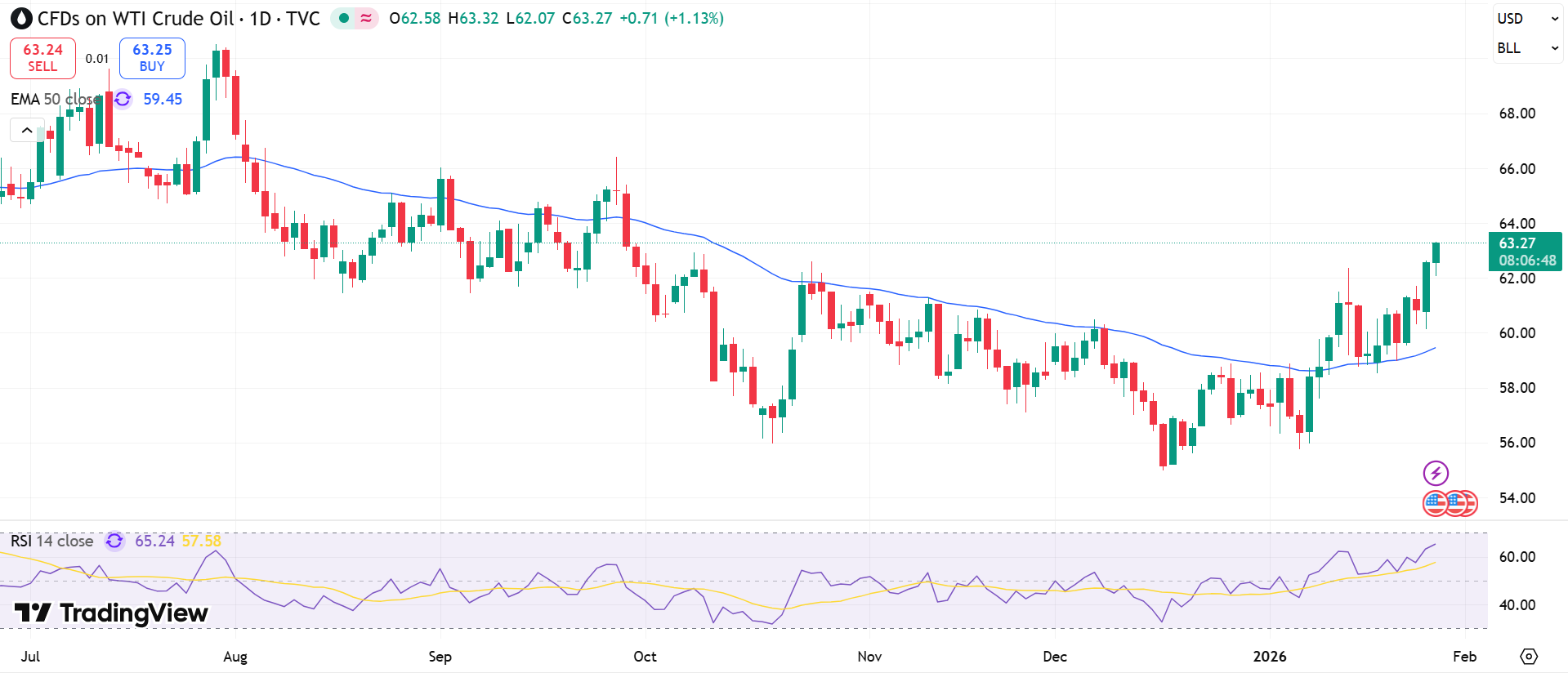
Key market data remains mixed:
• U.S. crude inventories showed a slight unexpected draw in API figures, defying forecasts for larger builds.
• Global crude fundamentals will be influenced by demand expectations from major consumers like China and ongoing production decisions by both OPEC and non-OPEC producers.
Bullet Points: Market Highlights
- Severe U.S. storm cut up to 2M bpd of crude output.
- Benchmark crude prices near four-month highs.
- Weak dollar enhances appeal of oil globally.
- Kazakhstan’s Tengiz output recovery remains slow.
Overall, while immediate weather and supply disruptions have bolstered prices, traders remain watchful of broader global demand signals, inventory data, and OPEC+ policy outcomes that could reshape the market trajectory in the weeks ahead.

