

Oil prices advanced in early Asian trading after the United States seized a sanctioned Venezuelan tanker, heightening concerns over supply stability. As of 21:38 ET (02:38 GMT), Brent crude for February delivery rose 0.4% to $62.44 per barrel, while West Texas Intermediate (WTI) gained 0.5% to $58.78. The move added a renewed risk premium to the market as traders reassessed geopolitical exposure in the global oil supply chain.
U.S. officials confirmed that the intercepted vessel—identified by maritime sources as the Skipper—was detained in waters near Venezuela in a joint action involving the U.S. Coast Guard, FBI, and Homeland Security. President Donald Trump called it the “largest ever” seizure linked to sanctions enforcement, signaling stricter oversight on Venezuelan crude flows.
Key supply-related highlights:
- Coordinated U.S. operation increases geopolitical tension
- Potential disruption to Venezuelan exports adds upward pressure
- Risk premium returns to the oil market amid heightened scrutiny
EIA Data Shows Decline in Crude Stocks
Weekly data from the U.S. Energy Information Administration (EIA) showed a 1.812 million-barrel draw in commercial crude inventories, surpassing expectations of a 1.1 million-barrel drop. The sharper-than-anticipated decline indicates slightly tighter supply conditions heading into year-end.
Gasoline inventories increased in line with seasonal patterns as consumption cooled after the autumn travel peak. Distillate stocks—including diesel and heating oil—also rose, suggesting a gradual softening in demand dynamics.
Inventory movements this week:
- Crude: –1.812 million barrels (vs. –1.1 million expected)
- Gasoline: seasonal build
- Distillates: moderate increase
These shifts collectively reflect a market balancing between tightening crude availability and easing product demand.
Fed Rate Cut Boosts Commodity Outlook
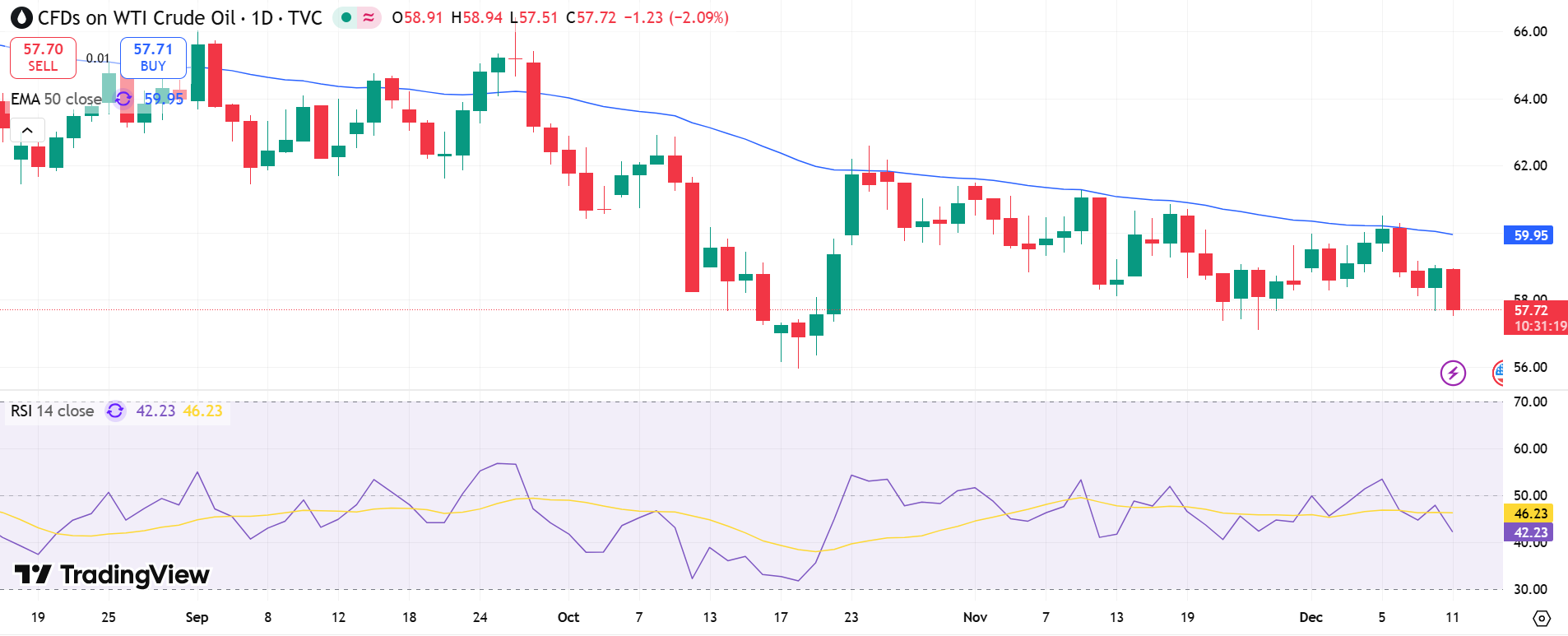
The Federal Reserve introduced a 25-basis-point rate cut, bringing the target range down to 3.5%–3.75%—its third reduction of the cycle. The decision was not unanimous, with several policymakers dissenting, highlighting internal divisions over the path of monetary easing.
The move pressured the U.S. dollar and lowered financing costs, both supportive factors for commodities priced in dollars. A weaker currency typically enhances global purchasing power, thereby lifting demand prospects for crude oil.
As markets digest the combined impact of geopolitical tensions, inventory shifts, and monetary easing, traders are likely to remain focused on supply-side risks and the trajectory of U.S. economic policy.

