

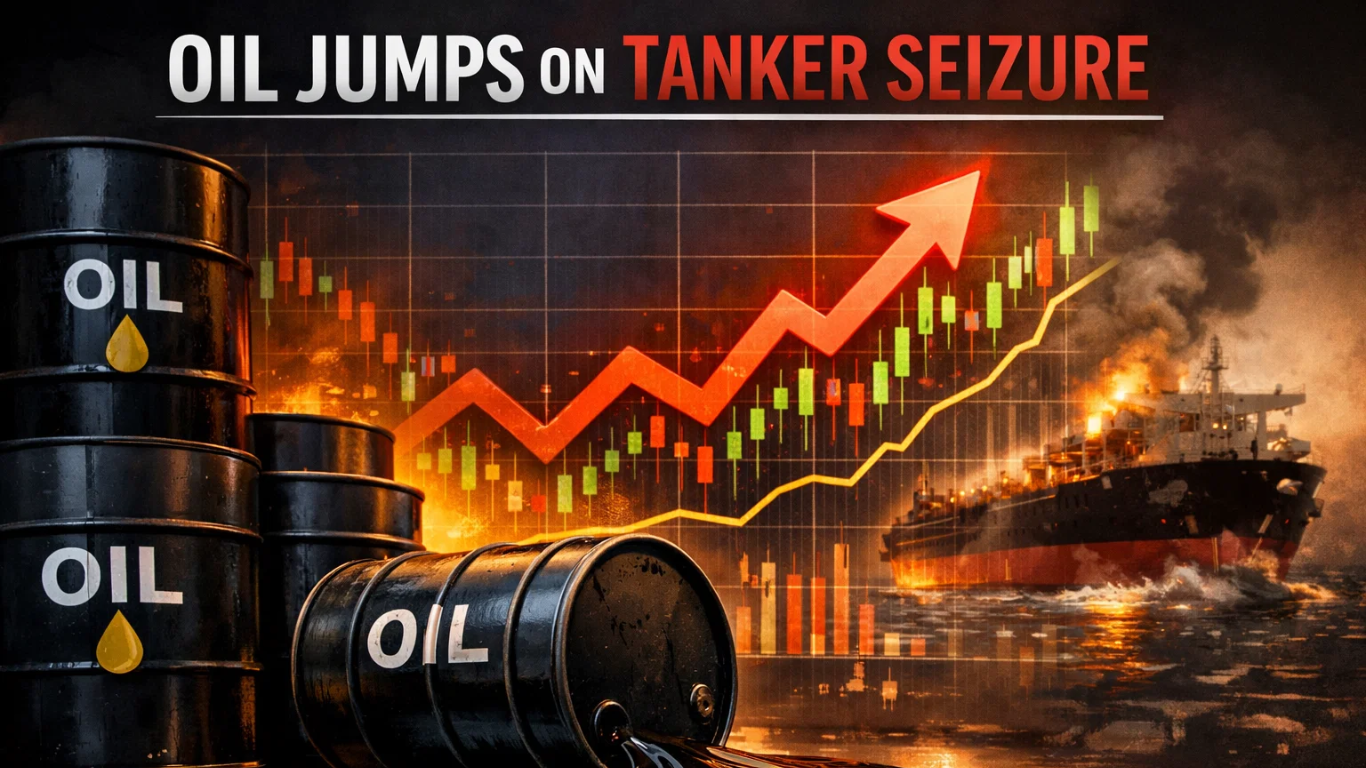
Oil prices opened the week higher after U.S. officials confirmed the interception of an oil tanker in international waters near Venezuela, reviving concerns about supply disruptions tied to sanctions enforcement. The move signaled a firmer U.S. stance on Venezuelan crude flows at a time when markets were already sensitive to geopolitical risk.
Brent crude futures climbed 46 cents, or 0.8%, to $60.93 a barrel, while U.S. West Texas Intermediate rose the same amount to $56.98 a barrel in early Asian trading. The gains followed reports that the U.S. Coast Guard was pursuing another tanker—potentially the third such action in less than two weeks—highlighting renewed vigilance over sanctioned oil shipments.
Analysts say the response reflects a market reassessing political risk premiums after weeks of bearish sentiment driven by oversupply and soft demand expectations.
Geopolitics Reassert Influence on Crude Markets
Market participants increasingly view Washington’s actions as a signal that sanctions enforcement may tighten rather than ease. According to June Goh, a senior oil market analyst at Sparta Commodities, traders are “waking up to the reality” that the U.S. is taking a hardline approach to Venezuelan oil trade, lending near-term support to prices.
The Venezuelan episode comes amid broader geopolitical strains. Russia-Ukraine tensions remain unresolved, and recent reports of a Ukrainian drone strike on a Russian “shadow fleet” vessel in the Mediterranean have added to uncertainty around energy transport routes. Together, these developments have offset otherwise bearish fundamentals.
Tony Sycamore, an analyst at IG, noted that hopes for a swift, durable peace agreement in Ukraine are fading. While U.S.-brokered talks involving European and Ukrainian officials were described as productive, Russian officials signaled that revised proposals have not improved prospects for an agreement.
Prices Stabilize Despite Oversupply Pressures
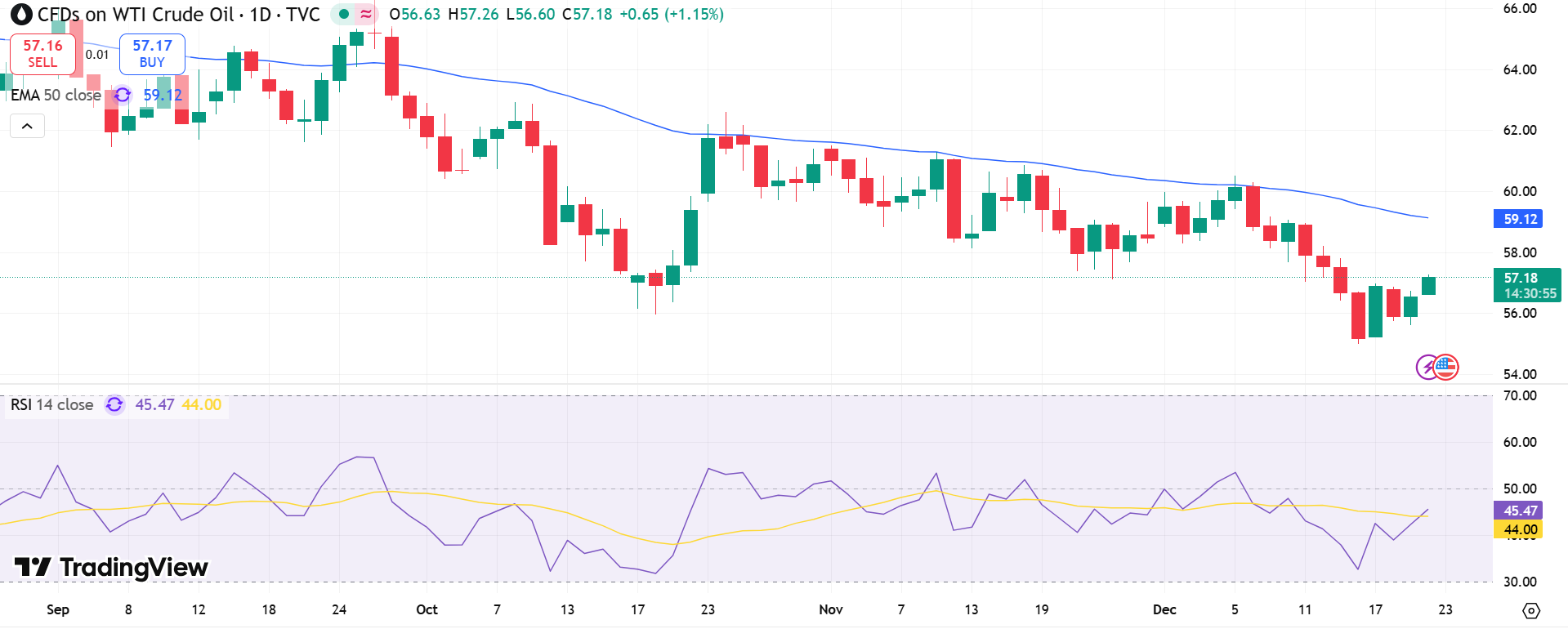
Despite Monday’s rebound, crude markets remain fragile. Brent and WTI fell about 1% last week, following a steeper 4% decline in the prior week, as traders weighed ample supply against uneven global demand.
Key factors shaping near-term oil prices include:
- Sanctions enforcement: Increased U.S. actions against Venezuelan tankers
- Geopolitical risk: Ongoing Russia-Ukraine conflict and maritime security threats
- Market positioning: A recent false downside break that caught traders off guard
- Fundamentals: Persistent concerns over global oversupply
While supply risks are back in focus, analysts caution that sustained gains will depend on whether geopolitical tensions escalate further or remain contained.

