

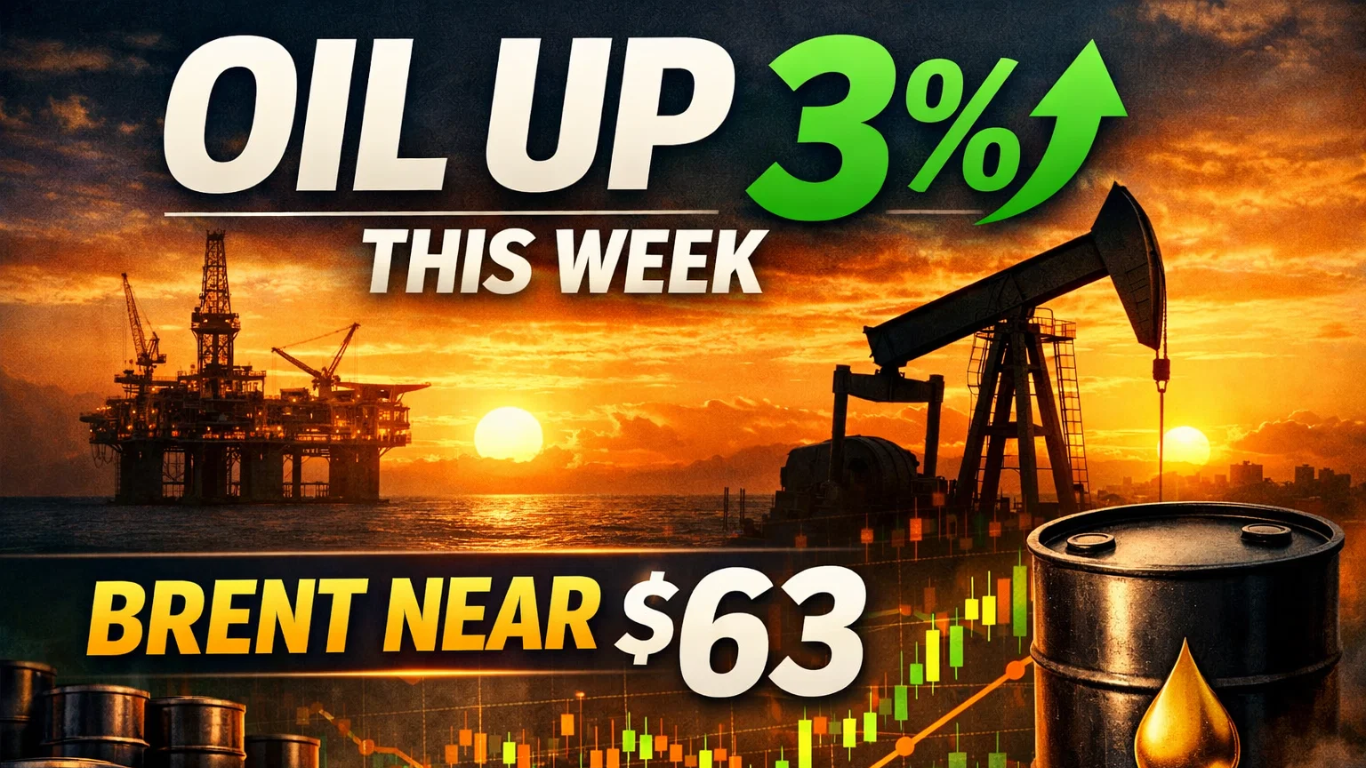
Oil prices advanced for a second consecutive session on Friday, extending a rebound that has put crude on track for its third weekly gain. Brent crude futures rose 1.3% to $62.82 a barrel, while U.S. West Texas Intermediate (WTI) climbed 1.3% to $58.52. The move followed a sharp rally a day earlier, when both benchmarks surged more than 3%, reversing losses from earlier in the week.
On a weekly basis, Brent is up about 2.7%, while WTI has gained roughly 1.4%. The rally reflects renewed concern over potential supply disruptions, even as markets remain aware of forecasts pointing to a broadly oversupplied oil market in 2026. For now, traders appear willing to look past surplus projections as geopolitical risk regains prominence.
Analysts note that the recent strength highlights how quickly oil sentiment can shift when physical supply risks emerge. Bottlenecks in sanctioned crude flows and steady near-term demand have helped stabilize prices after a volatile start to the year.
Venezuela and Iran Drive Geopolitical Premium
A central driver of the latest price gains has been uncertainty surrounding Venezuelan oil supply. Prices jumped after U.S. President Donald Trump announced the capture of Venezuelan President Nicolas Maduro and stated that Washington would take control of the country’s oil sector and exports. Venezuela holds the world’s largest proven crude reserves, and any disruption to its exports carries global implications.
Market participants are closely watching negotiations involving major energy firms and trading houses seeking U.S. government approval to export Venezuelan crude. Up to 50 million barrels are reportedly sitting in storage at state-run PDVSA, accumulated amid sanctions and tanker seizures. How, and how quickly, those barrels reach global markets could influence prices in the weeks ahead.
At the same time, unrest in Iran, another key producer, has added to supply anxiety. Protests across major cities and a reported nationwide internet blackout have raised questions about production stability. Broader concerns that geopolitical conflicts could spill over to threaten Russian oil exports have further supported a risk premium in crude prices.
Oversupply Risks Still Cap the Upside
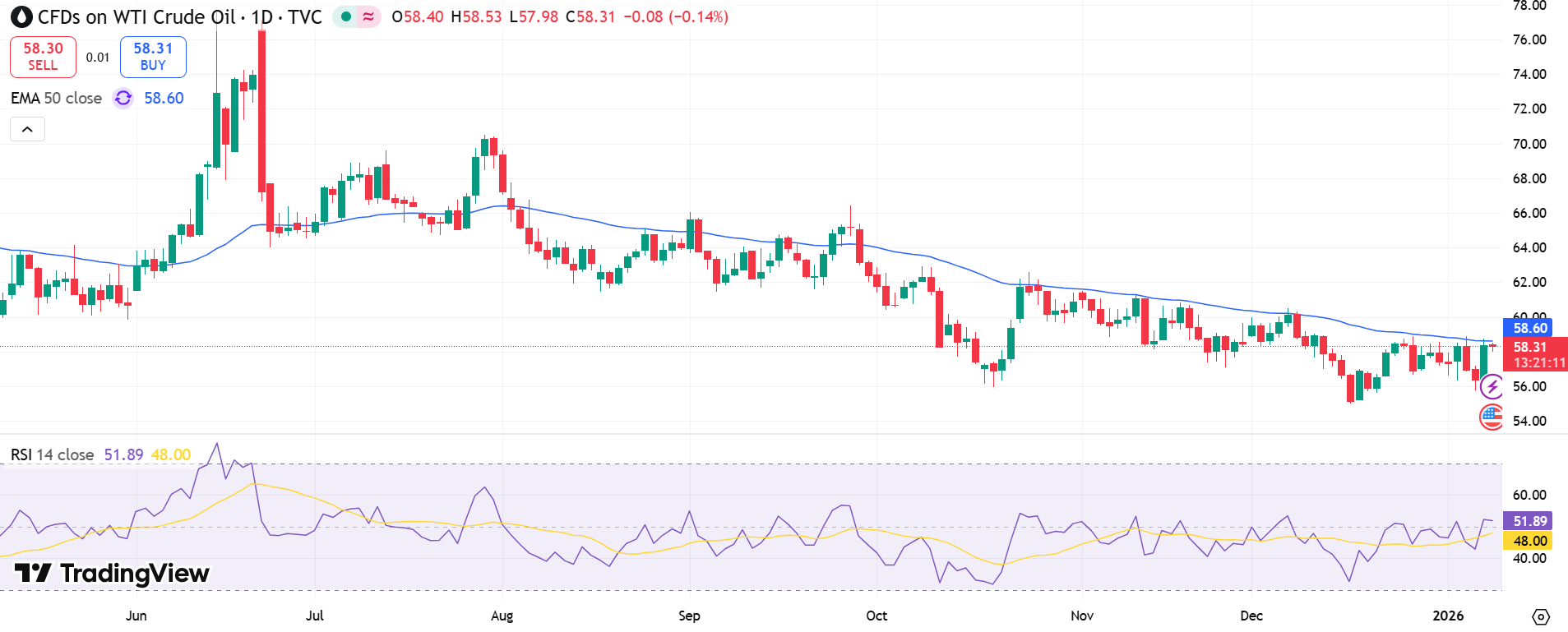
Despite the recent rally, analysts caution that rising global inventories remain a significant headwind. Unless geopolitical risks escalate further, gains may prove difficult to sustain.
Key factors shaping the near-term outlook include:
- Global inventories continuing to trend higher
- Sanctioned supply flows from Venezuela and Iran
- Demand resilience amid slowing global growth
- Policy signals from major producers and consuming nations
For now, oil markets are balancing structural oversupply risks against acute geopolitical uncertainty. The result is a fragile rebound—supported by fear of disruption, but vulnerable if supply ultimately reaches the market faster than expected.

