

Oil prices edged lower on Tuesday as traders reassessed the balance between geopolitical risk and a steadily weakening global demand outlook. Despite uncertainty surrounding sanctions on Russian crude, concerns over a widening supply surplus into 2026 continued to pressure the market.
Brent crude slipped 0.4% to $63.10 a barrel, while West Texas Intermediate fell 0.4% to $58.61 as of 0500 GMT. The pullback followed a 1.3% rise on Monday, driven by doubts over progress in Ukraine-Russia peace negotiations that could determine the future of sanctioned Russian exports.
Analysts noted that even if sanctions disrupt Russian supply, broader market conditions point toward weaker pricing power. Several forecasts indicate supply growth may outpace demand expansion next year, a trend that is already shaping traders’ expectations.
Russia Seeks New Buyers as Sanctions Bite
New sanctions targeting Russian oil giants Rosneft and Lukoil—along with restrictions on products refined from Russian crude—have forced several Indian refiners, including private major Reliance, to cut purchases of Russian barrels. With fewer options, Moscow is deepening energy ties with Beijing.
At a China-Russia business forum in Beijing, Deputy Prime Minister Alexander Novak confirmed active discussions aimed at expanding Russian crude exports to China. The shift underscores Russia’s attempt to redirect flows amid tightening Western restrictions.
Key supply-shift developments:
- Indian refiners scale back Russian crude purchases
- Russia accelerates pivot toward Chinese buyers
- Market anticipates more rerouted cargoes in 2025–26
Still, analysts warn that expanded Russian-Chinese trade will not offset the broader imbalance forming in the global oil market.
Analysts Flag a 2M Bpd Surplus in 2026
Deutsche Bank projects a 2026 crude surplus of at least 2 million barrels per day, noting no clear path back to deficits even by 2027. The bank’s assessment highlights structural demand softness and steady non-OPEC supply growth.
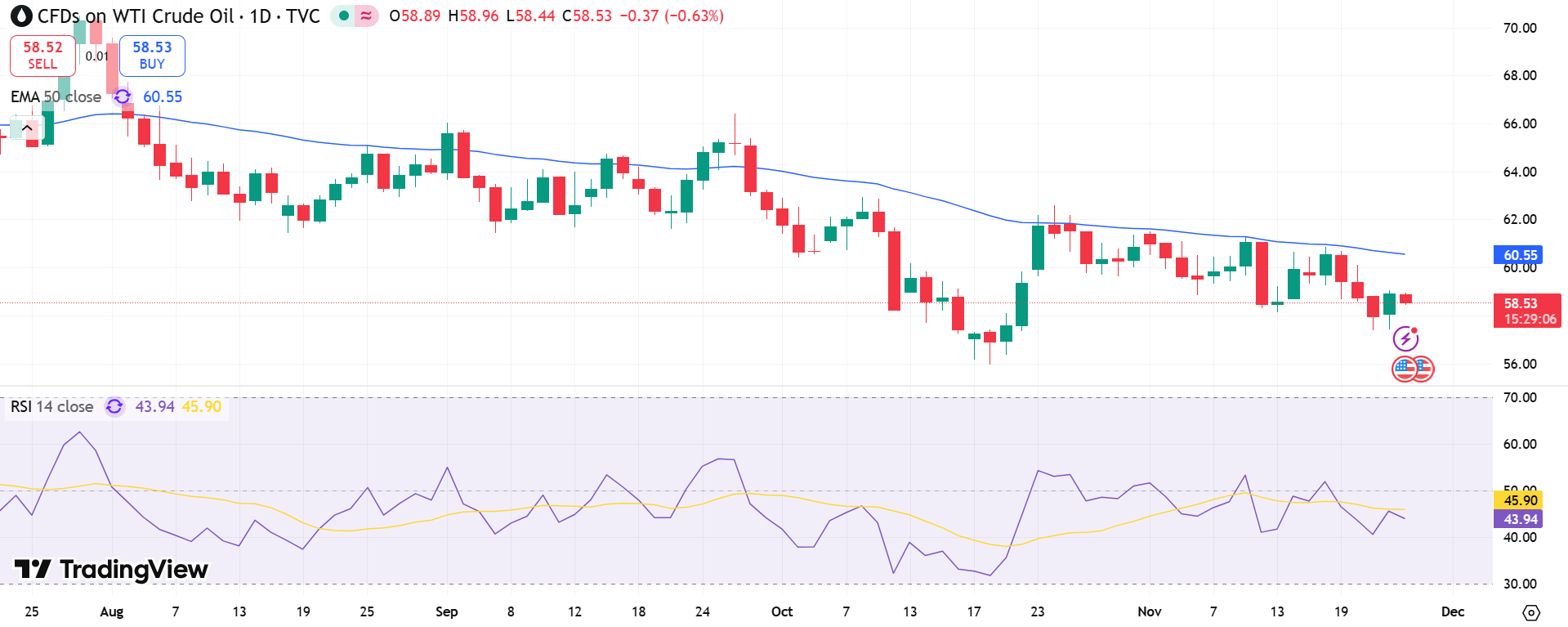
“The path forward into 2026 remains a bearish one,” analyst Michael Hsueh wrote, emphasizing that oversupply concerns now overshadow geopolitical risks tied to Ukraine-Russia negotiations. A peace deal could lift sanctions and release additional barrels—deepening the surplus.
Some support for oil persists as traders anticipate a U.S. Federal Reserve rate cut at the December 9–10 meeting, with officials signaling openness to easing. Lower rates often stimulate economic activity, potentially strengthening energy demand.
Yet, for now, markets remain caught in what analysts describe as a tug-of-war:
- Oversupply fears dominate the near-term outlook
- Demand hopes hinge on monetary easing and economic recovery
This imbalance keeps crude prices vulnerable as the industry braces for a challenging 2026.

