

Oil prices edged lower on Tuesday after Russia’s Novorossiysk export hub restarted loadings earlier than anticipated. The hub had been offline for two days following a Ukrainian missile and drone strike, briefly tightening global crude supply and driving prices higher. With operations now restored, traders shifted focus to the broader impact of Western sanctions targeting Russia’s energy sector.
By early Asian trade, Brent crude slipped 0.72% to $63.74 a barrel, while WTI fell 0.75% to $59.46. Analysts said the swift return of shipments removed the immediate risk premium that had lifted prices late last week.
Exports from Novorossiysk—and the nearby Caspian Pipeline Consortium terminal—represent roughly 2.2 million barrels per day, equal to about 2% of global supply. Their temporary shutdown pushed crude up more than 2% on Friday, highlighting just how sensitive the market remains to infrastructure disruptions.
Sanctions Pressure Adds to Longer-Term Market Uncertainty
While supply fears have eased, traders are increasingly focused on Western sanctions and their long-term effect on Russian oil flows. The U.S. Treasury reported that penalties imposed in October on Rosneft and Lukoil were already reducing Moscow’s energy revenues. Analysts expect Russian crude export volumes to gradually decline as restrictions tighten.
Market analysts say the sanctions climate is contributing to pricing distortions. ANZ Research noted that Russian barrels are now trading at deeper discounts to global benchmarks, reflecting buyers’ growing caution.
Key themes shaping sentiment include:
- Rising discounts on Russian crude amid sanctions
- Delays and rerouting of shipments due to compliance concerns
- Accumulating volumes on tankers as buyers assess legal risk
- Expectations that Russia will adapt, as it has in past sanctions cycles
Vivek Dhar of Commonwealth Bank of Australia said market anxiety stems largely from the “build-up of oil on tankers as buyers weigh the risk of breaching sanctions,” though he added that Russia has historically found ways to offset U.S. restrictions.
Policy Signals and Forecasts Point to Near-Term Price Pressure
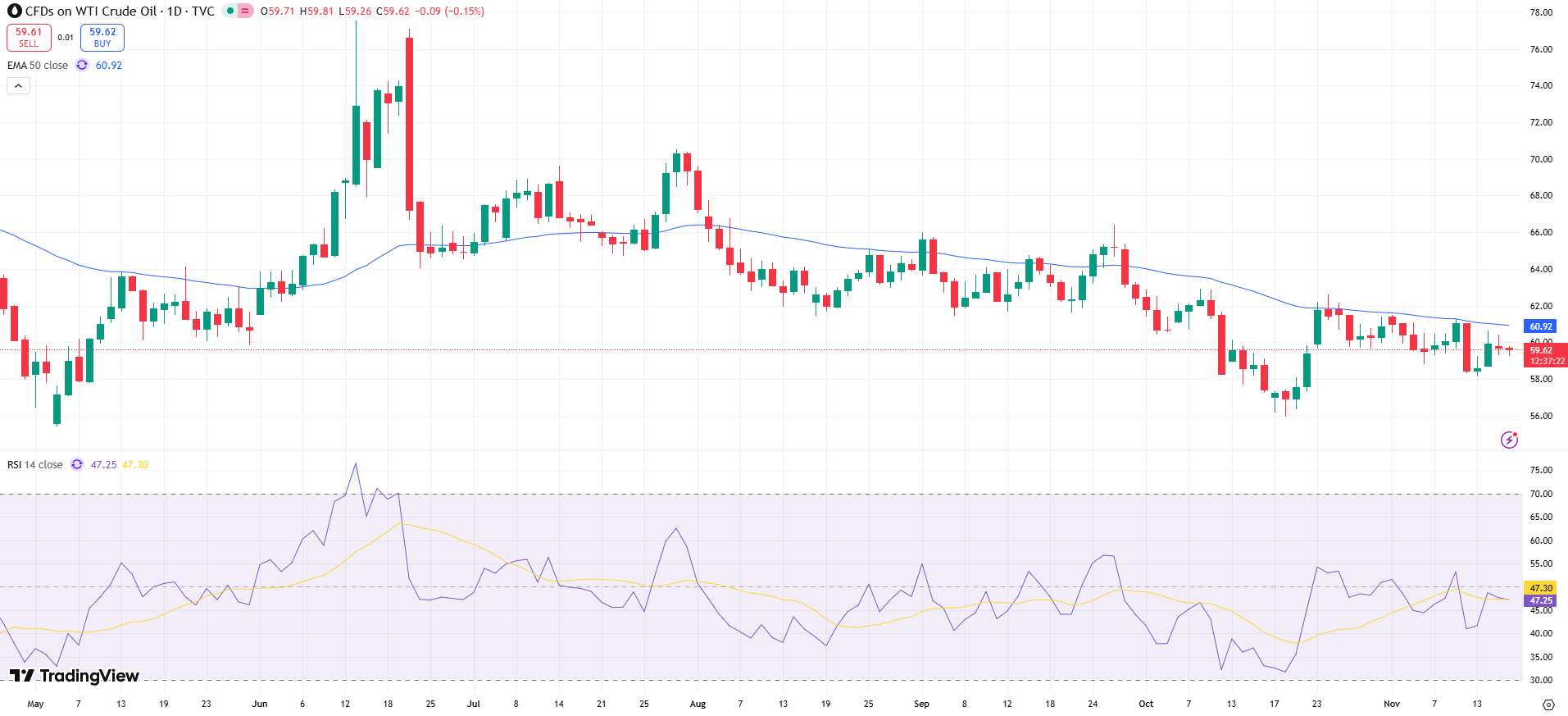
Political developments in Washington are also influencing the outlook. A senior White House official said President Donald Trump would back new Russia sanctions legislation provided he retains authority over enforcement. Over the weekend, Trump said Republicans were drafting a bill to penalize countries conducting business with Russia, with Iran potentially included.
Looking ahead, Goldman Sachs expects oil prices to decline through 2026, citing an incoming wave of supply that could keep the market in surplus. However, the bank noted that Brent may rise above $70 in 2026–2027 if Russian output drops more aggressively under sanctions pressure.
With short-term supply restored but long-term risks rising, the market appears set for continued volatility as traders balance geopolitical threats against a growing supply outlook.

