

Oil prices edged lower on Wednesday after new industry data signaled a notable rise in U.S. crude inventories, adding pressure to a market already wrestling with concerns of oversupply. The American Petroleum Institute reported an increase of 4.45 million barrels for the week ending November 14, while gasoline and distillate stocks climbed 1.55 million barrels and 577,000 barrels, respectively.
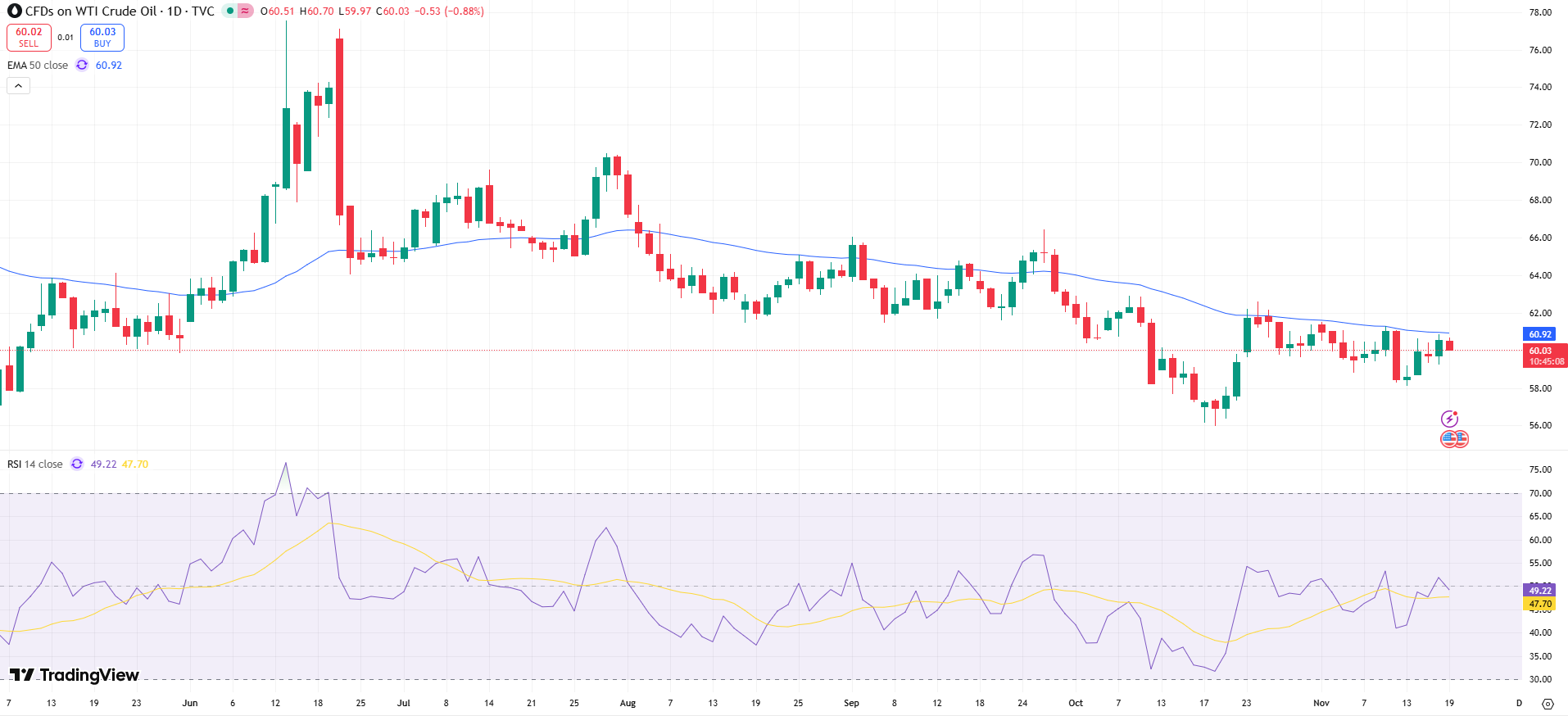
Brent crude futures slipped 0.68% to $64.45 a barrel, and U.S. West Texas Intermediate declined 0.76% to $60.28, partially reversing Tuesday’s gains. Traders said the pullback reflected a market recalibrating its expectations for near-term demand, particularly as global growth indicators remain mixed.
Despite the bearish inventory data, analysts noted that the broader energy market remains sensitive to supply risks, especially as geopolitical tensions and infrastructure disruptions weigh on refined product flows.
Russian Supply Risks Support Prices
A key factor limiting deeper price declines is the tightening effect of U.S. sanctions on Russian oil giants Rosneft and Lukoil. Companies have until November 21 to unwind dealings with the sanctioned firms, a deadline that is already reshaping global sourcing patterns. The U.S. Treasury said Monday that the measures—aimed at restricting Moscow’s oil revenue—are expected to further reduce its export volumes.
Refiners in China and India have begun shifting toward alternative suppliers, underscoring the sanctions’ early impact. Additional pressure emerged following recent Ukrainian strikes on Russian energy and port infrastructure. These attacks have contributed to a surge in Europe’s diesel margins, which on Tuesday hit their highest level since September 2023, reflecting tighter fuel availability.
Key supply-related dynamics currently shaping the market include:
- Sanctions reducing Russia’s export flexibility
- Disruptions supporting global diesel crack spreads
- Buyers diversifying suppliers amid compliance deadlines
Market Awaits Official U.S. Data
The market now turns to official U.S. government inventory figures due later Wednesday. A Reuters poll of eight analysts projects an average 600,000-barrel decline in crude stocks, a sharp contrast to API’s reported build. Any surprise draw could help stabilize prices in the short term, particularly as traders weigh forecasts that global output continues to exceed present consumption levels.
Analysts at ING noted that while the API report appeared “relatively bearish,” participants remain more focused on supply risks than the likelihood of prolonged surplus conditions. Diesel tightness, reduced Russian exports, and shifting trade flows continue to exert upward pressure on refined product markets, softening the impact of crude oversupply concerns.

