


Oil prices declined sharply on Tuesday as investors downgraded demand expectations, reacting to sustained tensions between the United States and China. The world’s two largest economies continue to clash over trade policy, raising concerns over global growth and energy consumption.
By 04:00 GMT, Brent crude futures had fallen $0.44, or 0.7%, to $65.42 per barrel, while U.S. West Texas Intermediate (WTI) crude slipped $0.40, or 0.6%, to $61.65. Both benchmarks lost more than $1 on Monday, marking their steepest two-day drop in nearly a month.
Analysts say the outlook for energy markets remains clouded by geopolitical risk and softening economic signals.
“There’s a clear lack of confidence in future oil demand,” said Priyanka Sachdeva, senior market analyst at Phillip Nova. “Until we see solid signs of demand recovery in China, downside pressure on prices is likely to persist.”
Global Growth Risks Hit Demand Forecasts
The escalating trade dispute is triggering concerns about a potential recession, with a Reuters survey of economists indicating a growing belief that tariffs could tip the global economy into contraction by year-end.
In response to prolonged uncertainty:
- Barclays cut its 2025 Brent forecast by $4 to $70 a barrel
- The bank also projected a 1 million bpd supply surplus this year
- Analysts expect reduced oil consumption in the U.S. and China
China, the world’s second-largest oil consumer, remains especially vulnerable to trade pressures. The imposition of tit-for-tat tariffs has dampened industrial activity, further weighing on energy demand forecasts.
Meanwhile, the U.S. administration’s broad tariff approach is exacerbating global supply chain disruptions, compounding pressure on economic expansion.
OPEC+ Eyes Output Hike as Stockpiles Rise
Adding to the bearish sentiment, OPEC+ may accelerate oil production increases for a second consecutive month in June, according to sources familiar with the group’s plans. A coordinated boost in output could exacerbate the current oversupply conditions.
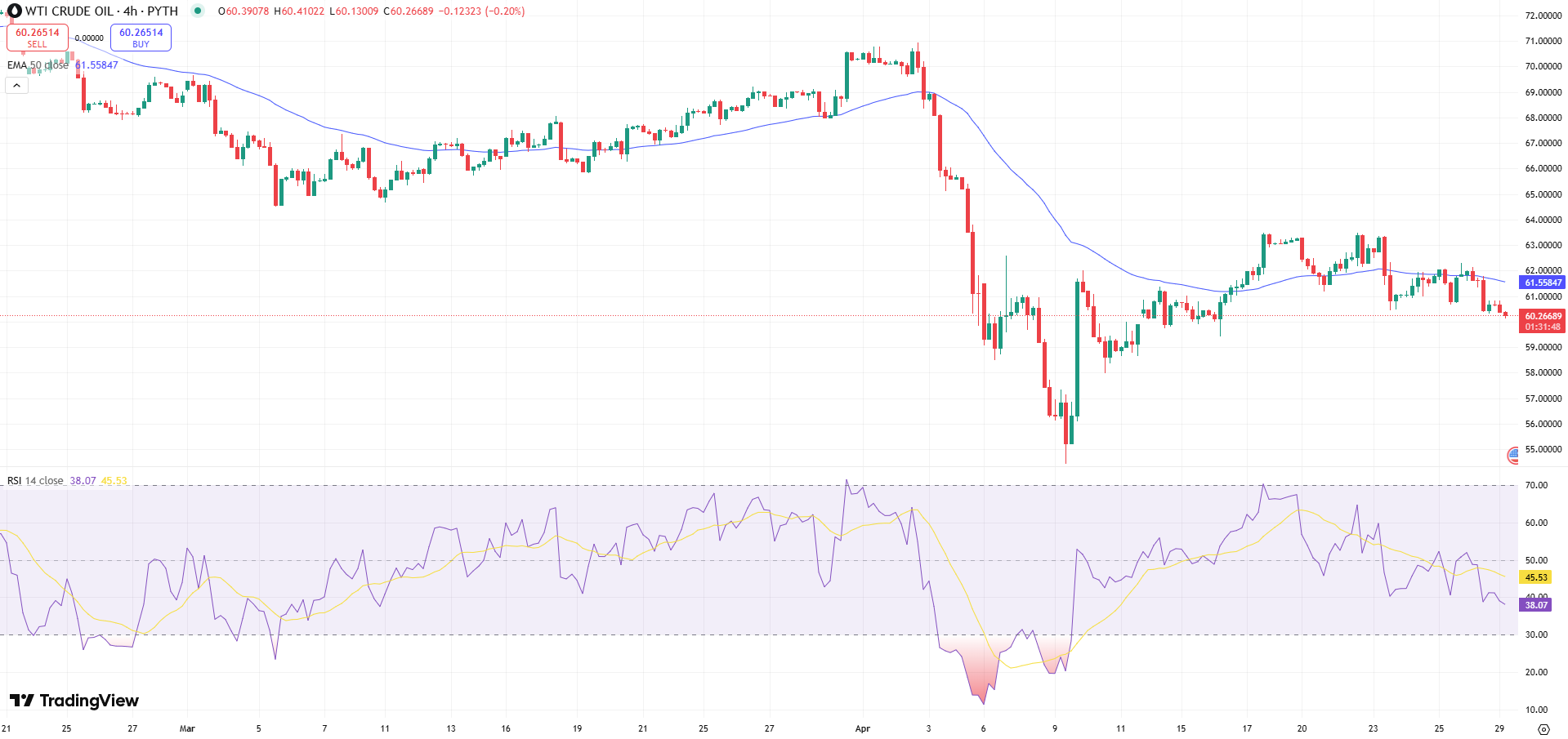
In the U.S., crude oil inventories are also expected to rise:
- Preliminary Reuters poll: +500,000 barrels for week ended April 15
- API report due Tuesday, followed by EIA data on Wednesday
Oil analyst Philip Verleger noted that “a significant price drop looks likely if key exporters follow through on expanded production plans.”
With no immediate resolution in sight for trade disputes and inventories ticking higher, crude oil markets face a turbulent second quarter. Traders remain cautious, bracing for more volatility ahead.

