

Oil prices edged lower on Wednesday after four consecutive sessions of gains, as fresh supply from Venezuela and rising U.S. inventories tempered bullish momentum. Still, mounting political unrest in Iran, a major OPEC producer, continues to inject a risk premium into global crude markets, preventing a sharper pullback.
Oil Prices Pause After Four-Day Rally
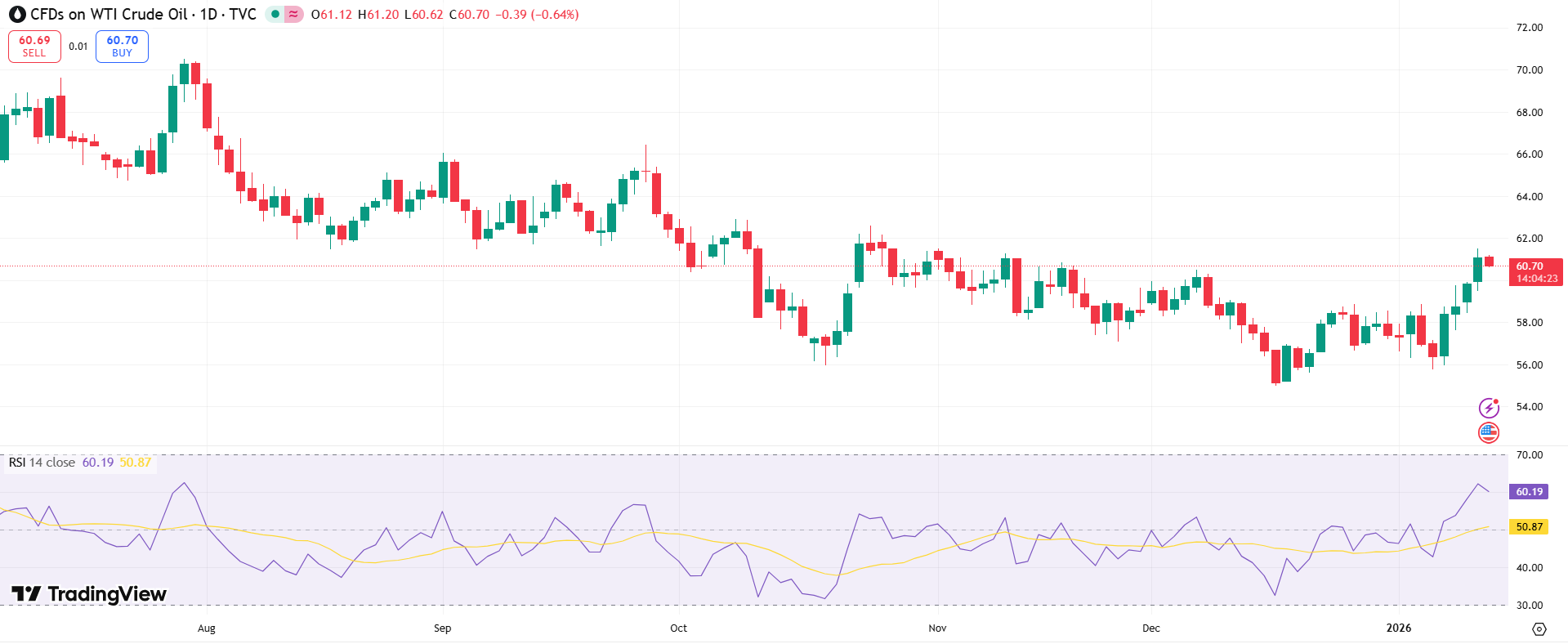
Brent crude futures slipped 0.3% to $65.27 a barrel, while U.S. West Texas Intermediate fell 0.4% to $60.92. The modest retreat followed a strong run-up driven by geopolitical anxiety, particularly in the Middle East and the Black Sea region.
Analysts note that much of the recent upside already reflects geopolitical concerns. According to DBS Bank, oil markets have priced in a significant risk premium linked to Iran-related tensions and recent drone activity affecting energy routes. Without clear evidence of supply disruptions, prices may struggle to extend gains in the near term.
At the same time, inventory data from the United States weighed on sentiment. The American Petroleum Institute reported that U.S. crude stocks rose by 5.23 million barrels in the week ended January 9. Gasoline inventories jumped by 8.23 million barrels, while distillate stocks increased by 4.34 million barrels, highlighting softer near-term demand in the world’s largest oil consumer.
Venezuela Exports and U.S. Stocks Weigh
Additional pressure came from Venezuela, where oil production cuts imposed under a U.S. embargo are being reversed. Three industry sources confirmed that crude exports have resumed, marking a notable shift in supply dynamics.
Key supply developments influencing prices include:
- Two supertankers leaving Venezuelan waters carrying about 1.8 million barrels each
- Early signs of a 50-million-barrel supply deal between Caracas and Washington
- Rising U.S. crude and fuel inventories, countering expectations of tighter balances
These developments suggest that incremental barrels are returning to the market at a time when demand growth remains uneven.
Iran Unrest Keeps Risk Premium Intact
Despite near-term supply relief, fears of disruption from Iran continue to underpin prices. The country, OPEC’s fourth-largest producer, has been gripped by intensifying anti-government protests. U.S. President Donald Trump publicly urged protesters to maintain pressure, adding to uncertainty over potential policy or military responses.
Citi analysts said the unrest raises the likelihood of tighter oil balances, primarily through an elevated geopolitical risk premium rather than immediate production losses. The bank raised its three-month Brent forecast to $70 a barrel, citing the potential for political and logistical frictions.
Crucially, protests have not yet spread to Iran’s core oil-producing regions. As a result, actual supply and export flows remain largely intact. For now, oil markets appear caught between improving supply conditions and persistent geopolitical threats—leaving prices range-bound but highly sensitive to the next headline.

