
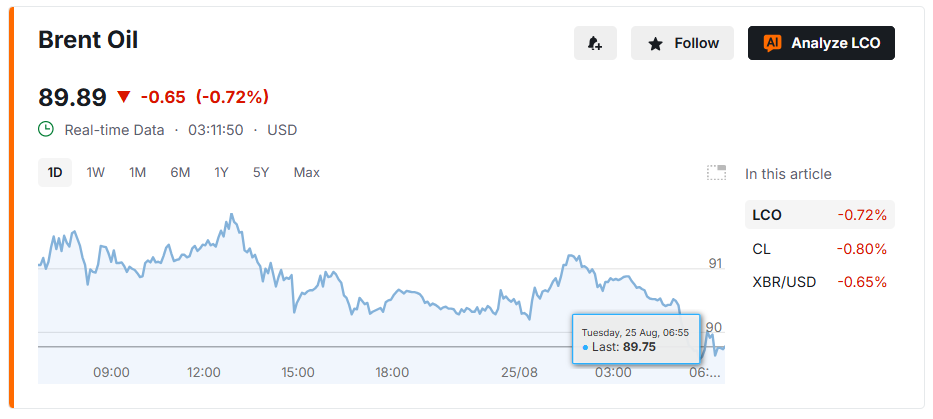
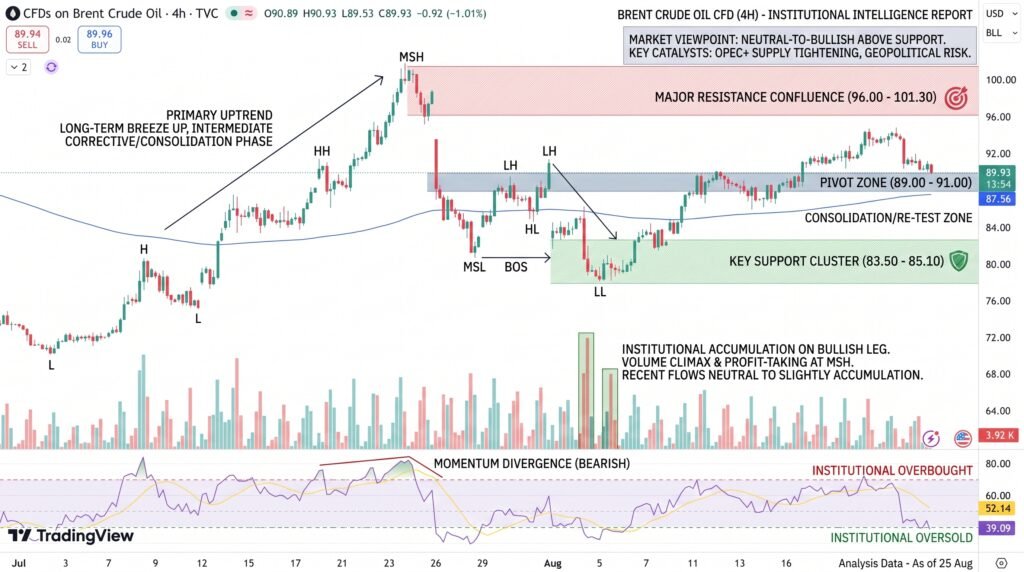
Oil extended its decline Tuesday, with Brent crude down 1% to $91.27 a barrel and WTI off 0.9% at $84.25, after both benchmarks settled more than 2% lower Monday. Treasury Secretary Scott Bessent unveiled expanded sanctions against Iran, but traders treated the move as incremental rather than disruptive, choosing instead to lock in gains from a rally that had pushed both contracts up more than 5% the prior week.
Sanctions Fail to Rattle Markets
Bessent’s announcement, dubbed “Operation Economic Outcast” internally at Treasury, targets nearly 60 individuals, entities and vessels tied to Iran’s oil, technology, gold, aviation and shipping sectors. Countries that continue trading with Tehran risk exclusion from the dollar-based financial system, though Bessent did not name specific targets or set a compliance deadline, giving governments time to wind down ties instead.
ING commodity strategists said the market is treating Washington’s push to pull trading partners away from Iran as marginal rather than market-moving. That reaction reflects a broader shift: with Defense Secretary Pete Hegseth declining to rule out military force while Washington leans toward economic pressure instead, analysts say the risk of a sudden strike on regional oil infrastructure has eased, even as the war between the U.S., Israel and Iran, now six months old, continues.
Tim Waterer, chief market analyst at KCM, said markets are pricing economic pressure as a lower-risk path for physical supply than direct military action, which explains why oil moved lower rather than spiking on the sanctions news. He cautioned, though, that Iran retains the ability to disrupt shipping, keeping a residual premium built into prices.
Hormuz Tensions Keep a Floor Under Prices
That risk turned concrete Tuesday: an oil tanker was disabled after being struck by an unidentified projectile roughly 9 nautical miles northeast of Oman’s Ash Shishah, according to the UK Maritime Trade Operations. The crew was reported safe, but the engine room was damaged.
Iran continues to assert control over the Strait of Hormuz, which historically carried cargoes equal to roughly 20% of global oil consumption before the war began. Iran’s newly formed Persian Gulf Strait Authority has now blacklisted 45 tankers accused of violating its crossing rules, threatening fines, detention or cargo confiscation, and warning that ships conducting transfers with those vessels face the same penalties.
Key figures behind the current supply squeeze:
- U.S. Strategic Petroleum Reserve stocks fell 3.7 million barrels last week to 289.7 million barrels, the lowest level since November 1982
- The drawdown is part of a wider 172-million-barrel release agreement tied to the conflict
- Roughly 8 million barrels a day are still crossing Hormuz, per U.S. Energy Secretary Chris Wright, thanks to Navy-escorted transits
Conclusion
Tuesday’s pullback reflects profit-taking, not a change in the underlying risk picture. Sanctions alone haven’t moved the market, but Hormuz remains the wildcard: every tanker incident and blacklist update tests whether Iran will convert its threats over the strait into a genuine supply disruption.
Sources & Methodology
Primary-source standard: Market-moving facts should link to original data releases, regulator notices, company filings or official project announcements whenever available. Secondary reporting is used for additional context, not as a substitute for original evidence.
Page last reviewed: