
Oil prices jumped more than 3% Monday after U.S. forces struck Iranian rocket launchers near the Strait of Hormuz, and Iran retaliated with missile strikes on U.S. bases in Jordan, reviving fears that renewed hostilities could disrupt crude shipments through the key waterway.
As of 04:38 ET, Brent Oil Futures rose 3.2% to $90.91 a barrel, while Crude Oil WTI Futures gained 3.1% to $86.02, with both benchmarks extending gains after opening higher.
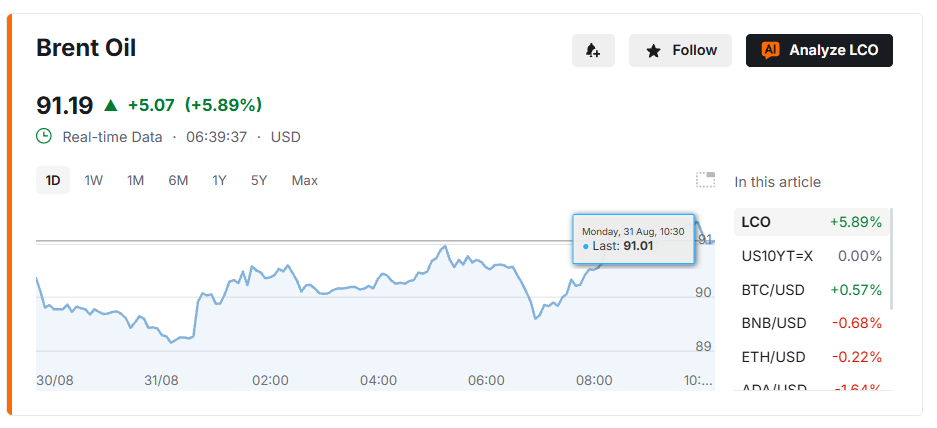
U.S. Strike Near Hormuz Sparks the Rally
The gains followed a U.S. military operation Sunday against two Iranian launchers on Larak Island, near the Strait of Hormuz, marking the first known American strikes on Iran since late July. A U.S. official reportedly said Islamic Revolutionary Guard Corps forces had been observed preparing to launch rockets carrying sea mines into the waterway, a tactic that could threaten one of the world’s busiest oil shipping routes.
Iran responded with missile strikes on U.S. forces stationed in Jordan, according to a Fox News report citing a U.S. source. The report said nearly all incoming missiles had been intercepted and there had been no significant impact so far. Still, the exchange has raised the stakes for a region that ships a substantial share of the world’s crude.
Why the Strait of Hormuz Matters So Much
“The key is whether this ignites further rounds of strikes from both sides, and whether it leaves shippers hesitant to navigate the Strait of Hormuz,” ING analysts said in a note. Regional producers had grown more comfortable moving crude through the chokepoint in recent weeks, with an average of 5 million barrels a day transiting the strait, but analysts warned further escalation could put those flows under renewed pressure.
A few figures underline the strait’s importance to global supply:
- 5 million barrels a day currently transit the Strait of Hormuz
- Brent rose 3.2% and WTI gained 3.1% in Monday’s session
- The Larak Island strikes mark the first known U.S. action against Iran since late July
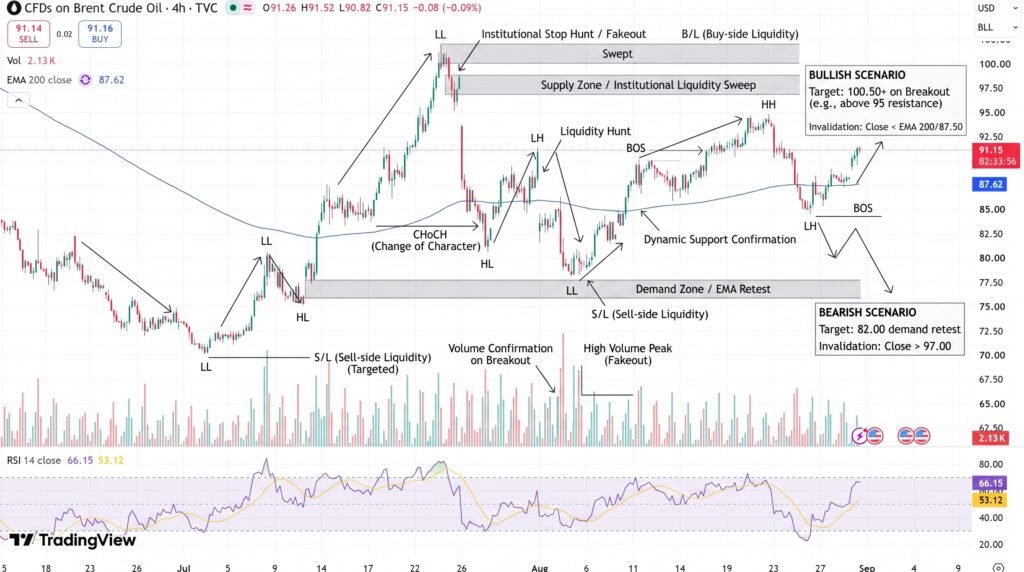
Escalation Risk Keeps Markets on Edge
Oil markets have stayed highly sensitive to Middle East developments throughout the year, with Brent repeatedly swinging on shifting expectations for military escalation, ceasefire negotiations, and the outlook for sustained shipping through Hormuz. Earlier this month, doubts over progress toward a U.S.-Iran peace agreement pushed Brent to its highest closing level since late July, as Iran maintained the strait would stay closed unless Washington changed its approach.
Attention is also turning to broader supply developments after President Donald Trump said Sunday that Washington would begin replenishing the Strategic Petroleum Reserve using oil obtained under a new agreement with Venezuela, a move that could offset some of the geopolitical risk premium building into prices.
Sources & Methodology
Primary-source standard: Market-moving facts should link to original data releases, regulator notices, company filings or official project announcements whenever available. Secondary reporting is used for additional context, not as a substitute for original evidence.
Page last reviewed: