
Oil prices extended losses on Tuesday as investors reduced bets on major supply disruptions after signs of diplomatic engagement between the United States and Iran. As reported by Investing.com and CNN, easing geopolitical tensions triggered another wave of selling after crude benchmarks had already recorded their biggest one-day decline in months.
Oil Fell More Than 9% As Diplomatic Hopes Grew
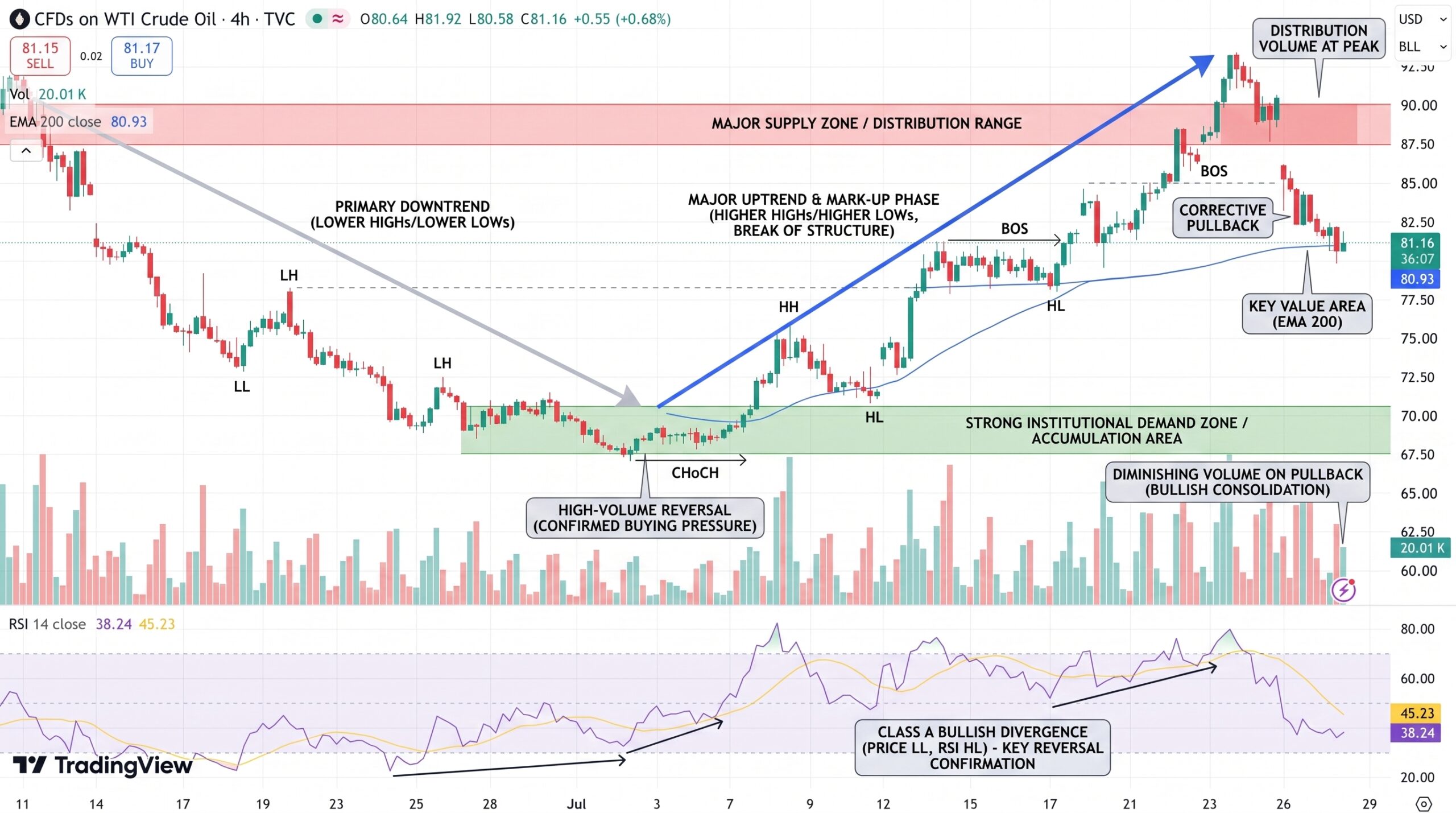
According to Investing.com, Brent crude futures fell 1.3% to $87.24 per barrel, while U.S. West Texas Intermediate (WTI) crude declined 1.2% to $81.61 per barrel during Asian trading. The decline followed a more than 9% selloff in the previous session as traders unwound the geopolitical premium built into oil prices during last week’s Middle East tensions.
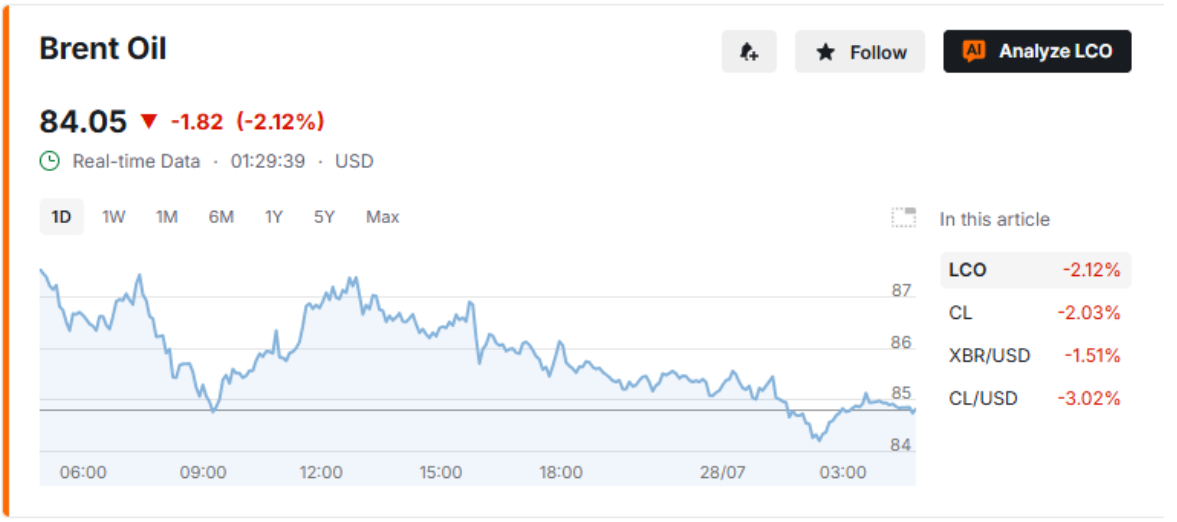
Brent crude had briefly traded above $100 per barrel last week as fears grew that military escalation could disrupt crude exports from the Middle East. Those gains have largely been erased after diplomatic signals reduced immediate supply concerns.
CNN reported that President Donald Trump said the United States paused additional strikes on Iran to allow diplomacy another opportunity but warned military action could resume if negotiations fail. Iran’s Foreign Ministry, however, said there are no current negotiations with Washington and rejected suggestions that the United States could dictate the timing of war or peace.
Why Oil Prices Fell Despite Ongoing Risks
The sharp decline reflected investors removing the “geopolitical risk premium” that had lifted oil prices during the conflict.
According to Investing.com, IG market analyst Tony Sycamore said the market is increasingly pricing in an “off-ramp” from the conflict, reducing fears of attacks on Middle East energy infrastructure.
Despite improving sentiment, shipping risks remain. Tanker traffic through the Strait of Hormuz and the Bab el-Mandeb Strait has yet to return to normal levels. The Strait of Hormuz carries around 20% of global oil shipments, making it one of the world’s most important energy trade routes. Any renewed attacks or failed negotiations could quickly push oil prices higher again.
Brent Reversed From Above $100 As Supply Risks Eased
Oil prices surged throughout last week after military tensions raised fears that crude exports from the Gulf region could be disrupted. Brent climbed above $100 per barrel before reversing sharply once the United States paused strikes and Iran suspended retaliatory attacks.
Diplomatic efforts have also expanded beyond Washington and Tehran. According to Investing.com, Iran and Oman continue discussions aimed at restoring safe navigation through the Strait of Hormuz, while reports indicate China has encouraged renewed diplomatic engagement between both sides.
On the supply side, Kazakhstan’s main export route also resumed operations. The Caspian Pipeline Consortium restarted tanker loadings after earlier disruptions caused by Ukrainian drone attacks, easing concerns about near-term global crude supplies.
Markets Watch U.S.-Iran Talks And Strait Of Hormuz
Markets will closely monitor whether diplomatic contacts develop into formal negotiations between the United States and Iran. Investors will also track shipping activity through the Strait of Hormuz and any developments affecting Saudi oil infrastructure.
Separately, CNN reported that President Trump is scheduled to meet Ukrainian President Volodymyr Zelensky and Israeli Prime Minister Benjamin Netanyahu, with discussions expected to focus on the wars in Ukraine and the Middle East. Any change in regional security conditions could quickly influence oil prices.
Sources & Methodology
Primary-source standard: Market-moving facts should link to original data releases, regulator notices, company filings or official project announcements whenever available. Secondary reporting is used for additional context, not as a substitute for original evidence.
Page last reviewed: