
Oil prices jumped more than 3% on July 29 after the United States and Saudi Arabia conducted joint precision strikes on Iran-aligned militia sites in eastern Iraq. The operation followed more than 30 IRGC-directed drone attacks on US forces and Saudi energy infrastructure. Iran claimed a ballistic missile strike on US positions, which CENTCOM said was fully intercepted, while risk-off sentiment pressured US stock futures and Bitcoin.
US-Saudi jets strike Iran-backed sites after 30+ drone attacks in 72 hours
US Central Command and the Saudi Armed Forces struck multiple logistics and weapons sites used by Iran-backed groups, including elements of Iraq’s Popular Mobilization Forces (PMF). CENTCOM described it as a response to over 30 drone attacks in 72 hours and the first publicly announced joint US-Saudi operation of its kind.
Iraqi PMF reported casualties, with some outlets citing eight members killed and others wounded. Iran denied directing the drones targeting Saudi oil facilities. Iran’s IRGC later claimed ballistic missiles targeted the Muwaffaq Salti Air Base in Jordan and other US positions; CENTCOM stated all were intercepted. Houthis condemned the Iraq strikes. Iran also rejected Oman’s 50-50 shared-control proposal for the Strait of Hormuz, demanding greater authority over transit lanes.
Oil Climbs 3.8–3.9% as Brent Nears $87.40, WTI Hits $82 Zone on Hormuz Risk
Brent crude rose about $3.15–$3.30 (roughly 3.8–3.9%) toward $87.24–$87.39 a barrel, while West Texas Intermediate climbed $2.73–$3.05 (about 3.4–3.8%) to the $82 area, as reported by Reuters. Traders priced in heightened risk of wider conflict disrupting supplies through the Strait of Hormuz, which handles roughly one-fifth of global oil trade. US crude inventories had also fallen about 3.3 million barrels the prior week.
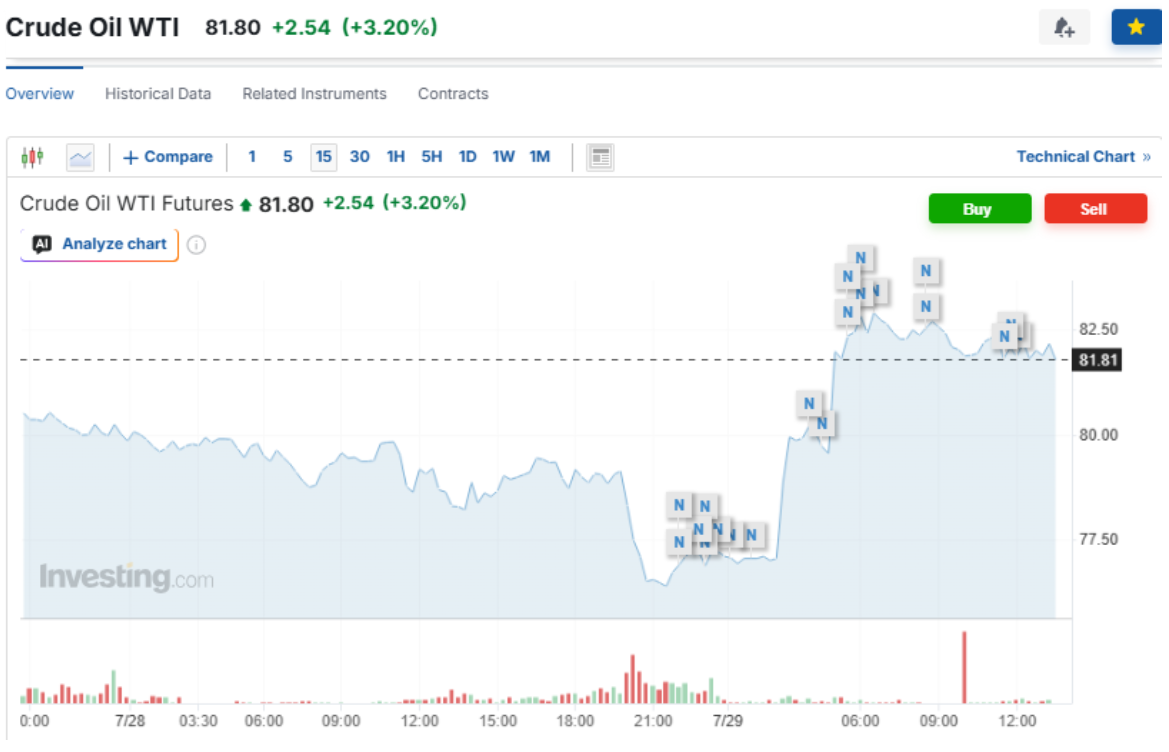
Risk aversion erased earlier stock-futures gains. Bitcoin slipped amid the broader risk-off move, consistent with its recent sensitivity to oil-driven inflation and rate expectations.
Oil Peaked Above $100 in July After 600+ Militia Attacks on US Targets
The strikes occur during a pause in direct US-Iran exchanges intended to allow diplomacy after months of heightened conflict, including earlier Iranian missile attacks on bases hosting US troops (such as prior hits on Muwaffaq Salti that caused US fatalities). From February to April 2026 alone, Iran-aligned militias attempted more than 600 attacks on US personnel and facilities in Iraq. Ongoing proxy activity, Houthi actions, and disputes over Hormuz have kept energy markets volatile throughout the year.
Oil Could Hold Near $80 Floor if Escalation Resumes, Markets Watch Hormuz Talks & Fed
Markets will watch whether the pause holds or further retaliation resumes, alongside Oman-Iran talks on Hormuz navigation and the Federal Reserve’s policy decision. Sustained escalation could keep a higher floor under oil near $80 even in partial de-escalation scenarios, analysts note. Diplomatic progress or renewed strikes will drive the next price moves.
Sources & Methodology
Primary-source standard: Market-moving facts should link to original data releases, regulator notices, company filings or official project announcements whenever available. Secondary reporting is used for additional context, not as a substitute for original evidence.
Page last reviewed: