
Oil prices extended gains Monday as renewed U.S.-Iran attacks involving vessels increased concerns about a prolonged disruption to Middle Eastern crude supplies. The latest escalation has placed commercial shipping at the center of the market’s supply concerns as traders assess whether weaker tanker traffic through the Strait of Hormuz could lead to tighter global oil availability.
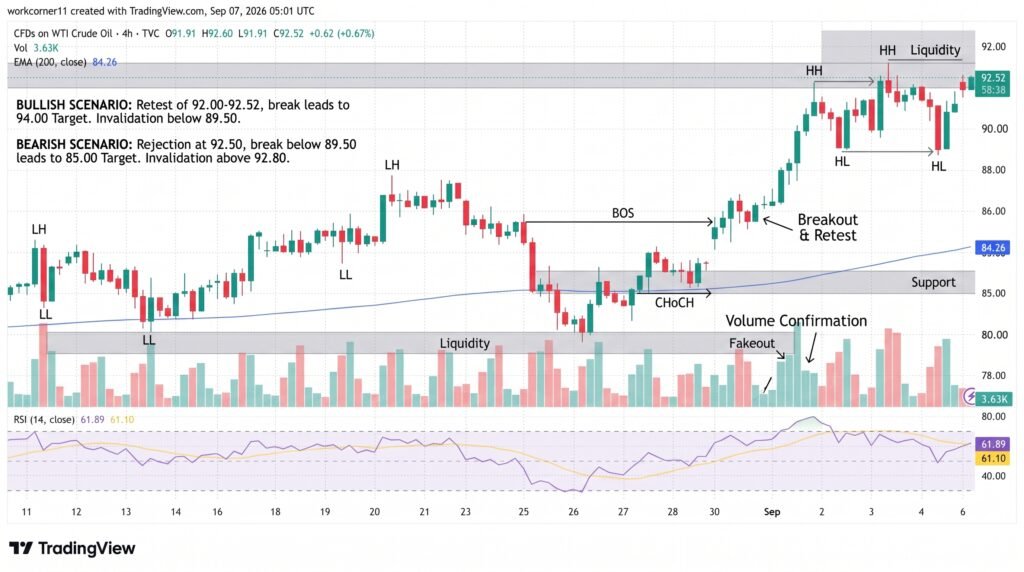
Brent crude futures climbed 79 cents, or 0.82%, to $97.07 a barrel by 0512 GMT. U.S. WTI crude rose 80 cents, or 0.87%, to $92.28 a barrel.
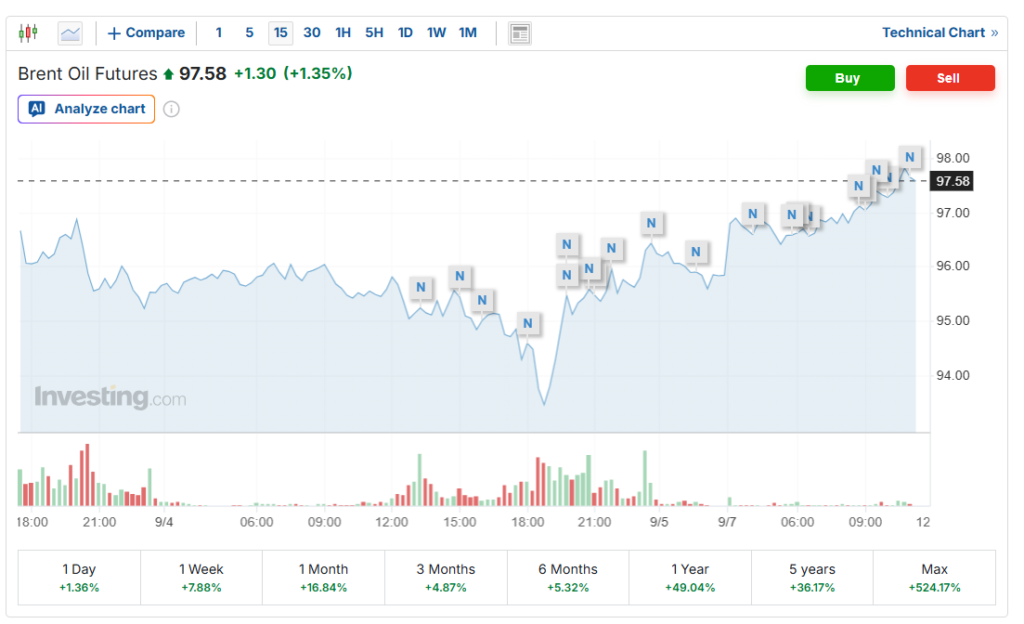
Brent gained 7.8% last week, while WTI rose nearly 10%, after renewed fighting between the United States and Iran disrupted oil movements through the Strait of Hormuz. The waterway historically carried about one-fifth of global oil supply, making changes in tanker traffic an important indicator for the global oil supply outlook.
Hormuz traffic falls to May low
U.S. forces struck three Iranian oil tankers on Saturday, according to U.S. Central Command. One of the vessels was hit near Kharg Island, close to Iran’s major oil-export hub. The strikes followed Iranian attacks on U.S. Navy ships, according to U.S. officials.
Iran’s Islamic Revolutionary Guard Corps Navy said it had targeted three oil tankers traveling through routes it considered unauthorized in the Strait of Hormuz, along with three U.S. vessels in other areas. Maritime intelligence firm Marisks described the weekend attacks as a major escalation in the maritime conflict.
The impact is already visible in shipping data. Kpler showed that an average of only 10 commodity ships per day crossed the Strait of Hormuz during the 10 days through Sunday, the lowest level since May. The 10-day average had been above 15 earlier in the week.
The main market figures are:
- Brent crude: $97.07 a barrel
- WTI crude: $92.28 a barrel
- Brent weekly gain: 7.8%
- WTI weekly gain: nearly 10%
- Hormuz traffic: 10 commodity ships per day
Phillip Nova’s Priyanka Sachdeva said a material slowdown in tanker traffic could cause the market to price in a significantly larger supply shock. Iran has also said a restricted zone outside the Strait of Hormuz will be announced in the coming days, according to Iranian state media.
OPEC+ keeps October output steady
The supply response remains limited after OPEC+ agreed on Sunday to keep its October oil-output policy unchanged. The group is still working on new production quotas before determining its next steps.
OPEC+ has completed the rollback of a 1.65 million-barrel-per-day voluntary production cut introduced in 2023, according to Reuters. However, higher production targets cannot immediately solve a shipping bottleneck if tankers continue avoiding the Strait of Hormuz.
The group is also preparing for a broader review of production capacity and quotas for 2027. Its next scheduled meeting is October 4.
ANZ analysts expect Middle Eastern exports to remain constrained through the rest of 2026, followed by a gradual reopening late in the fourth quarter. They said a return to pre-conflict oil throughput may not occur until late Q1 or early Q2 2027.
Conclusion
Crude oil prices are extending their advance as U.S.-Iran attacks increase risks for commercial shipping through the Strait of Hormuz. Brent at $97.07 and WTI at $92.28 reflect growing concern over the reliability of Middle Eastern exports. The decline in Hormuz traffic to its lowest 10-day average since May provides a measurable sign of the disruption, while OPEC+ has left October policy unchanged. The next major price driver will be tanker traffic. If shipments continue falling, supply concerns could push crude higher; a sustained recovery in traffic would reduce the risk premium built into prices.
Sources & Methodology
Primary-source standard: Market-moving facts should link to original data releases, regulator notices, company filings or official project announcements whenever available. Secondary reporting is used for additional context, not as a substitute for original evidence.
Page last reviewed: