Oil prices rose on Friday as renewed U.S.-Iran hostilities increased concern that disruptions to energy shipments through the Strait of Hormuz could persist.
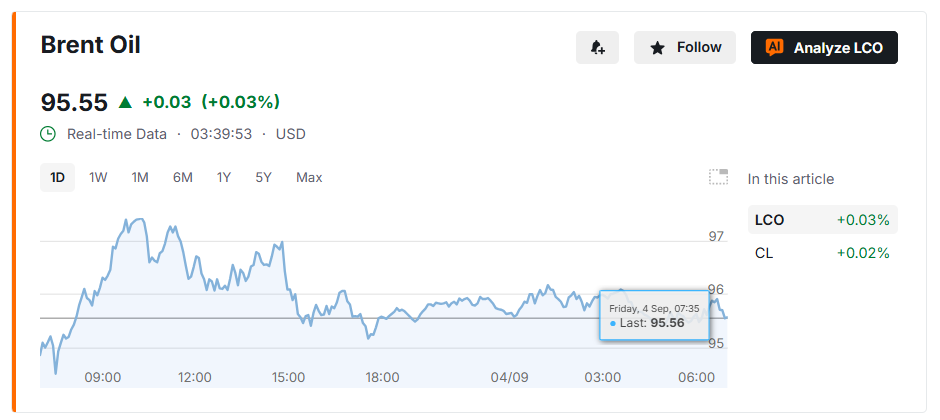
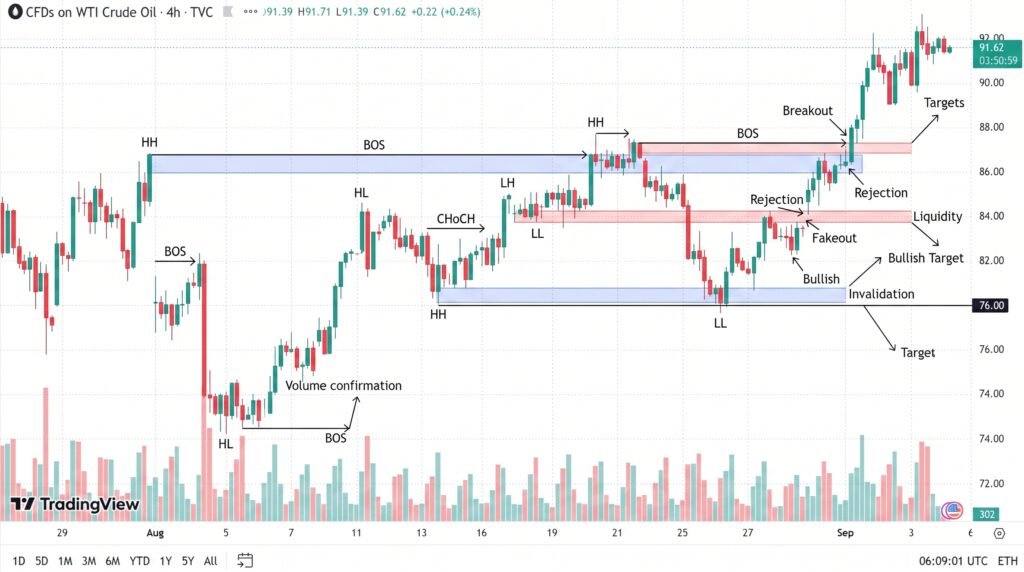
The latest Reuters market report put Brent crude at $96.06 a barrel, up 7.6% for the week, while U.S. WTI crude stood at $92.10, a 10.4% weekly gain. Both benchmarks were heading toward their strongest weekly increases since mid-July.
The weekly advance followed a sharp rise earlier in the week. Brent settled above $94 a barrel on Tuesday after climbing more than 4%, while WTI also posted a gain above 5%. The moves followed renewed U.S. strikes on Iranian military targets and concerns that Tehran could further restrict commercial shipping through Hormuz.
The oil market is responding primarily to the possibility of reduced physical supply rather than higher demand. If tanker movements through Hormuz remain constrained, crude exports from Gulf producers could take longer and become more expensive to deliver.
That risk has become more significant because Iran’s conflict with the United States has already altered shipping patterns across the region.
Hormuz keeps supply risks elevated
The Strait of Hormuz is the critical transit route connecting the Persian Gulf with global energy markets. Shipping data showed only four commodity vessels crossed the waterway on Tuesday, compared with a 10-day average of about 13. The number is preliminary because vessels can switch off tracking transponders, but the decline illustrates the disruption facing commercial operators.
At the same time, the amount of oil physically moving through Hormuz has not fallen to zero. U.S. Energy Secretary Chris Wright said approximately 17 million barrels crossed the strait on Monday, the highest daily volume since the conflict reduced transit activity.
This creates a more complicated market than a complete closure scenario. Oil can continue moving, but fewer available vessels and greater security risks can reduce the effective capacity of the route.
Iran has also expanded restrictions on international shipping, increasing uncertainty for tanker operators. Two Saudi oil supertankers were attacked inside the strait earlier this week, adding to concerns about the safety of commercial vessels.
Meanwhile, Iran’s own crude exports have been severely constrained. Reuters reported that the country has gone roughly seven weeks without meaningful crude exports through Hormuz, reflecting the extent of the disruption.
The main supply variables are:
- Brent: $96.06 a barrel
- WTI: $92.10 a barrel
- Hormuz oil transit: About 17 million barrels on Monday
- Tuesday vessel transits: Four versus a 10-day average near 13
Inventories and OPEC+ add support
Falling U.S. inventories are providing another source of support for crude oil prices. The Energy Information Administration reported that commercial crude stocks declined by 4.5 million barrels in the week ended August 28 to 424.5 million barrels. Stocks remained about 1% above the five-year average, but the weekly draw reduced available domestic supplies.
The U.S. Strategic Petroleum Reserve provides another layer of supply protection, although its inventory remains far below the levels held before the previous major replenishment cycle. Market participants are therefore watching government inventories alongside international flows.
OPEC+ is also scheduled to meet on Sunday. Reuters sources expect the group to leave its October production policy unchanged after completing the latest stage of its phased rollback of production cuts.
OPEC+ had approved an increase of about 188,000 barrels per day from September, completing the unwinding of one layer of voluntary reductions. However, actual production and exports have not fully matched quotas because conflicts in Iran and Ukraine have disrupted supply from several members.
That limits the ability of nominal production increases to offset an abrupt loss of Middle Eastern shipping capacity. Iraq, however, is adding barrels. Its exports reached 2.34 million barrels per day in August, with September shipments expected to increase further.
The result is a market where geopolitical risk, inventories and producer policy are moving in different directions. Additional U.S.-Iran escalation could push crude higher quickly, while stronger exports or reduced military activity could take some pressure off prices.
Conclusion
Oil is heading toward its strongest weekly gain since mid-July as renewed U.S.-Iran fighting raises the risk of prolonged disruption to crude shipments through the Strait of Hormuz. Brent near $96 and WTI above $92 reflect that supply concern. Lower U.S. inventories and limited OPEC+ flexibility add support, while higher Iraqi exports provide some offset. The key question is whether the conflict materially reduces physical oil flows. A sustained decline in Hormuz traffic would increase supply pressure, while restored shipping and easing tensions could pull prices lower.
Sources & Methodology
Primary-source standard: Market-moving facts should link to original data releases, regulator notices, company filings or official project announcements whenever available. Secondary reporting is used for additional context, not as a substitute for original evidence.
Page last reviewed: