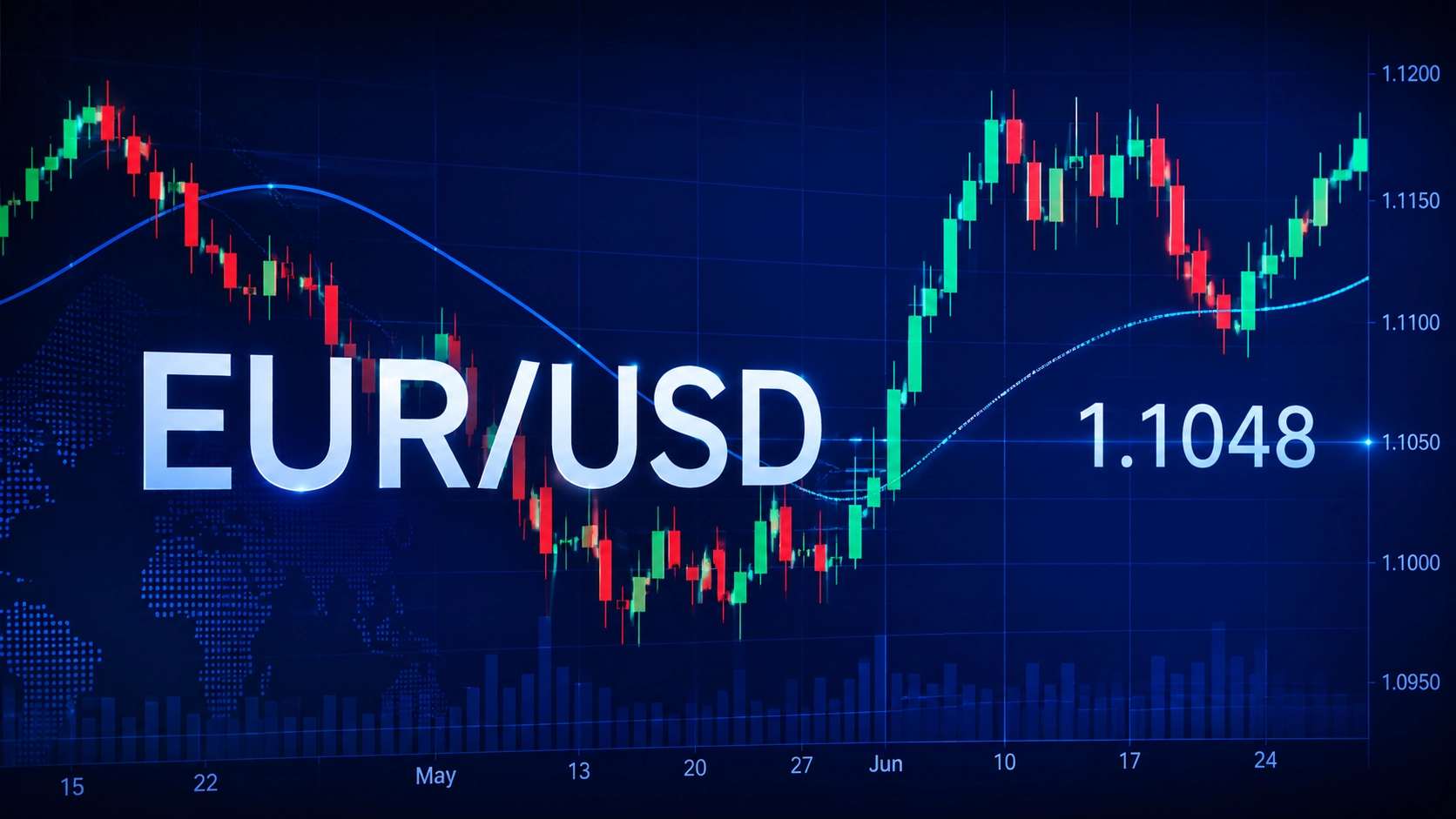
The EUR/USD pair is holding around 1.1630 after a strong rebound on Thursday, as heavy selling in the U.S. dollar improved demand for the euro. The pair remains above its 100-day simple moving average at 1.1564, keeping the immediate technical bias moderately positive ahead of the August U.S. nonfarm payrolls report.
The recovery followed comments from Federal Reserve Governor Christopher Waller, who said he could support keeping interest rates unchanged at the September 15-16 meeting if incoming inflation data continue to show progress toward the Fed’s 2% target. Waller did not rule out a rate increase if price pressures strengthen again.
The U.S. Dollar Index was trading near 99.00, close to Thursday’s low, reflecting the dollar’s recent decline against major currencies. The move has helped EUR/USD recover from its recent weakness.
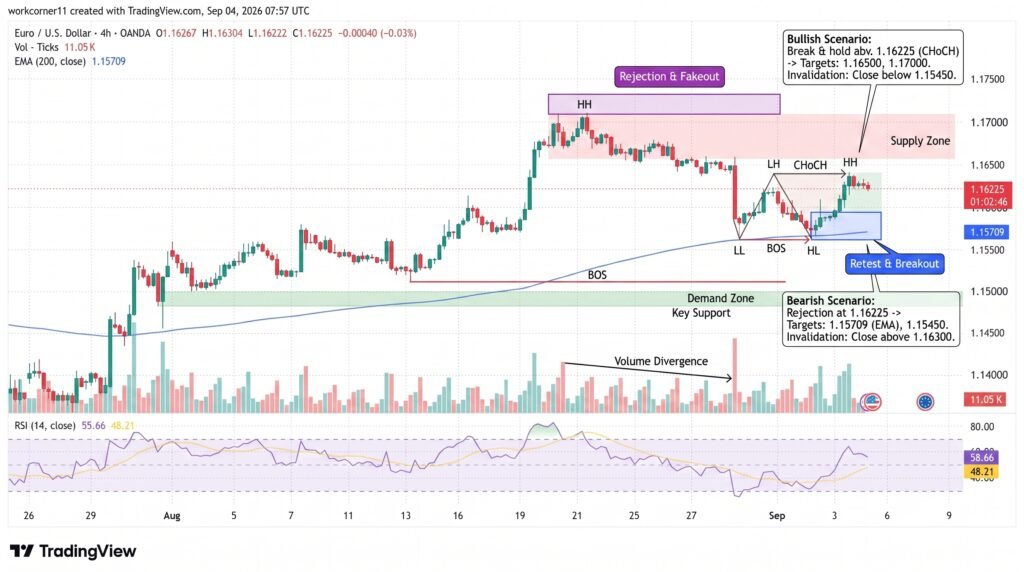
The 100-day SMA remains the main technical reference. Price holding above the average indicates that buyers have retained control of the recent rebound, although the pair still needs to clear higher resistance before the broader recovery can be considered established.
The relative strength index is around 57, showing positive momentum without entering overbought territory. That leaves room for additional gains if the dollar remains under pressure.
1.1564 support keeps bulls active
The 1.1564 100-day SMA is the first important support level. A daily close below that average would weaken the current structure and could expose the pair to the recent lows around the mid-1.15 area.
On the upside, 1.1630 is an important near-term hurdle because the pair has struggled to build momentum above this region. A sustained move higher would bring the August high near 1.1720 into focus, while a failure at current levels would keep EUR/USD inside its recent trading range.
The technical map remains relatively straightforward:
- Current price: Around 1.1630
- 100-day SMA: 1.1564
- RSI: Around 57
- August high: Around 1.1720
The pair is also navigating a cluster of moving averages. FXStreet’s latest analysis previously identified the 200-day SMA near the 1.1630 area as an important longer-term technical barrier. Reclaiming that average would strengthen the recovery, while rejection there would leave the broader outlook less certain.
That makes the current level a technical decision point rather than a confirmed breakout.
NFP and Fed policy drive direction
Friday’s U.S. nonfarm payrolls report is the next major catalyst for EUR/USD. Investors are watching the data for evidence on whether the U.S. labor market is slowing enough to reduce pressure for another Federal Reserve rate increase.
Private-sector hiring already showed signs of weakness. The latest ADP Employment Report showed employers added only 38,000 jobs in August, below expectations. However, the ADP report can diverge materially from the government’s monthly payrolls estimate, making the official NFP release more important for currency traders.
The market response could be asymmetric. FXStreet reports that analysts expect a stronger payroll number to provide only limited dollar support unless it is followed by firm inflation data. A softer employment result, meanwhile, could reduce September rate-hike pricing and weigh further on the dollar.
Next week’s U.S. inflation report will therefore remain important even after the payrolls release. Waller has made clear that August inflation data will be central to his September policy decision.
The euro also has domestic support from expectations for tighter European Central Bank policy. Recent market pricing has increasingly favored an ECB rate hike this month, while German economic data have provided some support for the eurozone growth outlook. German July factory orders rose 2.5%, well above the expected 0.3% increase.
The combination of a softer dollar, changing Fed expectations and potential ECB tightening gives EUR/USD a constructive backdrop. The pair still needs to hold above 1.1564 and clear resistance near 1.1630-1.1720 to establish a stronger upward trend.
Conclusion
EUR/USD has recovered to around 1.1630 after a sharp dollar decline, with the 100-day SMA at 1.1564 providing a clear technical support level. RSI near 57 confirms positive but controlled momentum. A sustained break above 1.1630 would strengthen the recovery and put the August high near 1.1720 in focus, while a close below 1.1564 would weaken the setup. Friday’s U.S. NFP is the immediate catalyst, but the Federal Reserve’s September decision will also depend heavily on next week’s inflation data. The euro’s outlook is therefore closely tied to the relative paths of Fed and ECB policy.
Sources & Methodology
Primary-source standard: Market-moving facts should link to original data releases, regulator notices, company filings or official project announcements whenever available. Secondary reporting is used for additional context, not as a substitute for original evidence.
Page last reviewed: