
Oil prices edged lower on Thursday as investors assessed the risk that renewed U.S.-Iran military action could disrupt crude supplies while also watching signs that the latest escalation may not develop into a broader campaign.
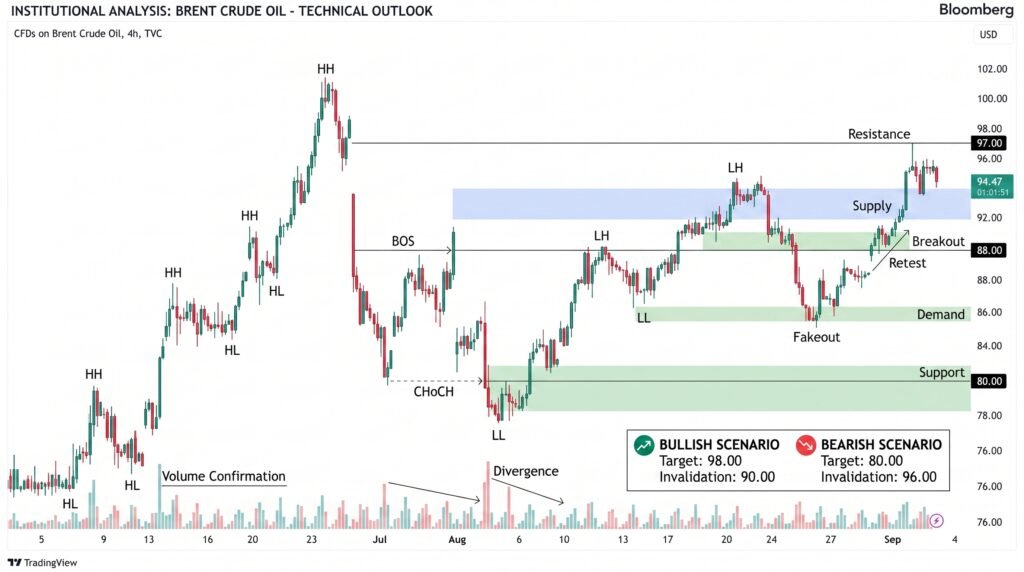
Brent crude fell 59 cents, or 0.6%, to $95.04 a barrel, while U.S. WTI crude dropped 38 cents, or 0.4%, to $90.63. Both benchmarks had moved sharply during the previous session, with prices swinging by roughly $2 as traders responded to changing military and shipping developments.
The decline followed a much stronger move earlier in the week. Brent settled at $94.65 on Tuesday after gaining 4.6%, while WTI climbed 5.2% to $90.22. The advances pushed both benchmarks to their highest settlement levels since July 24 as renewed strikes increased concern over physical supply.
The market is now balancing two opposing forces. Further U.S.-Iran escalation could restrict oil flows and drive crude higher, while any reduction in military activity could remove part of the geopolitical premium built into prices.
Hormuz remains the main supply risk
The Strait of Hormuz remains the most important supply variable. The waterway connects the Persian Gulf with global shipping routes and is critical to crude exports from several major oil-producing states.
On Monday, about 17 million barrels of oil passed through Hormuz, according to U.S. Energy Secretary Chris Wright. Reuters reported that this was the highest volume recorded since the conflict began disrupting regional shipping.
The latest flow highlights an important distinction for the market: military tensions do not automatically mean a large and permanent reduction in global oil supply. Prices will face more sustained pressure if restrictions prevent tankers from moving crude for an extended period.
Shipping remains difficult, however. Iran has expanded restrictions on vessels that do not comply with its requirements, increasing uncertainty for tanker operators and cargo owners. At the same time, alternative supply from producers outside the immediate conflict zone is helping reduce some of the pressure.
Iraq is one example. Its oil exports rose to 2.34 million barrels per day in August, and further increases were expected in September, according to Reuters.
Several factors are therefore shaping the crude market:
- Brent: $95.04 a barrel
- WTI: $90.63 a barrel
- Hormuz traffic: 17 million barrels on Monday
- Iraq exports: 2.34 million barrels per day in August
Traders assess the next escalation
President Donald Trump said the United States had carried out a heavy attack against Iranian radar and missile systems and remained prepared for further action. At the same time, there had been no confirmed new escalation since midday Wednesday when the latest Reuters market report was published, helping limit the immediate rise in crude prices.
The next direction for oil will depend increasingly on whether the conflict affects actual production, exports or shipping volumes. A strike on energy infrastructure or a sustained reduction in tanker traffic through Hormuz would present a direct threat to global supply.
In contrast, continued shipments through the waterway, stronger exports from other producers and reduced military activity could ease the market’s supply concerns.
The U.S. market is also receiving support from tighter domestic inventories. Government data showed U.S. crude stocks fell by 4.5 million barrels in the latest reporting week, providing another factor supporting prices even as geopolitical uncertainty dominates trading.
Higher oil prices also have implications beyond the energy market. A prolonged increase in crude can raise transportation, manufacturing and other operating costs, potentially adding to inflation and complicating decisions by central banks.
For now, traders remain focused on the connection between military developments and physical oil flows. Headlines can move prices quickly, but a sustained change in supply will determine whether Brent remains around $95 or moves substantially higher.
Conclusion
Oil prices are slipping after a strong three-session advance, but Brent near $95 and WTI above $90 show that supply concerns remain significant. The Strait of Hormuz is still the central risk because prolonged disruption could remove large volumes of crude from international markets. Continued shipments, higher Iraqi exports and easing military tensions could limit further gains. The market’s next major move will depend less on individual headlines and more on whether U.S.-Iran hostilities cause a lasting reduction in oil production, exports or tanker traffic.
Sources & Methodology
Primary-source standard: Market-moving facts should link to original data releases, regulator notices, company filings or official project announcements whenever available. Secondary reporting is used for additional context, not as a substitute for original evidence.
Page last reviewed: