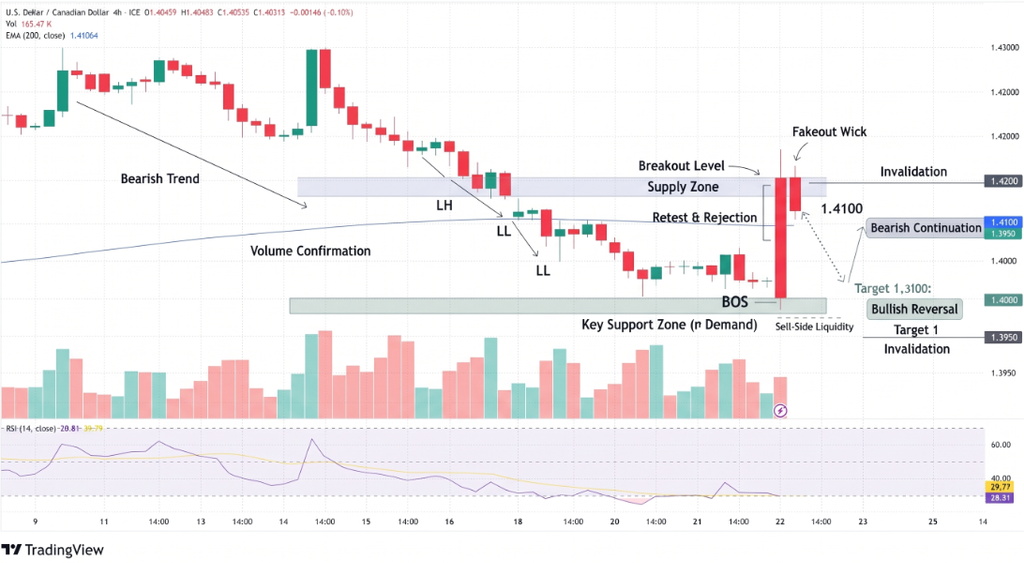
The Canadian dollar strengthened against its U.S. counterpart on Thursday, pushing USD/CAD toward 1.4040 and extending the pair’s decline to a sixth consecutive session. Rising crude oil prices supported the commodity-linked Canadian currency as escalating Middle East tensions raised concerns about global energy supplies. However, uncertainty surrounding Federal Reserve policy and Canada’s comparatively subdued economic outlook could limit further gains. Traders are assessing whether stronger oil prices can sustain the Canadian dollar’s advance despite differences in growth prospects and interest-rate expectations across North America.
Oil Rally Strengthens Canadian Dollar
Crude oil prices advanced after a drone strike targeted Saudi Aramco’s Shaybah oil field, killing two people, according to reports. The attack intensified concerns about regional security and potential disruptions to energy infrastructure. Brent crude rose $1.93 to $110.75 a barrel, while West Texas Intermediate climbed $1.43 to $98.58 on Thursday, Reuters reported. These gains provided fresh support for the Canadian dollar.
Canada exports substantial volumes of crude oil, making its currency sensitive to changes in global energy prices. Higher oil prices can improve export revenues and the country’s terms of trade, potentially increasing demand for Canadian dollars.
Geopolitical developments elsewhere also contributed to market uncertainty. Iranian Foreign Minister Abbas Araghchi called on Washington to lift its naval blockade and demonstrate a genuine commitment to diplomacy, while Ukraine carried out drone attacks against Russian oil infrastructure.
The main factors influencing the Canadian dollar include:
- Crude oil: Higher prices can support Canadian export earnings.
- Geopolitical risk: Supply disruptions may sustain energy-price volatility.
- Monetary policy: Differences between expected U.S. and Canadian interest rates can influence capital flows.
USD/CAD Faces Diverging Growth Outlooks
Despite the recent decline in USD/CAD, Canada’s economic outlook remains a potential headwind for its currency. Societe Generale strategists have highlighted the widening growth gap between the United States and Canada, arguing that stronger U.S. economic momentum could favour the greenback over time.
The International Monetary Fund’s October 2026 outlook projects U.S. economic growth of approximately 2.1% in 2027, compared with 1.7% for Canada. The projections suggest that the Canadian economy may expand more slowly than its southern neighbour, potentially limiting the currency’s longer-term strength.
Interest-rate differentials are another important consideration. When U.S. short-term yields exceed Canadian yields, dollar-denominated assets may become more attractive to investors. Conversely, narrowing yield differences can reduce support for USD/CAD.
Fed Outlook Keeps Currency Traders Alert
Investors are also monitoring the Federal Reserve ahead of its next policy meeting. Fed Chair Kevin Warsh offered limited guidance on the timing of potential future rate increases in recent remarks, leaving markets uncertain about the policy outlook.
Higher U.S. interest rates generally support the dollar by increasing the returns available on American assets. A more cautious Fed stance, however, could weaken that advantage and provide additional room for the Canadian dollar to appreciate.
Conclusion
USD/CAD’s six-session decline toward 1.4040 reflects the Canadian dollar’s sensitivity to rising oil prices and intensifying geopolitical risks. Nevertheless, the widening U.S.-Canada growth gap and uncertainty over Federal Reserve policy complicate the outlook. Traders will likely focus on crude prices, interest-rate expectations and incoming economic data to determine whether the pair’s decline can continue.
Sources & Methodology
Primary-source standard: Market-moving facts should link to original data releases, regulator notices, company filings or official project announcements whenever available. Secondary reporting is used for additional context, not as a substitute for original evidence.
Page last reviewed: