
USD/JPY closed around 157.41 after reversing earlier intraday losses, as the Japanese yen came under renewed pressure from the absence of fresh foreign-exchange intervention. Japan’s Ministry of Finance reported that authorities conducted zero yen-dollar intervention between Aug. 27 and Sept. 28, according to data released Sept. 30.
The latest figures are important because the yen remains sensitive to the wide interest-rate gap between Japan and the United States. Elevated U.S. Treasury yields can support demand for the dollar, while traders continue to monitor whether Japanese officials will respond if yen weakness becomes more pronounced.
Yen Pressure Builds Without Intervention
The Japanese Ministry of Finance reported zero foreign-exchange intervention during the latest reporting period. The data cover Aug. 27 through Sept. 28 and follow a major coordinated operation earlier in the year.
The absence of intervention removes one potential source of immediate support for the yen. At the same time, the market remains focused on the Bank of Japan and its monetary-policy outlook, particularly as Japanese officials continue to monitor currency-market volatility.
The dollar-yen pair has remained elevated as U.S. yields stay comparatively high. Higher U.S. yields can increase the relative return available from dollar-denominated assets, a factor that can influence foreign-exchange flows.
The latest move therefore reflects more than a single intervention headline. Traders are balancing interest-rate expectations, official currency policy and the possibility of renewed action if exchange-rate movements accelerate.
U.S. Yields Keep Dollar Supported
The interest-rate differential remains central to the USD/JPY story. When U.S. Treasury yields rise relative to Japanese yields, the incentive to hold dollar assets can increase, potentially keeping upward pressure on the currency pair.
The market is also watching Japanese policy signals closely. Any change in expectations for Bank of Japan rate policy could affect the yen through shifting yield differentials.
Meanwhile, Japan’s latest intervention data provide a clear reference point: authorities reported no operations during the Aug. 27-Sept. 28 period. That does not rule out future intervention, but it confirms that no purchases or sales of foreign currency were recorded during that window.
South Korea is facing a separate bond-market adjustment. Authorities have said they could conduct emergency government-bond buybacks if yields rise excessively and could reduce planned issuance using part of an expected 63.2 trillion won tax-revenue surplus.
Korea Signals Bond-Market Support
South Korea’s latest measures underline the broader pressure facing Asian fixed-income markets as global borrowing costs remain elevated. Government officials said emergency buybacks could be deployed if movements in Korean Treasury yields become excessive.
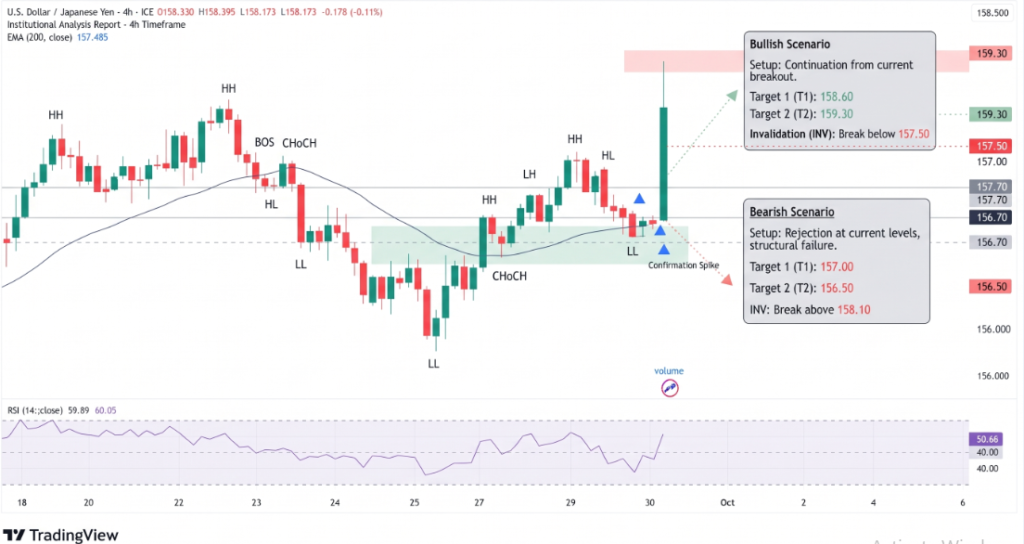
Recent market data show Korean yields easing after the government’s announcement. Investing.com’s government-bond data showed the South Korea 2-year yield near 3.982%, the 10-year near 4.399% and the 30-year near 4.526% in its latest available snapshot.
Key market points include:
- USD/JPY: 157.41 in the cited UOB market update
- Japan FX intervention: ¥0 during Aug. 27-Sept. 28
- Korean tax-revenue surplus: 63.2 trillion won
- Policy response: Potential emergency bond buybacks
Conclusion
USD/JPY remains near 157.41 as the yen faces pressure from the absence of recent Japanese FX intervention and relatively high U.S. yields. Japan’s Ministry of Finance has confirmed no intervention during the latest reporting period, while South Korea has signaled bond-market support measures as yields remain elevated. The next major drivers for the dollar-yen pair will include U.S.-Japan yield differentials, Bank of Japan policy expectations and any fresh signals from Japanese authorities on currency-market stability.
Sources & Methodology
Primary-source standard: Market-moving facts should link to original data releases, regulator notices, company filings or official project announcements whenever available. Secondary reporting is used for additional context, not as a substitute for original evidence.
Page last reviewed: