Gold and silver climbed to fresh record highs on Friday, extending a powerful rally fueled by geopolitical strain, a weakening U.S. dollar, and renewed investor demand for safe-haven assets. The move underscores how quickly capital is rotating toward defensive positions as global uncertainty intensifies late in the year.
Spot gold rose 0.6% to $4,506.76 per ounce, after touching an intraday record of $4,530.60, while U.S. gold futures for February delivery gained 0.7% to $4,537.55. The metal is on track for a weekly gain of nearly 3%, reflecting steady inflows from both institutional and retail investors seeking protection against macroeconomic risks.
Silver outpaced gold, surging more than 4% to a record $75.14 per ounce, bringing its weekly advance above 7%. The sharp move highlights silver’s dual role as both a defensive asset and a key industrial input, particularly in electronics and renewable energy supply chains.
Geopolitical Risks Drive Safe-Haven Demand
Escalating geopolitical developments have played a central role in lifting precious metals. Market participants reacted to increased U.S. pressure on Venezuela’s oil exports, a move that has raised concerns about supply disruptions and regional instability in Latin America.
Tensions were further amplified after U.S. officials confirmed military strikes targeting militant groups in Nigeria, signaling a broader willingness to engage in multiple geopolitical theaters. These events have reinforced demand for assets traditionally viewed as stores of value during periods of uncertainty.
Key factors supporting safe-haven flows include:
- Rising geopolitical flashpoints across energy-producing regions
- Concerns over global supply-chain disruptions
- Thin holiday trading conditions amplifying price swings
- Strong investment inflows into precious metals funds
Limited market liquidity has magnified daily moves, allowing relatively modest inflows to push prices sharply higher.
Weak Dollar and Rate Bets Add Momentum
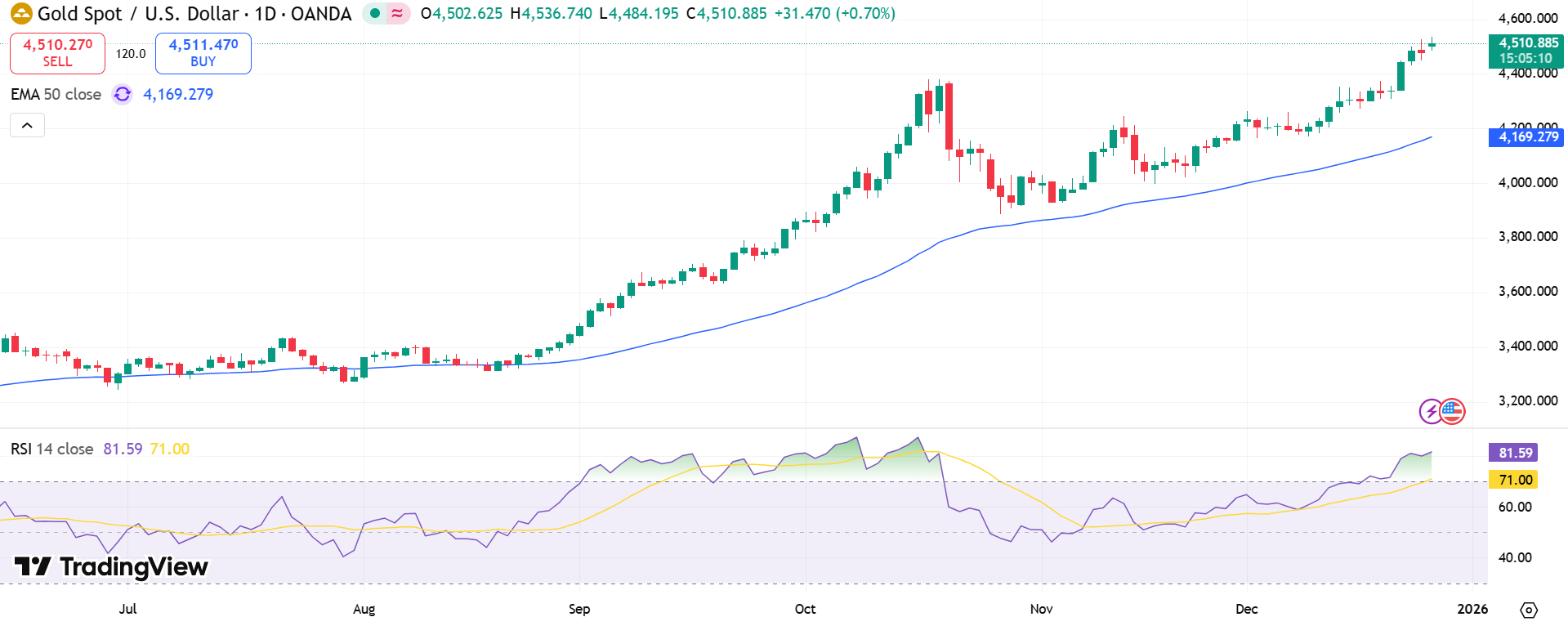
The rally has also been supported by a softer U.S. dollar, which has slipped against a basket of major currencies. Currency weakness typically benefits dollar-denominated commodities by making them more affordable for international buyers.
Investors are increasingly pricing in the possibility that the Federal Reserve could begin easing monetary policy in 2026, as inflation shows signs of cooling and economic growth moderates. Lower expected interest rates reduce the opportunity cost of holding non-yielding assets such as gold.
Additional tailwinds include:
- Declining U.S. Treasury yields
- Portfolio rebalancing toward hard assets
- Expectations of slower global growth
- Continued central bank diversification
Silver has benefited from these same macro forces while also drawing support from structural industrial demand tied to clean-energy technologies.
With holiday-thinned liquidity likely to persist, analysts caution that price volatility may remain elevated. Still, underlying fundamentals—ranging from geopolitical risk to monetary policy expectations—suggest continued strength for both gold and silver as the new year approaches.
Sources & Methodology
Primary-source standard: Market-moving facts should link to original data releases, regulator notices, company filings or official project announcements whenever available. Secondary reporting is used for additional context, not as a substitute for original evidence.
Page last reviewed: