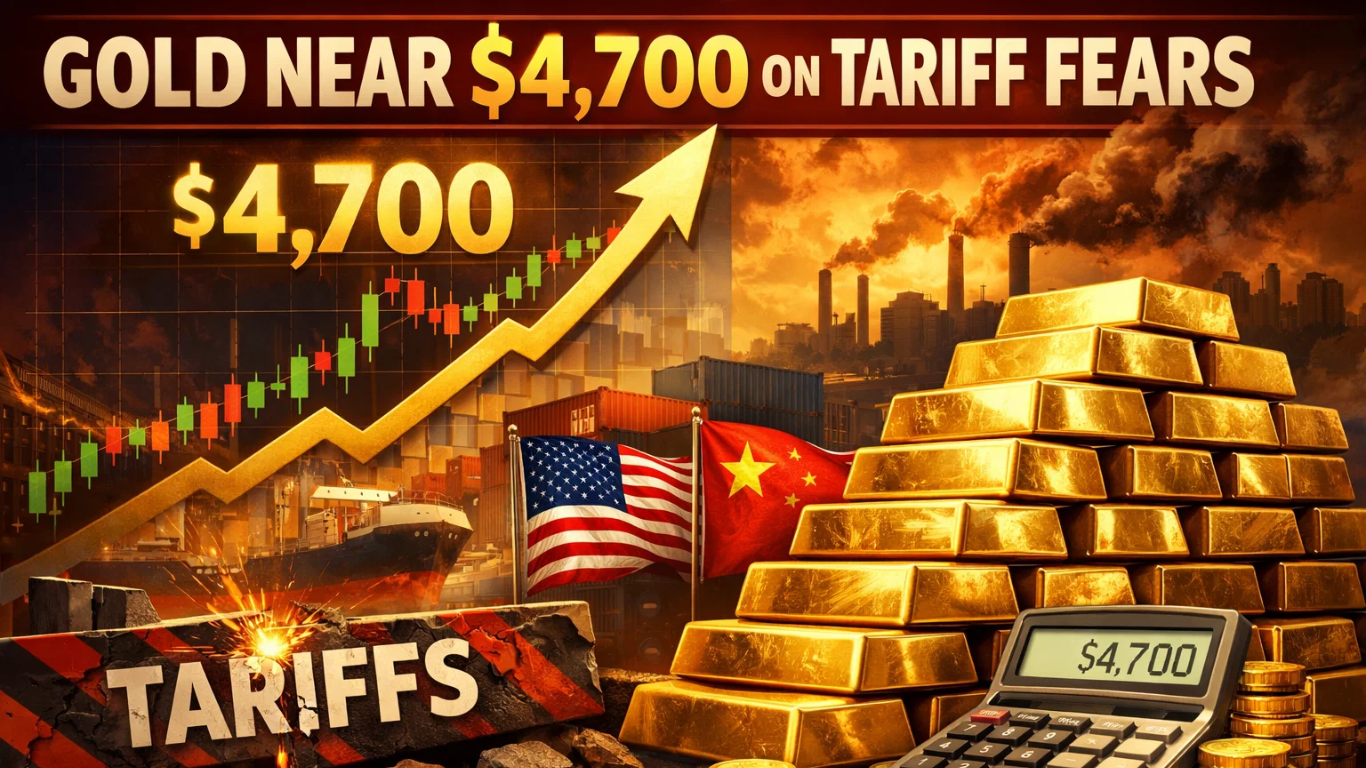
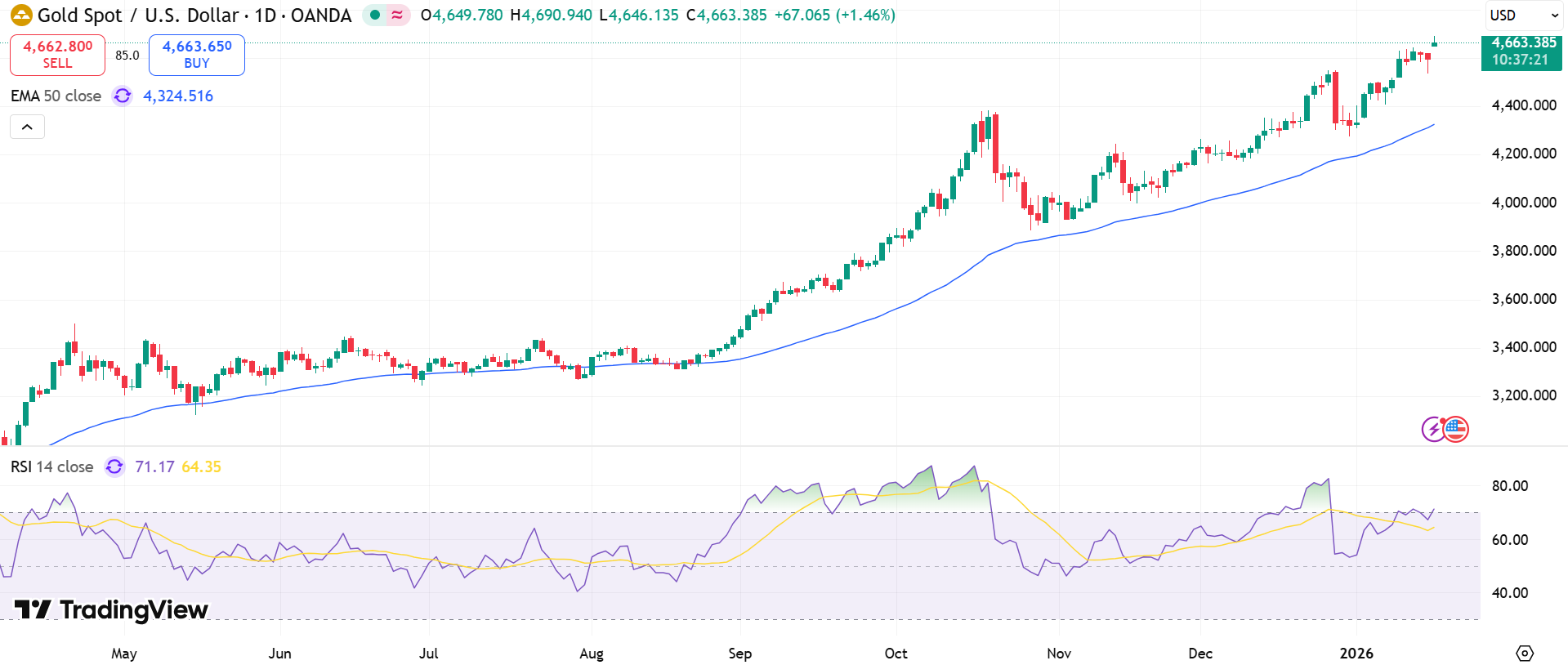
Gold prices surged to unprecedented levels in early Asian trading, underscoring the metal’s enduring role as a refuge during geopolitical stress. Spot gold rose 1.6% to $4,667 an ounce, after briefly touching a record $4,690, as investors reacted to renewed trade tensions between the United States and Europe. The rally followed comments from U.S. President Donald Trump, who threatened fresh tariffs on eight European nations opposing Washington’s push to acquire Greenland.
The proposed measures include a 10% levy on goods beginning Feb. 1, escalating to 25% by June if negotiations fail. France, Germany, and the United Kingdom are among the countries named, along with several Nordic and northern European states. European officials quickly criticized the move, raising concerns that the dispute could widen into a broader transatlantic trade confrontation. Markets responded swiftly, rotating into assets traditionally viewed as hedges against uncertainty.
Rate Cut Bets Reinforce Bullish Momentum
The tariff shock landed on top of an already supportive macroeconomic backdrop for bullion. Expectations that the Federal Reserve will begin cutting interest rates later this year have intensified after a run of softer U.S. economic data and easing inflation pressures. Lower rates reduce the opportunity cost of holding non-yielding assets, amplifying gold’s appeal.
Other precious metals joined the rally, reflecting both defensive and structural demand. Silver surged more than 4% to a record $94.03 an ounce, supported by its dual status as a safe haven and an industrial input. Platinum climbed over 1% to $2,358, buoyed by rising investor appetite for physical assets.
Key drivers behind the precious-metal surge include:
- Escalating trade tensions between the U.S. and Europe
- Growing confidence in Federal Reserve rate cuts
- Increased allocation to physical assets amid volatility
- Industrial demand supporting silver and platinum prices
Copper Gains as China Meets 5% Growth Goal
Industrial metals also found support, led by copper, after data showed China’s economy met Beijing’s 5% growth target for 2025. Benchmark copper futures on the London Metal Exchange rose 0.6% to $12,881 a metric ton. GDP growth in the December quarter came in slightly above expectations, easing fears of a sharper slowdown in the world’s largest metals importer.
Exports remained the primary engine of Chinese growth, while business investment and private consumption lagged. This uneven recovery has fueled expectations that policymakers will roll out additional stimulus, with the People’s Bank of China set to announce a key lending decision this week. Investors are also positioning for longer-term demand tied to global data-center expansion and electrification trends, both of which are copper-intensive.
Together, geopolitical risk, shifting monetary policy, and resilient Chinese demand have pushed metals markets into a powerful rally, reshaping expectations for prices in the months ahead.
Sources & Methodology
Primary-source standard: Market-moving facts should link to original data releases, regulator notices, company filings or official project announcements whenever available. Secondary reporting is used for additional context, not as a substitute for original evidence.
Page last reviewed: