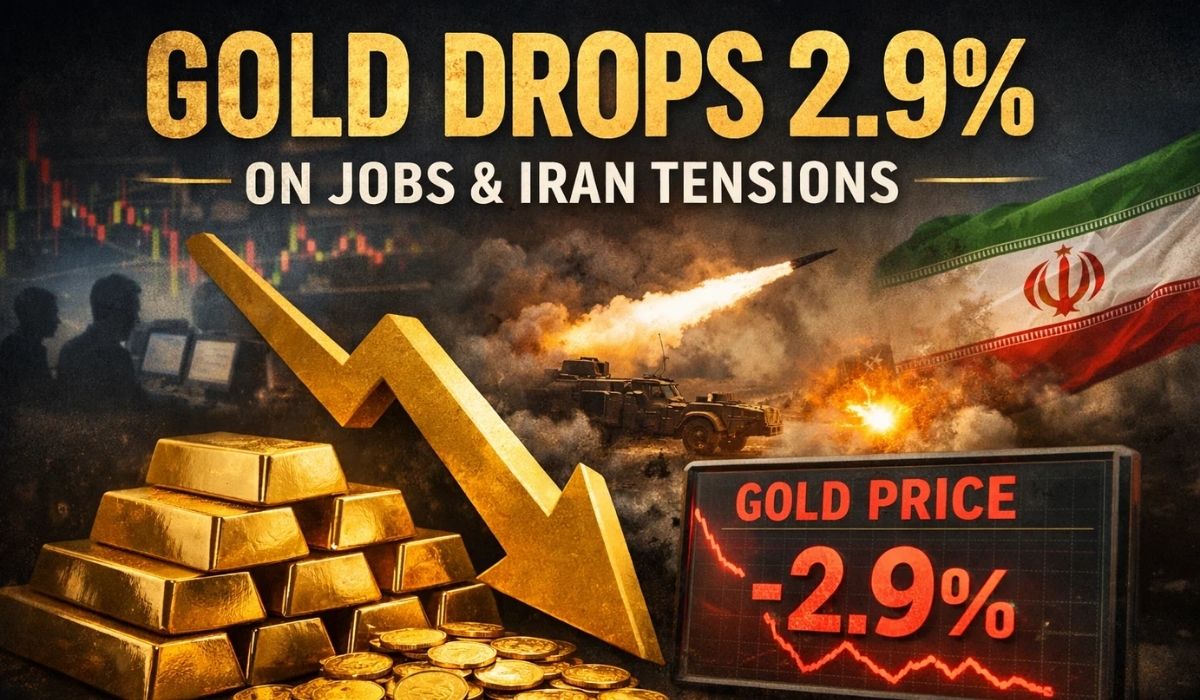
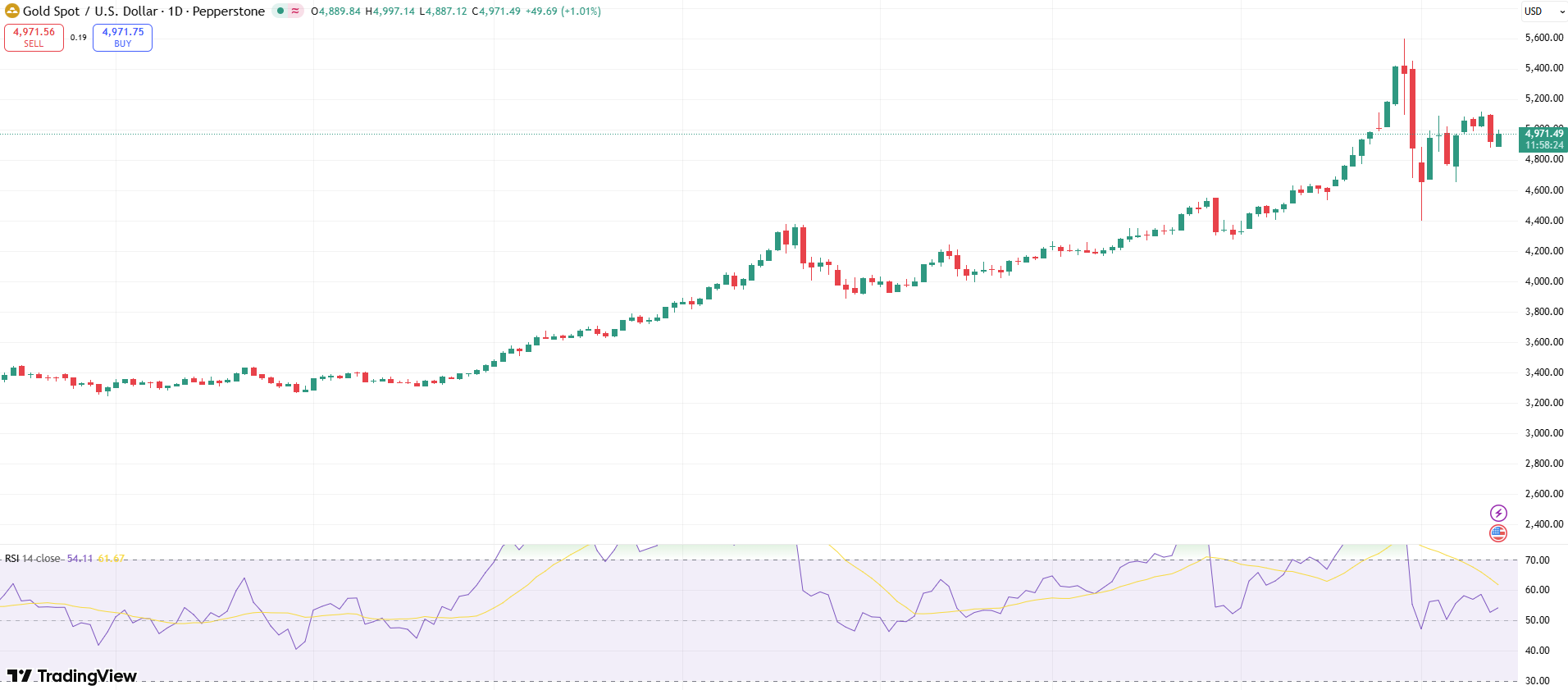
Gold prices dropped sharply on Thursday after new U.S. jobs data showed the economy is stronger than many expected. Spot gold fell 2.9% to $4,932.16 per ounce, while April gold futures slipped 2.8% to $4,953.66 per ounce by 13:33 ET (18:33 GMT).
Other precious metals fell even more:
- Silver plunged 9.6% to $76.26 per ounce
- Platinum dropped 5.6% to $2,025.70 per ounce
The main reason was January’s U.S. nonfarm payrolls report, which showed the labor market is still strong. When more people have jobs, it suggests the economy is healthy. That makes the Federal Reserve less likely to cut interest rates soon.
Markets now see:
- 94.1% chance the Fed keeps rates unchanged in March
- 78% chance rates stay the same again in April
Higher interest rates usually hurt gold because gold does not pay interest. After the jobs report, the U.S. dollar strengthened, which also pushed gold lower. Gold is priced in dollars, so when the dollar rises, gold becomes more expensive for other countries to buy.
Still, even after this drop, gold and silver remain well above last year’s prices.
Iran Tensions Keep Safe-Haven Demand Alive
Gold is often called a “safe-haven” asset. That means people buy it when they feel worried about the world.
Tensions between the United States and Iran remain high. Although both sides reported some progress in nuclear talks over the weekend, the U.S. is reportedly preparing to send a second aircraft carrier to the Middle East. President Donald Trump has also warned Iran to agree to a deal.
When there is political or military tension, investors often move money into gold for safety. That support has helped metals recover from a historic sell-off at the end of January.
Trade Uncertainty and CPI Ahead
Investors are also watching global trade news. Reports suggest President Trump and Chinese leader Xi Jinping may extend their trade truce for up to one year when they meet in Beijing in April. The meeting could include new Chinese purchase commitments.
At the same time, uncertainty surrounds the U.S.-Mexico-Canada Agreement, which faces a mandatory review before July 1. There are reports that President Trump has privately discussed exiting the pact, creating more uncertainty for businesses.
The next big event for markets is Friday’s U.S. Consumer Price Index (CPI) inflation report. Inflation data matters because it helps decide whether the Federal Reserve cuts or holds interest rates.
In simple terms:
- Strong jobs data → stronger dollar → gold falls
- High tensions or inflation fears → investors buy gold
- Fed rate decisions strongly influence metal prices
For now, gold’s drop looks like a short-term reaction to strong economic data, while bigger forces like inflation risk, global debt, central-bank buying, and geopolitical tensions continue to shape the long-term outlook.
Sources & Methodology
Primary-source standard: Market-moving facts should link to original data releases, regulator notices, company filings or official project announcements whenever available. Secondary reporting is used for additional context, not as a substitute for original evidence.
Page last reviewed: