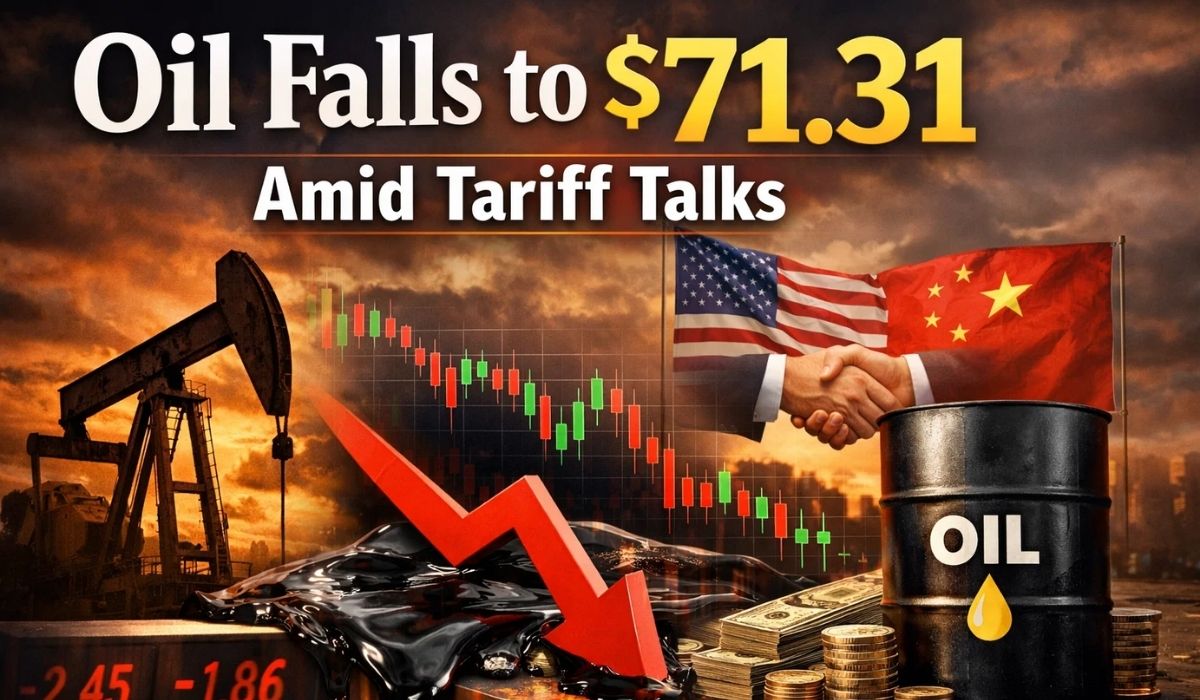
Oil prices moved slightly lower on Monday as traders reacted to two big events: new U.S. tariff changes and upcoming nuclear talks between the United States and Iran. Investors are trying to understand whether these events will reduce global tensions or slow economic growth. When there is uncertainty, oil prices often swing up and down.
Brent crude futures dropped 45 cents, or 0.6%, to $71.31 a barrel by 10:27 GMT. U.S. West Texas Intermediate (WTI) crude fell 42 cents, also 0.6%, to $66.06 per barrel. Even with Monday’s decline, both benchmarks had climbed more than 5% last week. Brent remains close to a six-month high after rising sharply on fears of possible military conflict between the U.S. and Iran.
Iran Talks Ease War Fears
The United States and Iran are preparing for a third round of nuclear talks on Thursday. Iran has indicated it is willing to make concessions on its nuclear program. In return, it wants sanctions lifted and recognition of its right to enrich uranium.
When traders believe a war could disrupt oil supplies, prices usually jump. That is what happened last week. Now that talks are continuing, some fear of conflict has eased, which is one reason prices slipped on Monday. However, uncertainty remains. If negotiations fail, prices could rise again quickly.
Tariff Changes Add Pressure
Trade policy is also influencing oil markets. After the U.S. Supreme Court struck down an earlier tariff program, President Donald Trump announced he would raise a temporary tariff from 10% to 15% on U.S. imports from all countries. The 15% rate is the maximum allowed under the International Emergency Economic Powers Act and will last for 150 days.
At the same time, U.S. Customs and Border Protection said it would stop collecting tariffs imposed under the earlier law at 12:01 a.m. EST (05:01 GMT) on Tuesday.
Higher tariffs can slow economic growth. If businesses and consumers spend less, they use less fuel. That can reduce demand for oil. Analysts noted that signs of risk-aversion were visible in higher gold prices and weaker U.S. equity futures.
Market Signals and Forecasts
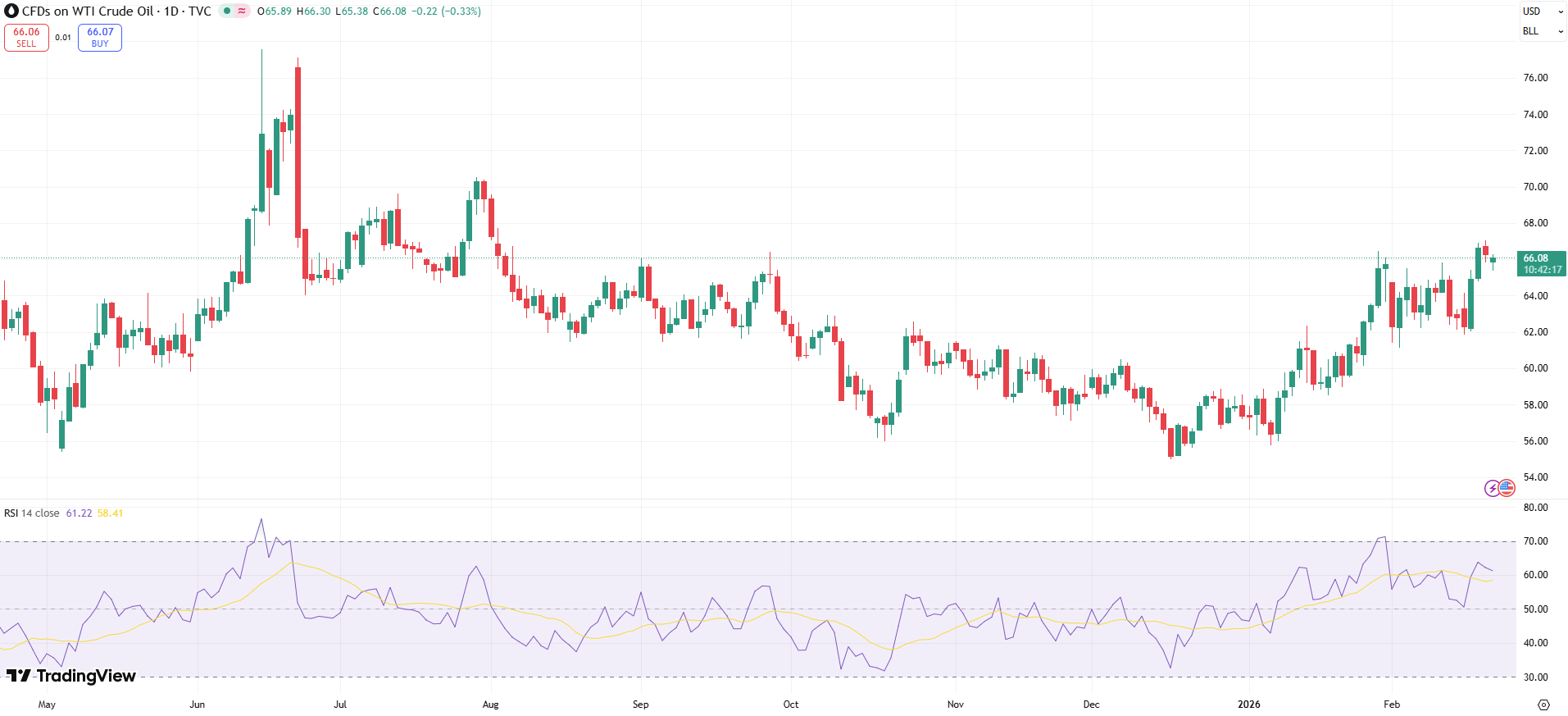
Some analysts believe recent oil gains were driven more by fear than by real supply shortages.
- Brent and WTI rose more than 5% last week.
- Brent is still near a six-month high.
- Softer prompt spreads and weaker physical differentials suggest supply is adequate.
- Morgan Stanley now expects Brent at $62.50 per barrel in the second quarter, up from a previous forecast of $57.50.
In simple terms, oil is available, but traders are paying extra because they are worried about what might happen next. With U.S.–Iran talks, ongoing geopolitical tensions, and shifting U.S. trade policy, oil prices may continue to move unpredictably in the weeks ahead.
Sources & Methodology
Primary-source standard: Market-moving facts should link to original data releases, regulator notices, company filings or official project announcements whenever available. Secondary reporting is used for additional context, not as a substitute for original evidence.
Page last reviewed: