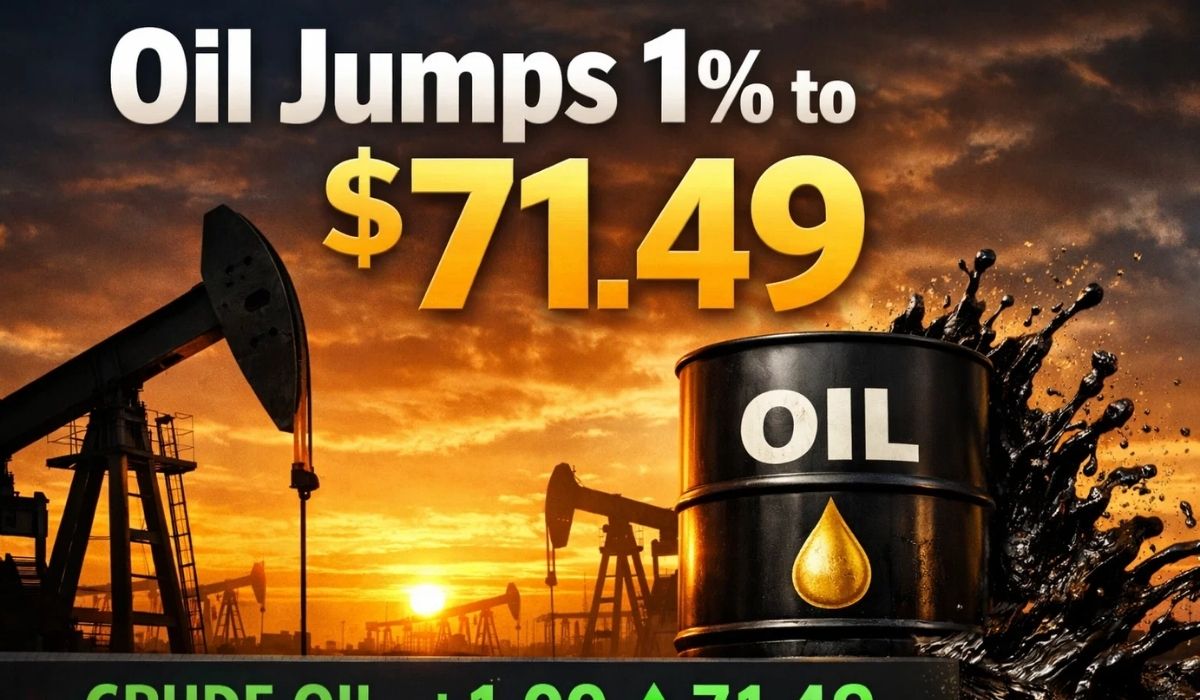
Oil prices moved higher in Asian trading Wednesday, staying just below seven-month highs reached earlier this week. Investors are weighing rising geopolitical risks against signs of growing U.S. crude supply.
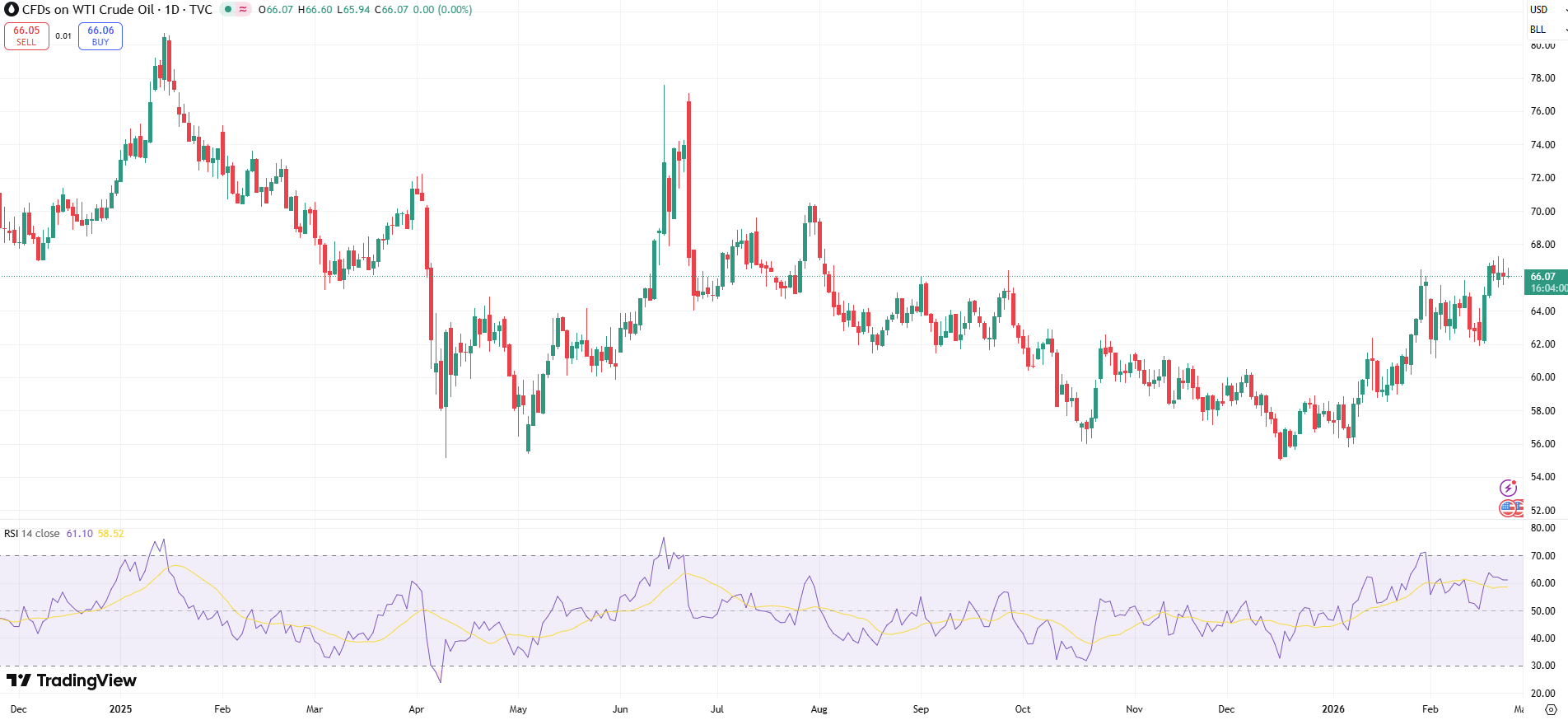
Brent crude futures for April delivery climbed 1% to $71.49 per barrel. U.S. West Texas Intermediate (WTI) crude rose 1.3% to $66.46 per barrel as of 22:41 ET (03:41 GMT). Both benchmarks had slipped about 1% on Tuesday after new trade tariff concerns rattled markets.
The main driver behind the rebound is tension between the United States and Iran. President Donald Trump has given Iran a 10-to-15-day deadline, which points to early March. That timeline keeps traders alert. When there is a risk of conflict in the Middle East—a region that produces a large share of the world’s oil—prices often rise because markets fear supply disruptions.
Analysts say this uncertainty adds what traders call a “risk premium.” In simple terms, buyers are willing to pay more because they are worried about what might happen next.
Crude Inventories Surge 11.4M Barrels
On the supply side, fresh data showed a sharp increase in U.S. crude stockpiles. The American Petroleum Institute (API) reported an 11.4 million-barrel build for the week ended February 20. That figure was far above expectations for a 1.9 million-barrel increase.
Normally, when oil inventories rise sharply, prices fall because it suggests weaker demand or excess supply. However, the market largely brushed off the data due to geopolitical risks.
Key supply figures:
- API crude build: +11.4 million barrels
- Market forecast: +1.9 million barrels
- Gasoline stocks: declined
- Distillate stocks: declined
The drop in gasoline and distillate inventories provided some balance, signaling steady fuel consumption. Traders are now waiting for official confirmation from the U.S. Energy Information Administration (EIA), which is set to release its data later in the day.
Tariff Uncertainty Adds Pressure
Broader market sentiment is also shaped by renewed U.S. trade policy shifts. A 10% global import tariff took effect Tuesday, with plans underway to raise the levy to 15%. The move follows a U.S. Supreme Court decision that struck down a previous tariff program, prompting the administration to reintroduce duties under alternative legal authority.
Trade uncertainty can slow global economic growth. If businesses face higher costs, demand for fuel may weaken over time. That risk helps explain why oil prices, despite recent gains, remain sensitive to headlines.
For now, the oil market is balancing two opposing forces: rising political tensions that support prices and swelling crude inventories that argue for caution. With Brent near $71.49 and WTI at $66.46, traders are watching early March closely. Any shift in diplomacy—or escalation—could quickly change the direction of prices.
Sources & Methodology
Primary-source standard: Market-moving facts should link to original data releases, regulator notices, company filings or official project announcements whenever available. Secondary reporting is used for additional context, not as a substitute for original evidence.
Page last reviewed: