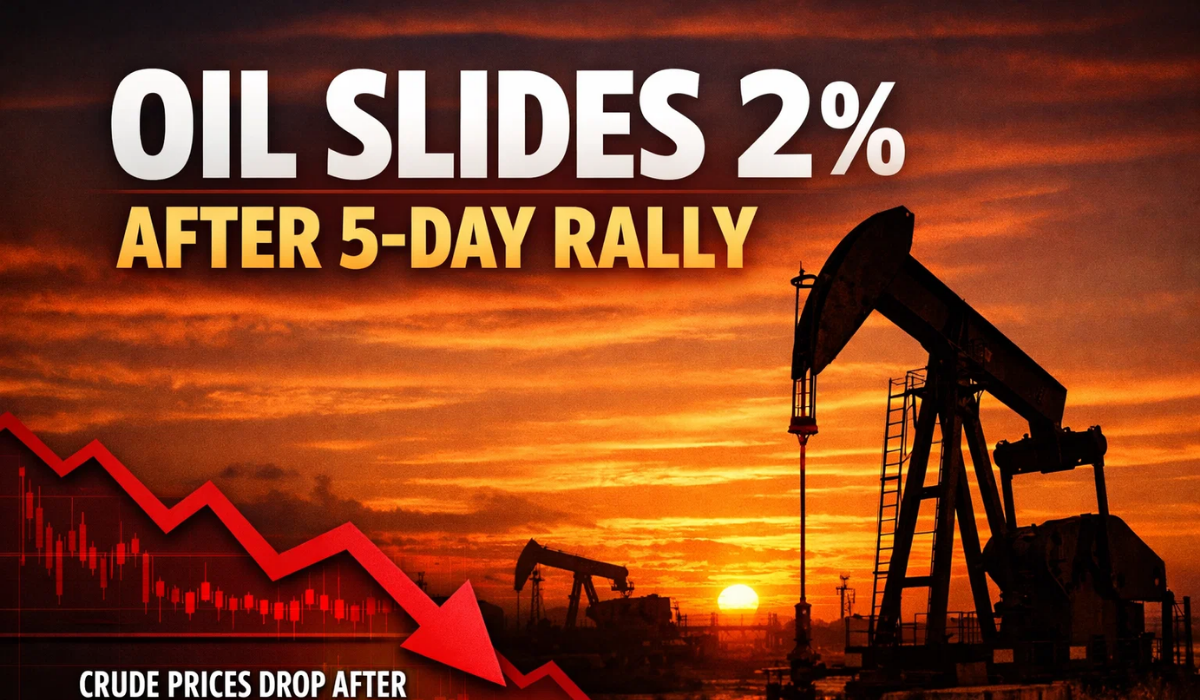
Oil prices slipped during Asian trading on Friday after climbing for five straight sessions, as traders locked in profits following a powerful rally earlier in the week. Even with the pullback, crude oil remains on track for one of its biggest weekly gains this year due to rising geopolitical tensions in the Middle East.
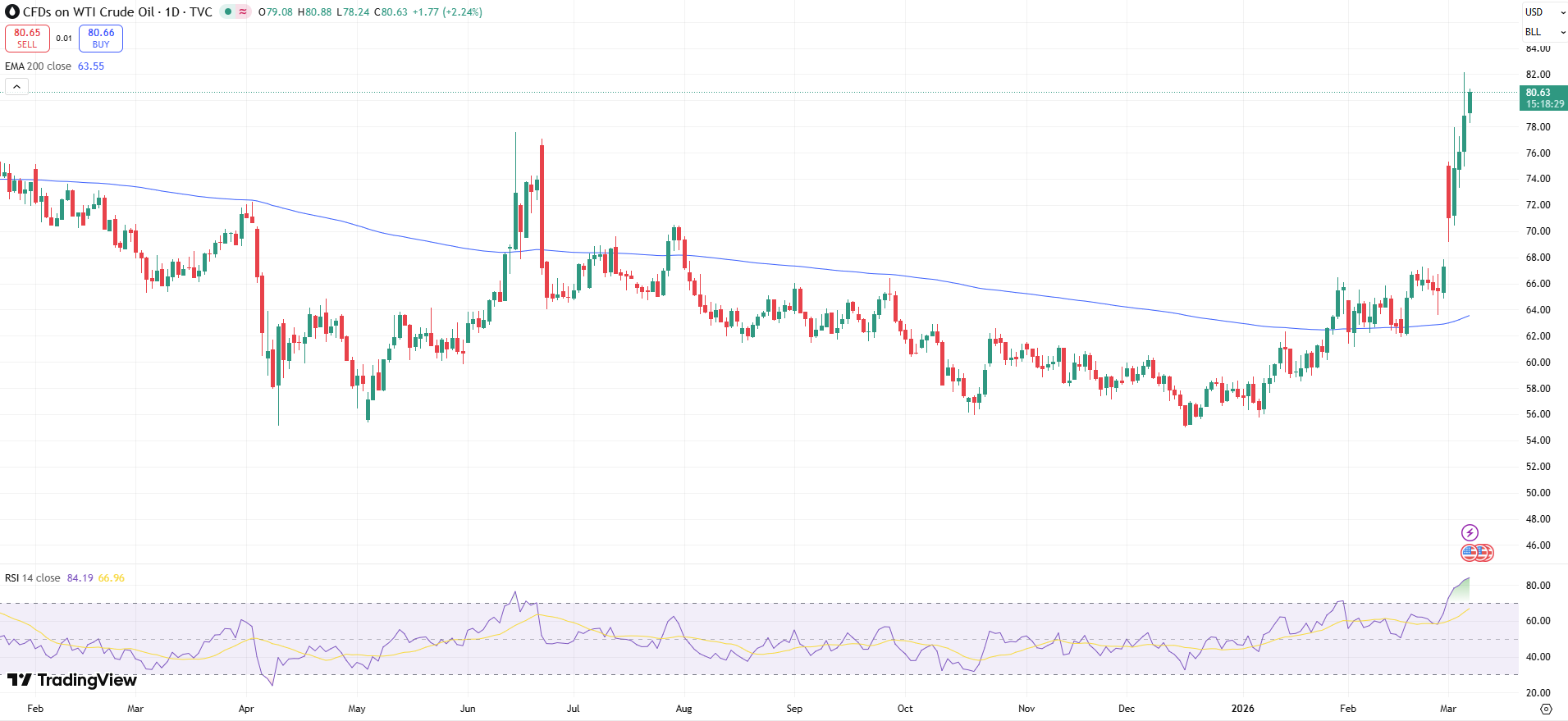
Brent crude futures for May delivery fell 1.5% to $84.13 per barrel, while West Texas Intermediate (WTI) crude dropped 2% to $79.44 per barrel as of 21:53 ET (02:53 GMT).
The decline came after a strong surge in the previous trading session. Brent oil jumped nearly 5%, reaching its highest level since July 2024, while WTI crude surged more than 8% in a single day. Despite Friday’s dip, both benchmarks are still on track to record major weekly gains.
Energy markets have been extremely sensitive to geopolitical developments. Rising tensions in the Middle East have triggered fears that global oil supplies could be disrupted, which pushed prices sharply higher throughout the week.
Key price movements this week:
- Brent crude: $84.13 per barrel after a 1.5% decline
- WTI crude: $79.44 per barrel after a 2% drop
- Brent daily surge: nearly 5% in the previous session
- WTI daily surge: more than 8%
- Weekly gains: both contracts up over 17%
Middle East Tensions Shake Energy Markets
The conflict in the Middle East entered its seventh day, with fighting between the United States, Israel, and Iran intensifying. Missile strikes, retaliatory attacks, and damage to energy infrastructure across the region have raised serious concerns about global supply stability.
Markets are especially worried about the safety of key shipping routes that transport oil across the region. One of the most critical areas is the Strait of Hormuz, a narrow waterway located between Iran and Oman.
This strategic passage is considered the most important oil transit route in the world. Every day, a large portion of the world’s crude oil passes through this corridor before reaching global markets.
About 20% of the world’s oil supply moves through the Strait of Hormuz daily, making it a major chokepoint for international energy trade. If shipping routes were disrupted, global oil supplies could tighten quickly, pushing prices even higher.Political tensions have also increased uncertainty. U.S. President Donald Trump recently said he wants a role in determining Iran’s next leader once the conflict ends, signaling potential political changes in the region.
Supply Moves and Inflation Risks
To ease immediate supply concerns, the United States announced it would allow India to continue purchasing Russian oil for 30 days. This temporary decision may provide short-term relief to the market.
However, analysts say the move alone will not significantly change the overall supply outlook. According to analysts at ING, the market remains strongly supported because there are still no clear signs that the conflict will calm down or that energy flows will fully resume.
They noted that each day without restored shipments forces the market to reassess how much oil supply could be lost. This process could lead traders to price in further shortages.
Higher oil prices also carry broader economic consequences. Energy costs influence transportation, manufacturing, and household spending. If crude prices stay elevated for a long time, global inflation could rise again.
This could complicate decisions for central banks such as the U.S. Federal Reserve, which is already balancing inflation risks with economic growth.
For now, traders continue to watch the Middle East closely, as any escalation—or de-escalation—could quickly shift oil prices in either direction.
Sources & Methodology
Primary-source standard: Market-moving facts should link to original data releases, regulator notices, company filings or official project announcements whenever available. Secondary reporting is used for additional context, not as a substitute for original evidence.
Page last reviewed: