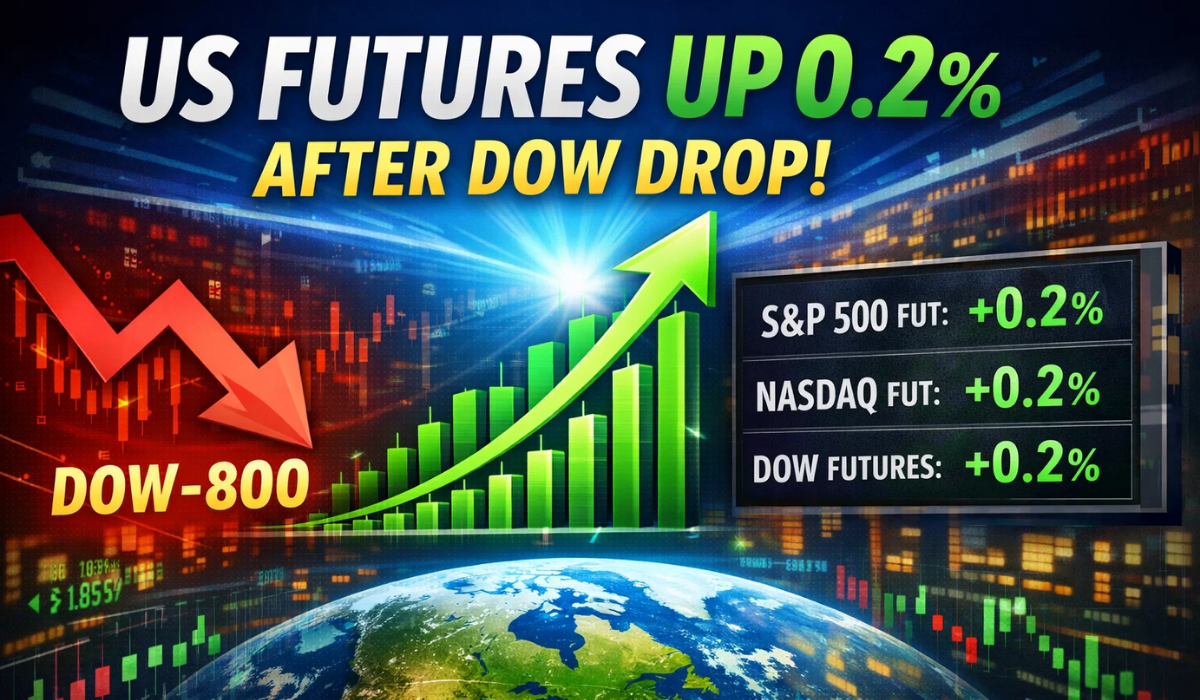
U.S. stock index futures were slightly higher late Thursday, suggesting a cautious pause after a broad market selloff earlier in the day. Investors remained careful as rising oil prices and growing tensions in the Middle East created uncertainty ahead of a key U.S. labor market report.
By 20:10 ET (00:10 GMT), major futures contracts showed only small gains. S&P 500 futures rose 0.1% to 6,843.50 points, while Nasdaq-100 futures also climbed 0.1% to 25,072.75 points. Dow Jones futures performed slightly better, rising 0.2% to 48,064 points.
The modest moves reflect a market waiting for more information. Traders are closely watching both geopolitical developments and upcoming economic data before making major investment decisions.
Wall Street has been under pressure this week. Rising energy costs and global political risks have reduced investors’ appetite for riskier assets such as technology and growth stocks.
Key futures levels:
- S&P 500 Futures: 6,843.50 (+0.1%)
- Nasdaq-100 Futures: 25,072.75 (+0.1%)
- Dow Jones Futures: 48,064 (+0.2%)
- Time of trading: 20:10 ET (00:10 GMT)
These small increases suggest the market may stabilize, but investors remain cautious as several major economic signals approach.
Oil Spike Pressures Wall Street
Major U.S. stock indexes closed lower on Thursday, extending a broader decline during the week. The drop was largely driven by a sharp rise in oil prices as tensions in the Middle East intensified.
The Dow Jones Industrial Average fell 1.6%, marking the biggest decline among major indexes. The S&P 500 dropped 0.6%, while the Nasdaq Composite ended the day 0.3% lower.
Energy markets played a major role in the market’s weakness. Crude oil prices surged more than 8% during the trading session, fueled by fears that escalating conflict in the Middle East could disrupt key oil shipping routes in the Persian Gulf.
Higher oil prices often create problems for the stock market. When energy costs rise, companies must spend more money on transportation, manufacturing, and operations. At the same time, consumers may reduce spending because fuel and living costs increase.
These pressures can reduce corporate profits and slow economic growth. Technology and other growth-focused sectors tend to be particularly sensitive to these changes because they rely heavily on future earnings expectations.
Geopolitical tensions have also pushed investors toward safer assets, increasing volatility across global financial markets this week.
Investors Await Key Jobs Report
The next major event for markets is the U.S. February nonfarm payrolls report, scheduled for release on Friday. This report measures how many jobs were added to the economy and is one of the most closely watched indicators of economic health.
Economists expect the U.S. economy to have added about 58,000 jobs in February. The unemployment rate is projected to remain near 4.3%, indicating that the labor market remains relatively stable.
The payrolls data could strongly influence expectations for U.S. Federal Reserve interest rate policy. If job growth remains strong, policymakers may feel comfortable keeping interest rates higher for longer to control inflation.
Key expectations for the upcoming report include:
- Expected job growth: about 58,000 new jobs
- Estimated unemployment rate: around 4.3%
- Policy impact: could shape future Federal Reserve rate cuts
Traders currently believe the Federal Reserve may begin lowering interest rates later this year. However, strong economic data and rising geopolitical risks have reduced expectations for aggressive rate cuts.
For now, investors are balancing two powerful forces—global uncertainty and economic resilience—both of which will continue shaping market direction in the weeks ahead.
Sources & Methodology
Primary-source standard: Market-moving facts should link to original data releases, regulator notices, company filings or official project announcements whenever available. Secondary reporting is used for additional context, not as a substitute for original evidence.
Page last reviewed: