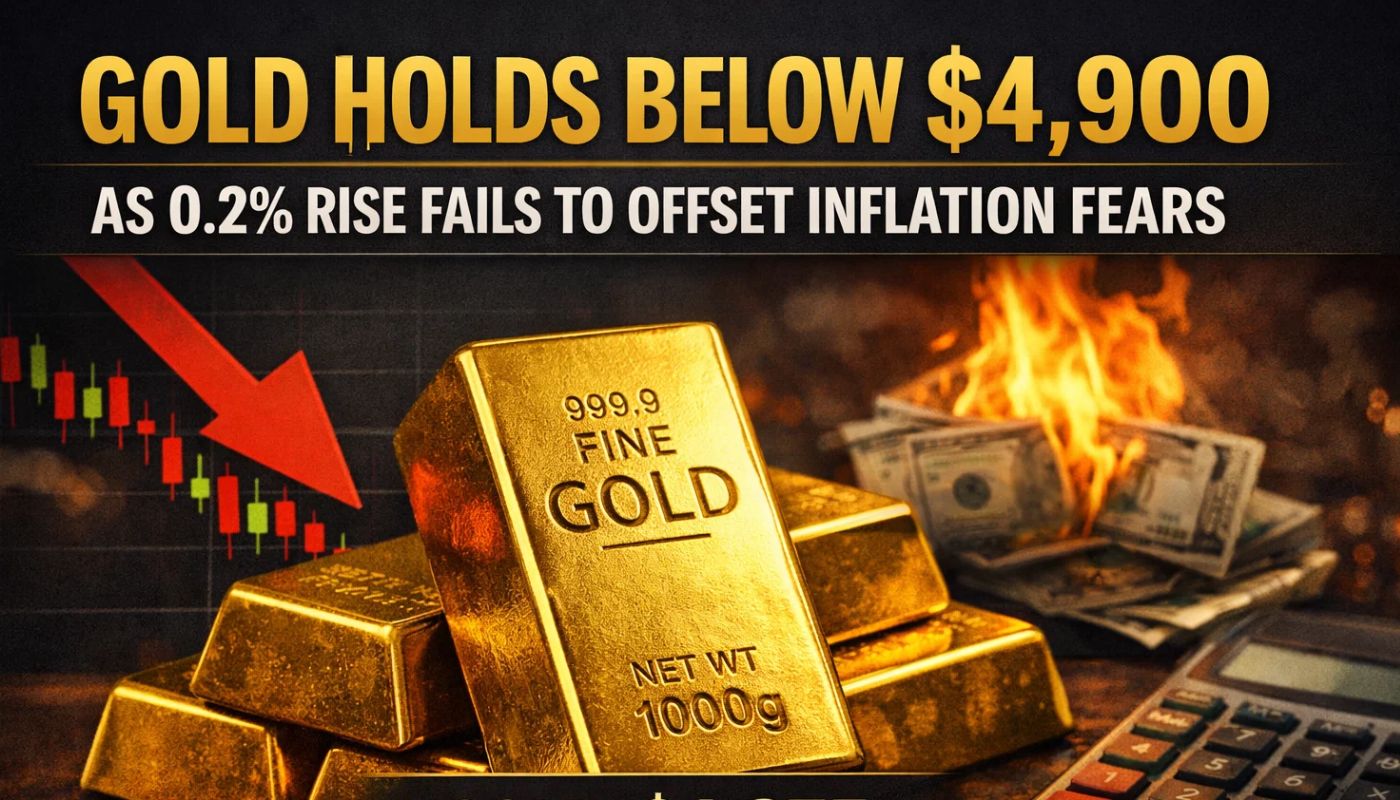
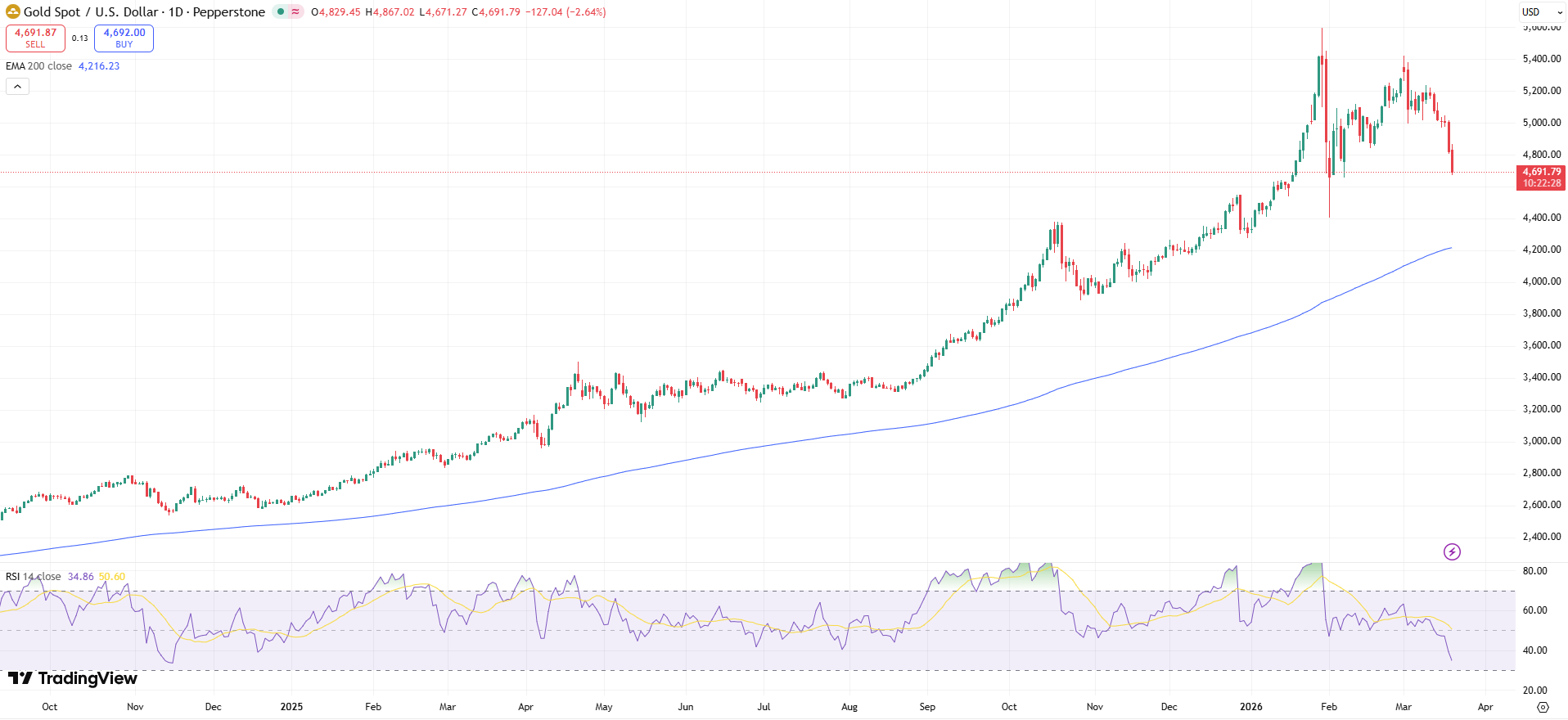
Gold prices showed a small recovery in Asian trading on Thursday, but the rebound was weak and failed to lift prices back toward the key $5,000 level. Spot gold edged up 0.2% to $4,833.60 per ounce, while gold futures actually dropped 1.3% to $4,834.04 per ounce.
The main reason behind this muted movement is uncertainty around U.S. interest rates. When interest rates stay high, gold becomes less attractive because it does not pay interest like bonds or savings accounts. As a result, investors often move their money away from gold during such periods.
At the same time, stronger-than-expected U.S. producer price index (PPI) data signaled that inflation may remain elevated. This has made markets believe that the Federal Reserve could delay cutting interest rates, keeping financial conditions tight for longer.
Inflation Data and Fed Outlook Weigh
Gold recently dropped out of its $5,000–$5,200 trading range, a level it held for nearly a month. This decline followed the Federal Reserve’s decision to keep rates unchanged while warning about ongoing inflation risks.
The February PPI data came in higher than expected, reinforcing concerns that inflation is not cooling fast enough. According to market expectations, there may be no rate cuts until at least September, as indicated by CME FedWatch data.
This situation creates a difficult environment for gold. Normally, gold benefits from global tensions, but now inflation fears and rising real yields are limiting its gains.
Key pressure points on gold include:
- Strong U.S. inflation data (PPI surprise)
- Delayed expectations for rate cuts
- Rising real yields reducing gold’s appeal
- Stable U.S. dollar limiting upside
Even though geopolitical risks usually support gold, current market behavior shows investors are focusing more on inflation and interest rates.
Oil Surge Adds More Market Stress
Another major factor affecting gold is the sharp rise in oil prices. The ongoing conflict involving the U.S., Israel, and Iran has pushed energy markets higher. A key escalation occurred when Israel targeted the South Pars gas field, the largest in the world, triggering retaliation from Iran.
As tensions increased, Iran disrupted shipping through the Strait of Hormuz, a critical route for global oil supply. This caused oil and gas prices to jump, raising fears of higher global inflation.
Higher energy costs often lead to broader inflation, which forces central banks to stay aggressive. This is negative for gold because it increases the likelihood of prolonged high interest rates.
Other metals also declined alongside gold:
- Platinum fell 0.6% to $2,012.68 per ounce
- Silver dropped 0.7% to $74.83 per ounce
In simple terms, gold is stuck between two forces:
- Support: Global conflict and uncertainty
- Pressure: High inflation and delayed rate cuts
Until inflation shows clear signs of slowing or interest rate cuts become certain, gold may struggle to regain strong upward momentum.
Sources & Methodology
Primary-source standard: Market-moving facts should link to original data releases, regulator notices, company filings or official project announcements whenever available. Secondary reporting is used for additional context, not as a substitute for original evidence.
Page last reviewed: