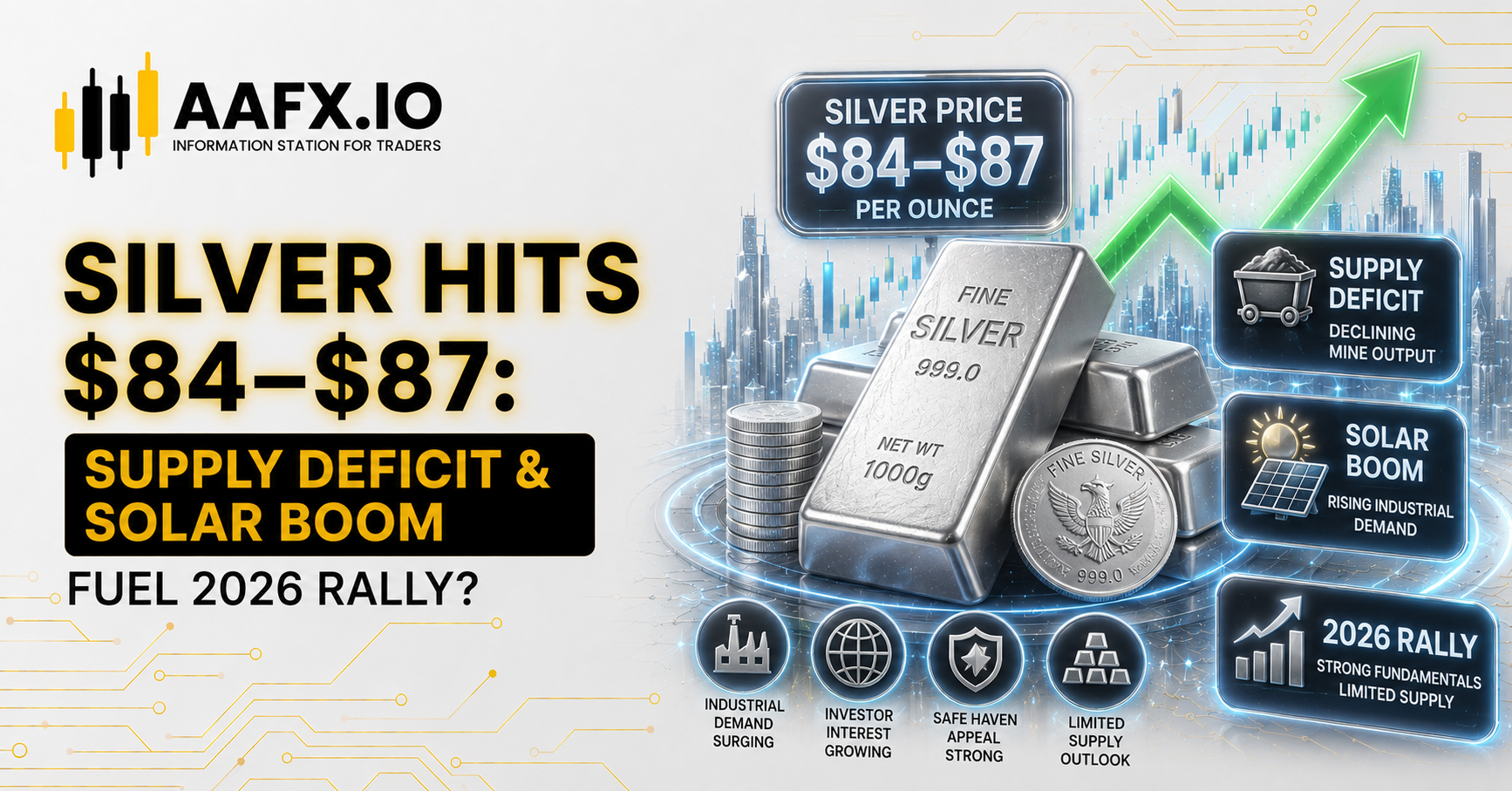
In mid-May 2026, silver is trading in a choppy but high range between $84 and $87 per ounce, doing better than gold thanks to strong industrial demand and ongoing supply shortages. As of May 15, spot silver (XAG/USD) is around $84.50 to $86.50 after recently reaching highs near $87 to $88.50. Price swings have been sharp, often reacting to geopolitical news and broader economic changes.
Industrial Demand and Supply Shortages Push Prices Higher
Silver’s strength comes from its use both as money and in industry. About 60% of demand is industrial, driven by rapid growth in solar panels (expected to use 120 to 125 million ounces in 2026), electric vehicles, AI data centers, and electronics. In March 2026, China imported a record 836 tonnes—173% above its 10-year average—and first quarter imports reached 1,626 tonnes as solar companies built up their supplies.
The Silver Institute expects another large deficit of about 46 million ounces in 2026, marking the sixth year in a row. This ongoing shortfall is reducing inventories and helping to keep prices strong, even when the market pulls back.
Geopolitical events are also driving prices. A fragile ceasefire between the U.S. and Iran and oil prices near $101 to $107 are increasing demand for safe-haven and inflation-hedge assets. The gold-to-silver ratio has narrowed to about 55 to 1, showing that silver is outperforming gold.
Technical Outlook & Analyst Targets
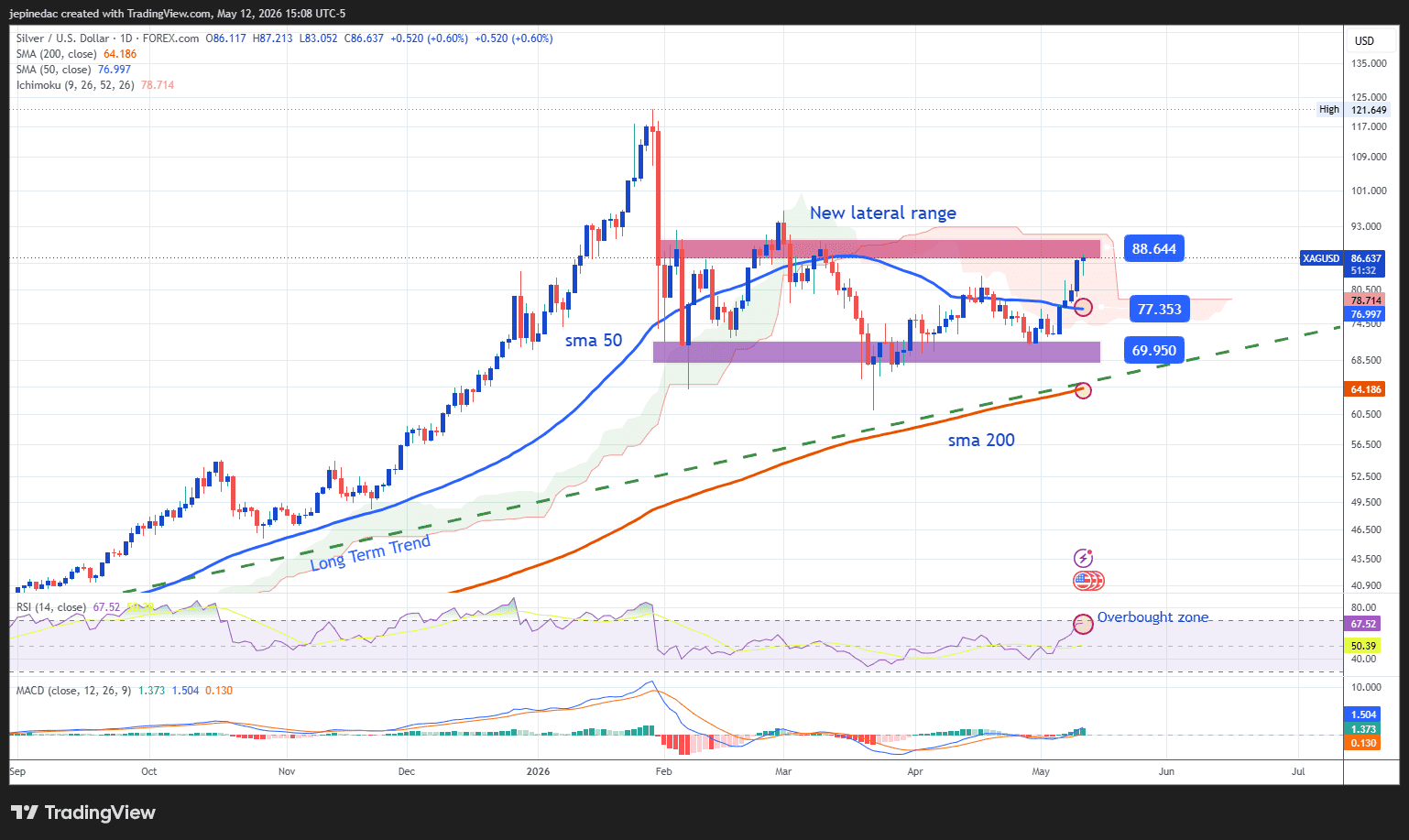
Silver has moved out of its recent trading range but now faces resistance between $88 and $90. There is support at $82 to $80, close to the 50-day moving average, and stronger support at $77 to $78. The trend remains positive as long as prices stay above the 200-day moving average.
Institutions remain constructive. Many forecast 2026 averages of $80–$85+, with bullish calls toward $90–$100+ on sustained deficits, ETF inflows, and renewable momentum. Extreme scenarios eye $125+ if shortages intensify.
Risks to Watch
- Potential for higher prices includes stronger demand from China and renewables, more ETF buying, or rising tensions in the Middle East.
- Possible risks to the downside include a stronger U.S. dollar, a more aggressive Federal Reserve led by Kevin Warsh, a resolution to oil supply disruptions, or a slowdown in industrial activity.
In 2026, silver is a standout option for those looking to benefit from the shift to green energy and ongoing uncertainty about money and markets. It is more volatile than gold, but its underlying factors make it an interesting choice for diversified portfolios. Keep an eye on data from China, trends in solar energy, signals from the Federal Reserve, and news about oil. Given its strong fundamentals, current prices may be appealing.
Sources & Methodology
Primary-source standard: Market-moving facts should link to original data releases, regulator notices, company filings or official project announcements whenever available. Secondary reporting is used for additional context, not as a substitute for original evidence.
Page last reviewed: