
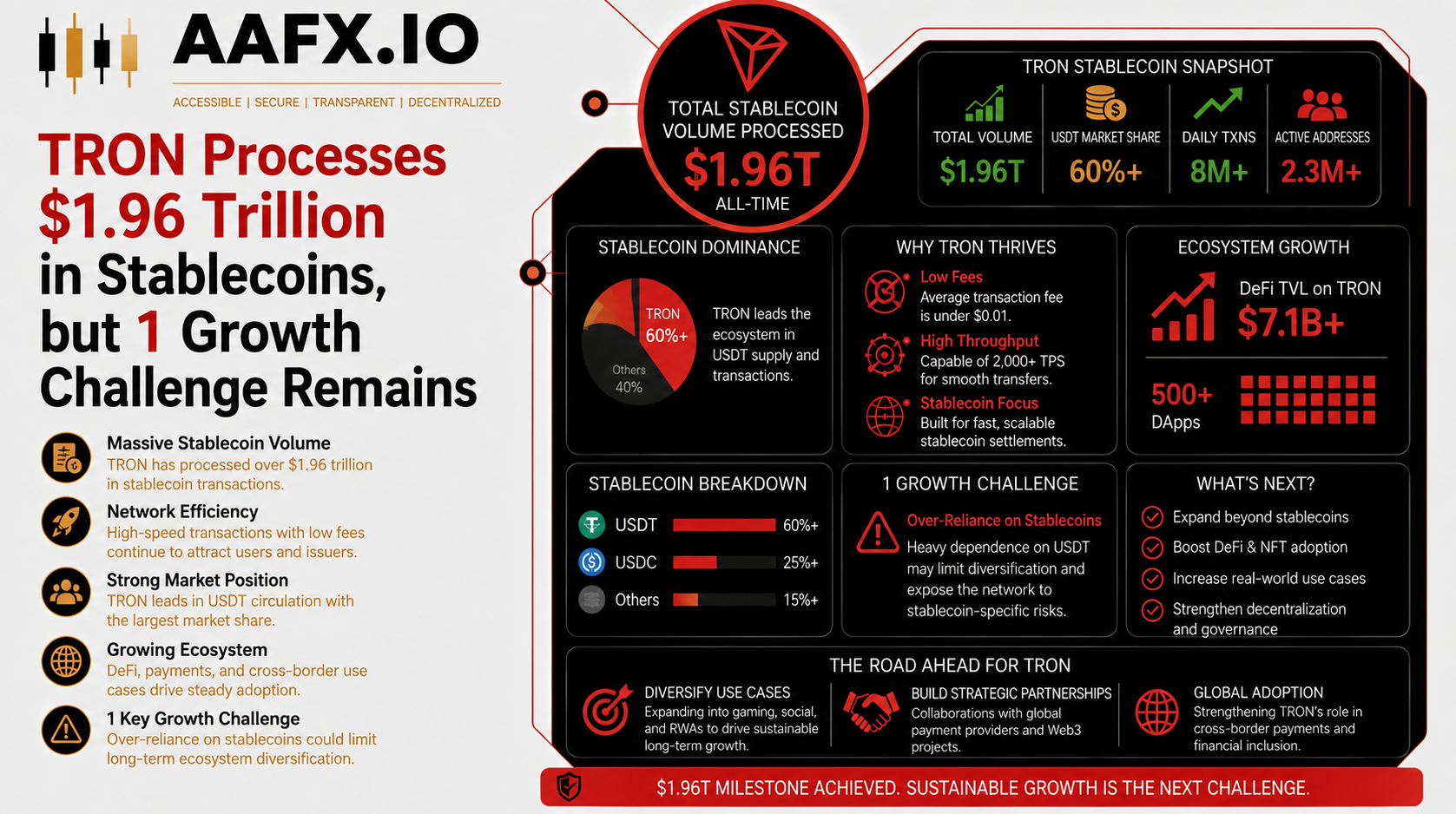
TRON has strengthened its position as one of the world’s leading blockchain networks for stablecoin payments, processing an impressive $1.96 trillion in stablecoin settlements during the first quarter of 2026. The milestone reflects more than increasing transaction volumes.
It highlights the network’s growing importance as an infrastructure layer for digital dollar transfers across global markets.
The network has become a preferred destination for users seeking low-cost, high-speed transactions. Businesses, remittance providers, and individual users increasingly rely on TRON for cross-border payments because transactions settle quickly while keeping fees significantly lower than many competing blockchain networks.
A major factor behind this momentum is the ecosystem’s deep liquidity in Tether (USDT). TRON currently hosts approximately $85 billion to $86 billion worth of USDT, making it one of the largest stablecoin hubs in the cryptocurrency industry.
Much of this activity is linked to recurring transfers, international payments, and peer-to-peer transactions rather than speculative trading.
If stablecoin issuance continues expanding and payment flows maintain their current pace, TRON could further reinforce its leadership in blockchain-based settlement. However, the competitive landscape remains dynamic, with newer networks attempting to capture market share through faster technology and broader decentralized finance offerings.
User Activity Shows Mixed Signals
Despite impressive payment growth, user adoption presents a more balanced picture.
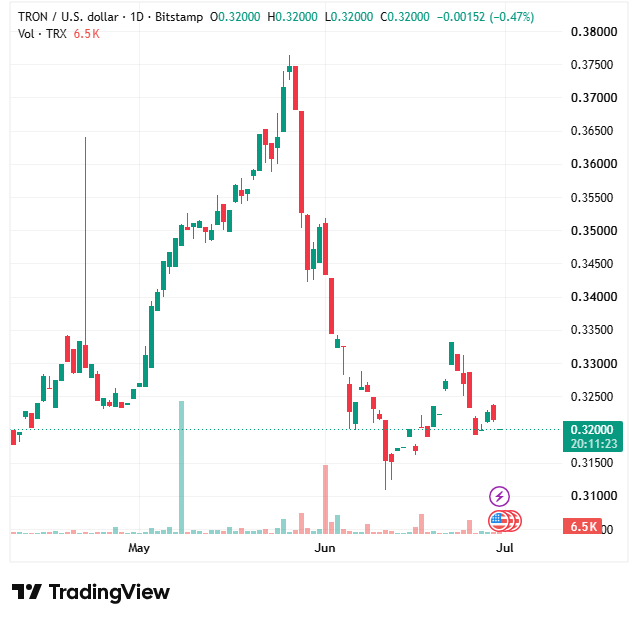
Daily active users climbed 16% over the past 30 days, reaching approximately 4.4 million, well above the first-quarter average of 3.2 million. The increase suggests that existing users are becoming more engaged and conducting transactions more frequently across the network.
However, longer-term adoption metrics reveal areas requiring attention.
- Daily active users increased 16% month over month.
- Active users reached roughly 4.4 million.
- Quarterly active addresses declined to 15.8 million from their Q4 2025 peak.
- New wallet creation also slowed during the same period.
These figures indicate that while current participants remain highly active, attracting new users has become more challenging. Strong engagement from existing users can sustain network activity in the near term, but long-term expansion will likely depend on consistently onboarding new participants alongside continued stablecoin demand.
DeFi Expansion Remains Key
TRON’s growing payment ecosystem is also helping retain liquidity on-chain. Total Value Locked (TVL) has climbed to approximately $4.4 billion, with stablecoins accounting for much of the capital supporting network liquidity.
Instead of leaving the blockchain immediately after settlement, a significant portion of these funds continues circulating through transfers and payment activity. This steady movement supports transaction volume, generates network revenue, funds validator rewards, and contributes to recurring TRX token burns without placing additional cost burdens on users.
Even so, one important challenge remains. TRON’s leadership in payments has not translated into equally strong growth across decentralized finance. Lending platforms, decentralized exchanges, and smart contract applications still represent a relatively modest share of overall network usage.
Expanding liquidity beyond payments into broader DeFi services could diversify network activity and strengthen TRON’s long-term competitiveness. Without broader ecosystem growth, the blockchain may continue dominating stablecoin settlements while remaining less influential in other high-value segments of the digital asset economy.
TRON’s performance demonstrates the growing importance of stablecoin infrastructure in the cryptocurrency market. Yet sustaining leadership will require balancing payment dominance with stronger user acquisition and broader decentralized application adoption, ensuring growth extends well beyond transaction settlement alone.
