

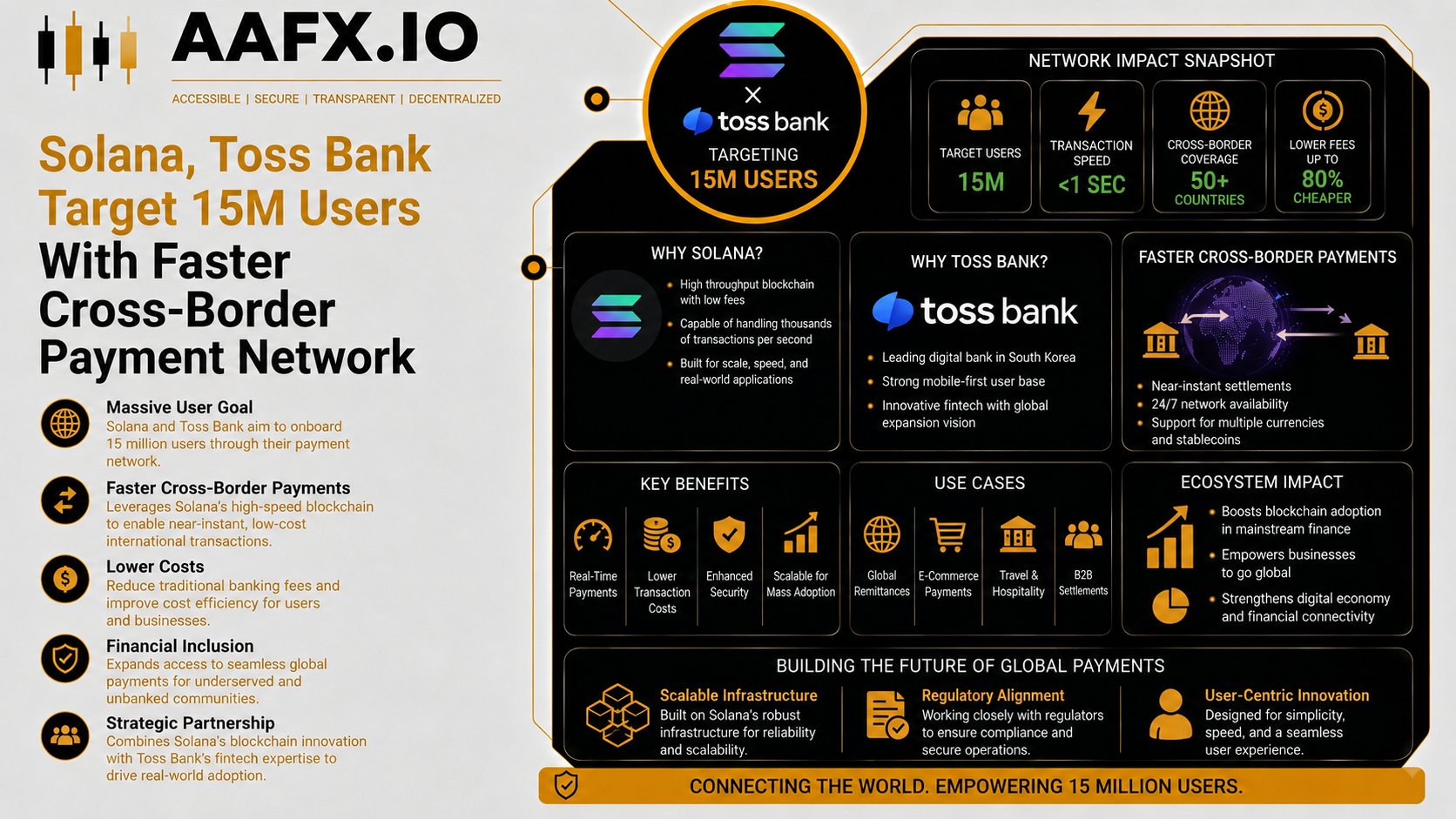
Solana and Toss Bank partner to test blockchain-powered cross-border payments for 15 million users, aiming to reduce costs, improve speed, and ensure compliance.
Solana Enters South Korean Banking
The Solana Foundation has signed a memorandum of understanding (MoU) with South Korea’s Toss Bank to explore blockchain-powered cross-border payment and settlement services. The agreement marks a significant step toward integrating blockchain technology into mainstream banking and represents the first direct collaboration between the Solana ecosystem and a South Korean internet-only bank.
The partnership focuses on building a proof-of-concept (PoC) that will evaluate whether Solana’s high-speed blockchain can improve international remittance services. Toss Bank already supports international money transfers to more than 30 countries in seven major currencies.
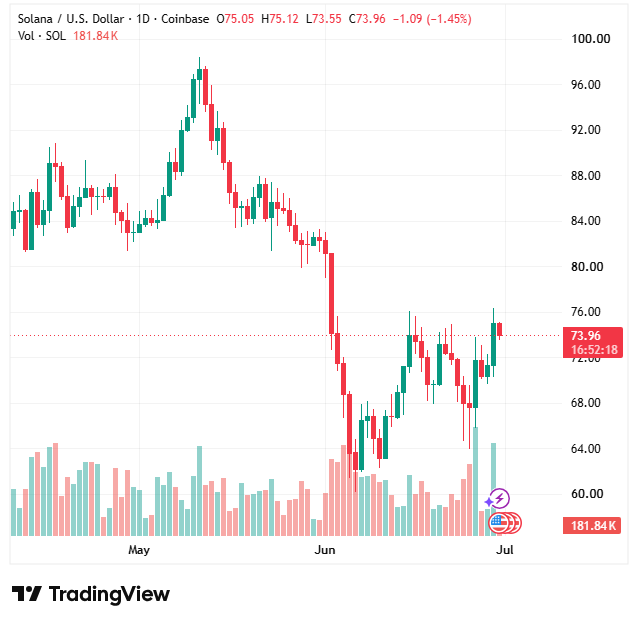
By using blockchain infrastructure, the bank aims to shorten settlement times while lowering transaction costs compared with traditional correspondent banking systems.
Serving approximately 15 million customers through the broader Toss financial ecosystem, Toss Bank is South Korea’s third-largest digital-only bank. Executives emphasized that the initiative is designed to strengthen existing financial services rather than promote cryptocurrency speculation.
Instead, the collaboration highlights blockchain’s growing role as an operational tool for regulated financial institutions.
The project also supports Solana’s long-term strategy of expanding beyond decentralized finance and digital assets into enterprise-grade financial infrastructure.
Building a Compliant Payment Model
Rather than focusing solely on technology, both organizations are placing compliance at the center of the initiative. The memorandum outlines a structured framework that balances innovation with regulatory requirements.
Key areas of collaboration include:
- Developing a blockchain-based remittance proof-of-concept.
- Researching next-generation payment infrastructure.
- Exploring stablecoin and digital asset services.
- Creating compliance frameworks covering AML and KYC standards.
- Supporting future international banking integrations.
This compliance-first strategy reflects how banks are approaching blockchain adoption. Financial institutions increasingly recognize that successful blockchain projects must operate within existing legal and regulatory standards while improving efficiency for customers.
Cross-border payments remain one of blockchain’s strongest real-world applications because conventional international transfers often involve multiple intermediaries, higher processing fees, and settlement delays.
The upcoming pilot will determine whether Solana’s low-cost, near-instant settlement capabilities can deliver measurable improvements over legacy payment networks.
Strategic Growth Beyond Crypto
The agreement strengthens Solana’s expanding presence in South Korea, where previous initiatives included partnerships with financial technology companies and discussions surrounding Korean won-backed stablecoin infrastructure.
Adding one of the country’s largest digital banks significantly broadens Solana’s institutional footprint.
The timing is equally important. South Korea continues refining regulations for blockchain-based financial services while advancing research into central bank digital currencies and tokenized deposits. This evolving regulatory environment creates favorable conditions for compliant blockchain payment solutions.
The collaboration also comes as Toss Bank’s parent company, Viva Republica, prepares for a potential U.S. public listing. Industry reports have suggested a valuation exceeding $10 billion, making technological innovation an important part of its long-term growth strategy.
For investors and the broader financial industry, the partnership offers more than a technology demonstration. If the proof-of-concept succeeds, it could establish a practical blueprint for integrating blockchain into regulated banking, opening new opportunities for faster international settlements, lower operational costs, and scalable digital financial services.
As more banks seek efficient payment infrastructure without compromising compliance, collaborations like this may accelerate the transition from experimental blockchain projects to everyday financial operations.
