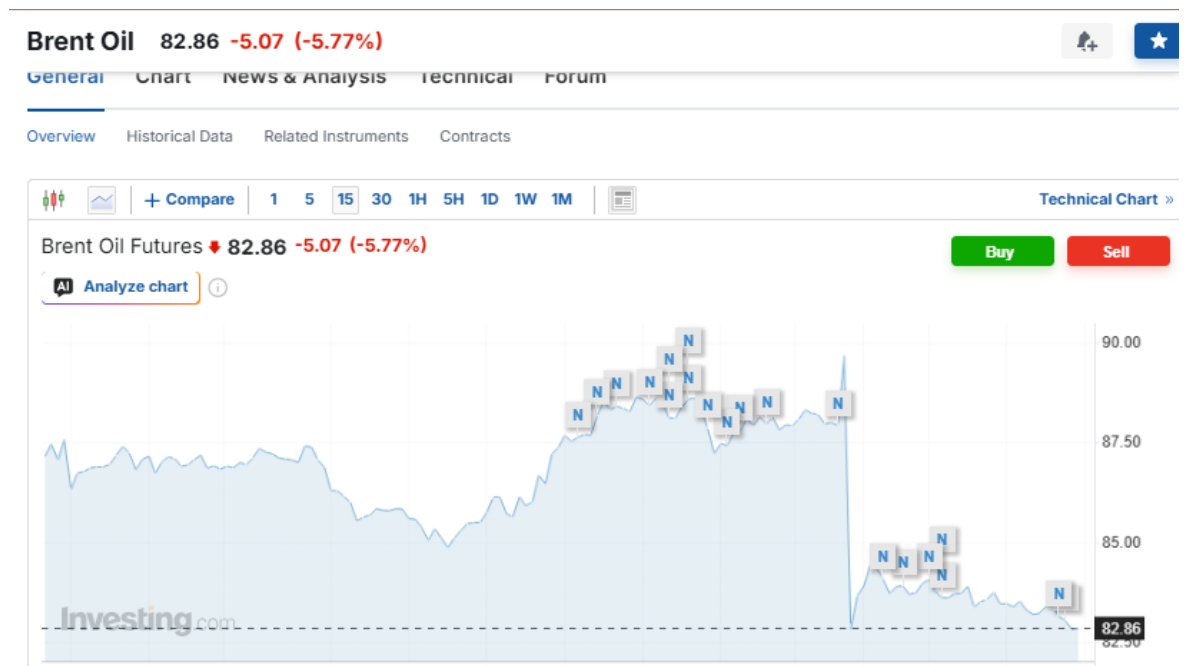
Oil prices fell nearly 5% in Asian trading on Monday, August 3, 2026, hitting their lowest levels in three weeks after U.S. President Donald Trump called off a planned military strike on Iran and said negotiations would resume. Brent crude futures for October delivery dropped 4.8% to $83.68 a barrel, while West Texas Intermediate (WTI) fell 4.9% to $80.50. The decline was reinforced by OPEC+’s decision to raise production quotas by about 188,000 barrels per day from September.
Trump Cancels Iran Strike as Oil Falls Over 5% and OPEC+ Hikes Output by 188,000 bpd
Trump announced on Sunday that he had cancelled a large-scale planned U.S. strike after Iran and several Middle Eastern countries requested more time for talks. He said negotiations would begin on Monday and focus on reopening the Strait of Hormuz and ending Iran’s nuclear threat.
Brent and WTI both slipped more than 5% over the previous week but had surged more than 20% in July amid escalating regional tensions. Last week, Brent briefly traded above $90 a barrel after Iran-backed groups attacked Saudi oil facilities, natural gas vessels were hit at Egypt’s Damietta port, and shipping routes in the Strait of Hormuz and Red Sea came under threat.
Separately, OPEC+ core producers (Saudi Arabia, Russia, Iraq, Kuwait, Algeria, Kazakhstan and Oman) agreed on Sunday to increase output by roughly 188,000 barrels per day starting in September. The move completes the unwinding of a layer of voluntary cuts first introduced in 2023.
Hormuz’s 20 mb/d Role and OPEC+ Hike Drive Risk Premium Collapse
Traders rapidly reduced the geopolitical risk premium that had supported prices. Hopes that a deal could restore more normal flows through the Strait of Hormuz — which normally carries about 20 million barrels per day of oil and products, or roughly 20% of global seaborne oil trade — outweighed lingering supply concerns.
The OPEC+ quota increase added further downward pressure by signaling the producer group’s continued commitment to gradually restoring supply as risks ease. Although previous hikes had limited impact due to disruptions in Iran, Russia and Kazakhstan, the combination of diplomatic de-escalation and higher official targets drove the sharp sell-off.
Conflict Since February 2026 Restricts Hormuz Flows as OPEC+ Raises Quotas
The conflict began in late February 2026 with U.S. and Israeli strikes on Iran and has severely restricted traffic through the Strait of Hormuz for much of the period. Alternative pipeline routes exist but lack the capacity to fully replace seaborne volumes.
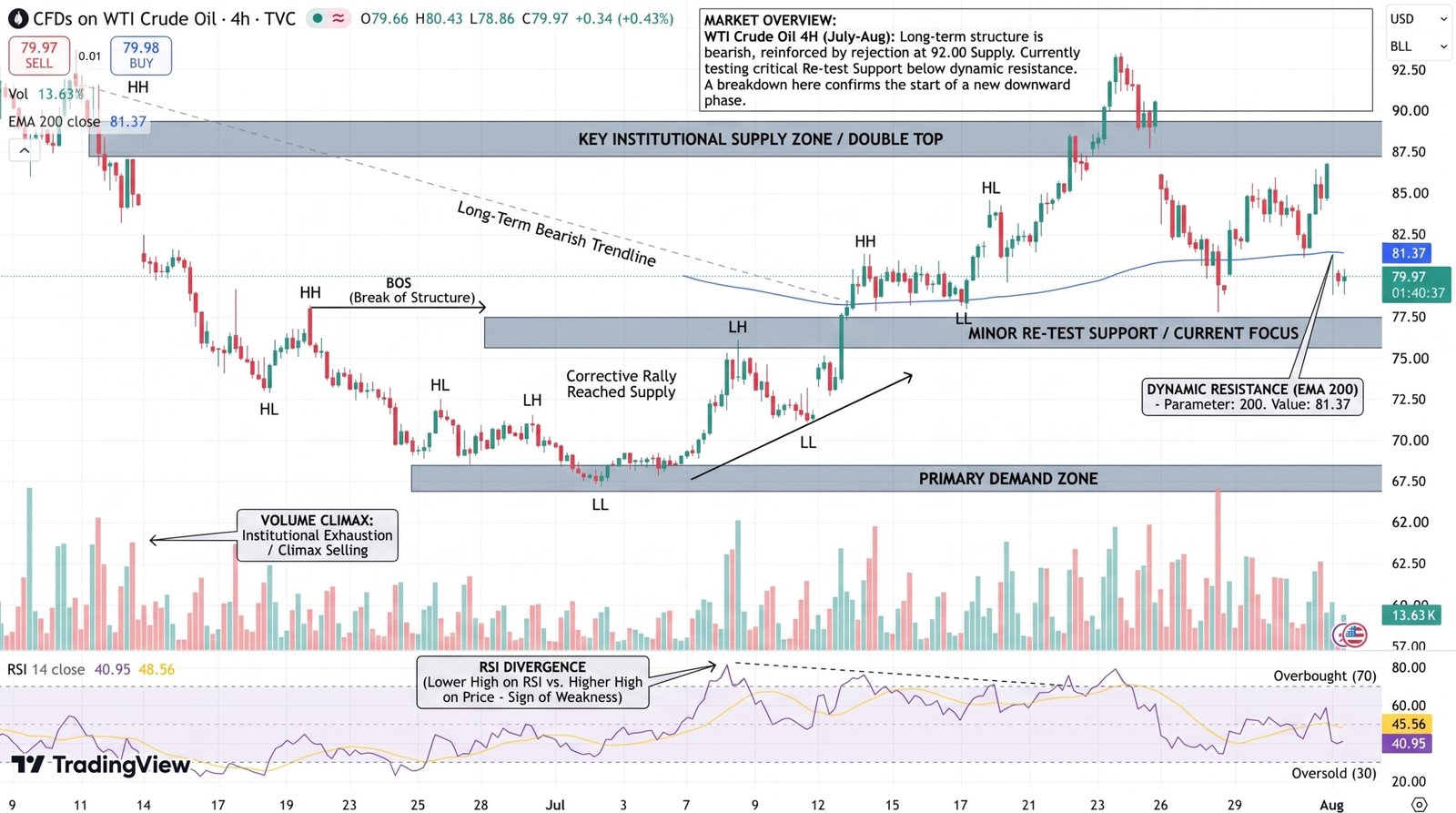
Oil had been highly sensitive to every shift in military and diplomatic signals. Escalations last week that spread beyond the Gulf pushed prices higher and raised fears of wider damage to regional energy infrastructure. Trump’s decision to pause the strike and pursue talks reversed that momentum. OPEC+ has been steadily raising quotas through 2026 even as actual exports from some members remained constrained by the war and other disruptions.
Hormuz Flows, OPEC+ Delivery and U.S. Data to Guide Oil Next
Markets will closely monitor the progress of the newly resumed U.S.-Iran talks, any concrete steps toward reopening the Strait of Hormuz, and Iranian responses. Actual physical flows through the waterway will be more important than announcements.
Traders will also watch whether OPEC+ members can deliver the additional barrels and how inventory data and demand signals evolve. Any breakdown in negotiations or renewed attacks on energy infrastructure or shipping could quickly reverse Monday’s losses. Upcoming U.S. economic data and further comments from policymakers may influence broader risk sentiment.
Sources & Methodology
Primary-source standard: Market-moving facts should link to original data releases, regulator notices, company filings or official project announcements whenever available. Secondary reporting is used for additional context, not as a substitute for original evidence.
Page last reviewed: