
U.S. dollar hovers near six-week low as Iran peace hopes and lower oil weigh on the greenback. Yen stabilizes around 157.6 after U.S.-Japan intervention; RBI holds repo at 5.25%, rupee gains.
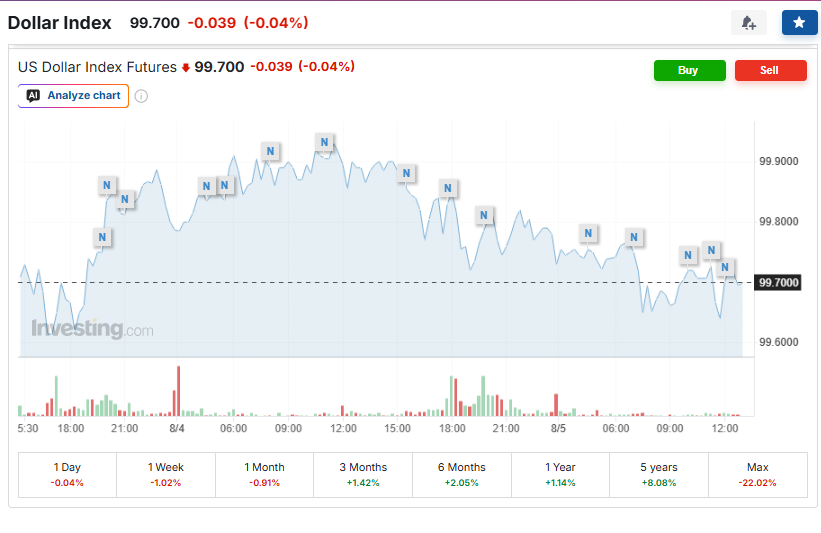
The U.S. dollar hovered near a six-week low on Wednesday as optimism over potential U.S.-Iran progress on the Strait of Hormuz weighed on the greenback, while the Japanese yen steadied after a sharp rebound driven by rare coordinated intervention from Tokyo and Washington. The Dollar Index edged down 0.1% to around 99.78–99.85, according to market data reported by Reuters.
Source:investing.com
DXY Near 99.80 Six-Week Low as Hormuz Hopes Weigh; USD/JPY Holds ~157.6 After Intervention
The U.S. Dollar Index (DXY) traded near 99.78–99.85 by early Wednesday, remaining close to its weakest level in about six weeks after recent declines. Oil prices slipped for a third consecutive session on hopes of a Hormuz deal, with Axios reporting that the U.S., Iran, and Oman were nearing an interim agreement and Washington aiming for a possible Wednesday announcement.
USD/JPY held largely steady around 157.60–157.70, consolidating gains after last week’s joint yen-buying intervention by Japan and the United States — the first such coordinated action in decades. The yen had rebounded sharply from near 40-year lows around 164. U.S. Treasury Secretary Scott Bessent stated that Washington would “do whatever it takes” to support the yen and ensure orderly markets.
In Asia, the Reserve Bank of India kept its benchmark repo rate unchanged at 5.25% for a third consecutive meeting, citing rising inflation, global uncertainty, and resilient domestic growth while retaining a neutral stance. The Indian rupee extended gains, with USD/INR falling about 0.2% to around 95.20, supported by lower crude prices. The rupee has recovered nearly 2% from recent lows as Brent retreated sharply.
Lower Oil and Hormuz Hopes Pressure Dollar, but Fed Uncertainty Caps Losses; Yen Supported by Intervention
Lower oil prices and reduced geopolitical risk premiums from Hormuz deal hopes fostered a mild risk-on tone that typically pressures the dollar. However, lingering uncertainty over Federal Reserve policy (with markets still pricing some chance of a September hike) and a resilient U.S. economy limited deeper dollar losses. The yen’s stability reflected the lingering impact of the joint intervention and verbal support from U.S. officials, which raised the cost of shorting the currency. The RBI’s hold and cheaper oil boosted the rupee by easing India’s import bill and inflation concerns.
Fed Holds Rates; Dollar Weakens, Yen Rebounds 5%, Oil Falls for Third Straight Session
The dollar’s recent softness follows the Federal Reserve’s decision to hold rates steady and mixed signals on the path of policy. The yen had plunged to multi-decade lows earlier, prompting the rare U.S.-Japan coordinated intervention late last week, which triggered a multi-session rebound of up to 5%. Progress reports on a potential 60-day interim Hormuz arrangement (dual shipping lanes, no tolls, mine clearing) have driven oil lower for three sessions, reducing energy-driven inflation risks. India’s RBI has prioritized stability amid global energy volatility and trade uncertainties.
Markets Eye U.S. Non-Farm Payrolls, Hormuz Deal, and BoJ Signals
Markets will closely watch U.S. non-farm payrolls data later this week for clues on Fed policy. Any official announcement on a Hormuz deal, further comments from U.S. or Japanese officials on currencies, and oil price movements will be key near-term drivers. Additional intervention risks and BoJ policy signals also remain in focus for the yen.
Sources & Methodology
Primary-source standard: Market-moving facts should link to original data releases, regulator notices, company filings or official project announcements whenever available. Secondary reporting is used for additional context, not as a substitute for original evidence.
Page last reviewed: