
Oil prices climbed again on Wednesday as fresh attacks across the Middle East raised the risk of a longer disruption to crude production, exports and shipping.
Brent crude rose 1.3% to $99.22 a barrel, while U.S. WTI crude gained 1.2% to $94.13. Brent was trading close to $100 for the first time since July and had gained roughly 25% since early August as hopes for a durable end to the regional conflict weakened.
The latest advance followed an escalation involving Iran-backed Houthi forces, U.S. military operations and attacks on commercial shipping. On Tuesday, the Houthis launched strikes against several Saudi cities, while U.S. forces targeted Iranian oil tankers and Iran retaliated against a U.S. military base in Jordan and vessels in the Gulf region.
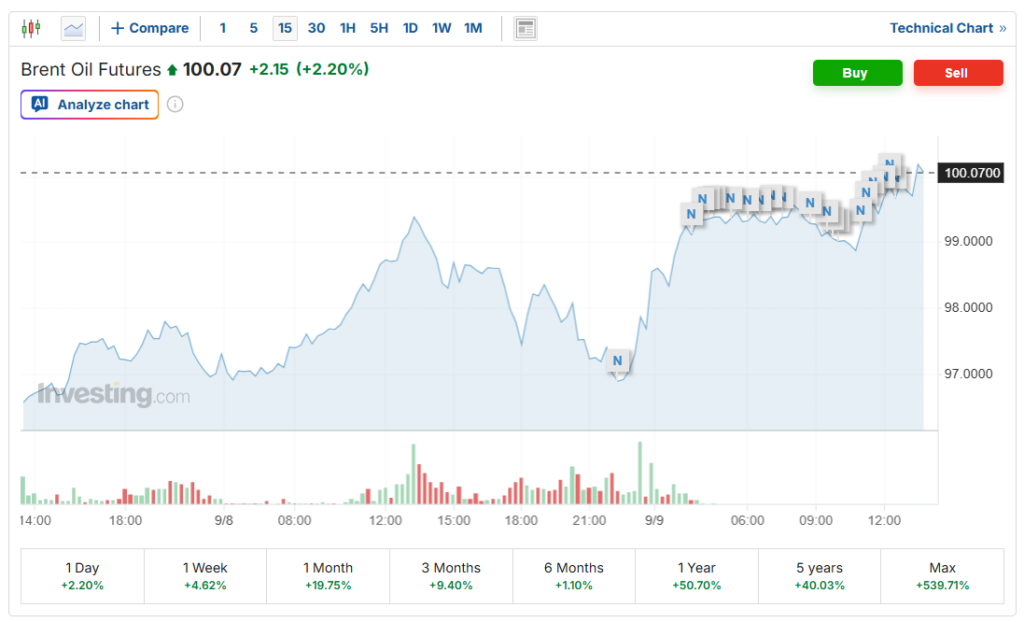
The market’s concern is increasingly focused on physical oil availability rather than military headlines alone. Damage to energy infrastructure or sustained restrictions on shipping could reduce the amount of crude reaching international buyers.
The approach toward $100 is therefore significant because it reflects a growing assessment that the conflict could affect regional supply for an extended period.
Hormuz traffic falls below normal
The Strait of Hormuz is the central transportation risk. Preliminary Kpler data showed only six commodity vessels crossed the waterway on Tuesday, down from nine the previous day and well below the 12-vessel 10-day average. The figures can change because some ships switch off their tracking systems.
The decline matters because Hormuz is one of the world’s most important crude-export routes. A sustained reduction in tanker traffic can disrupt deliveries even if the waterway remains technically open.
Saudi Arabia has attempted to reduce its exposure by redirecting some oil exports away from Hormuz, but attacks against Saudi energy infrastructure create another constraint. Reuters reported that the latest Houthi attacks increased concerns over the kingdom’s ability to maintain normal export operations if the attacks continue.
Other Middle Eastern shipping routes are also under pressure. Preliminary data showed 25 vessels crossed the Bab el-Mandeb Strait on Tuesday, compared with a 10-day average of 27. That route is important for shipments moving between the Red Sea and the Gulf of Aden.
Key market indicators now include:
- Brent crude: $99.22 a barrel
- WTI crude: $94.13 a barrel
- Hormuz traffic: 6 vessels on Tuesday
- Hormuz 10-day average: 12 vessels
Supply risks raise inflation pressure
Higher crude prices are already affecting expectations for inflation. Energy-importing economies in Asia are particularly exposed because they depend heavily on imported oil and refined products. Rising fuel and freight costs can feed into transportation, manufacturing and consumer prices.
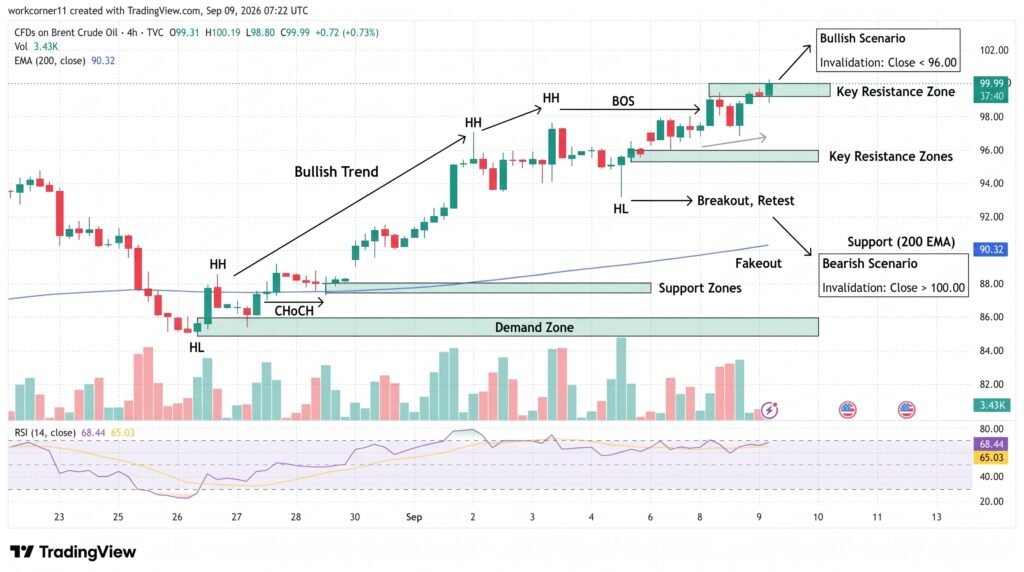
UKOIL Price Chart – Source: Tradingview
The impact could extend into monetary policy. A sustained increase in oil prices can make inflation harder to control, potentially limiting central banks’ ability to lower interest rates. In the United States, the renewed rise in crude has already become an important consideration for investors watching upcoming inflation data and the Federal Reserve.
The physical supply outlook is also difficult to assess because different parts of the region are experiencing different levels of disruption. Some exports continue, but shipping activity through Hormuz is well below normal and several tankers have been attacked or disabled.
The market is therefore entering a sensitive phase. A further attack on a major refinery, export terminal or tanker route could push Brent decisively above $100. A reduction in military activity and a recovery in vessel traffic would remove some of the recent supply pressure.
For now, traders are watching the relationship between conflict intensity and actual oil flows. Prices can rise on expectations, but a prolonged shortage will depend on whether disruptions persist across production and transportation networks.
Conclusion
Oil is approaching $100 a barrel as escalating Middle East attacks increase the risk of prolonged disruption to global crude supplies. Brent at $99.22 and WTI at $94.13 reflect growing concern over shipping and infrastructure across the region. The fall in Hormuz traffic to six commodity vessels on Tuesday is particularly important because it shows that commercial flows remain well below normal. Further attacks on Saudi energy facilities or tankers could push prices above $100, while restored shipping and reduced hostilities could ease the supply premium. The next major move will depend on physical oil flows, not military headlines alone.
Sources & Methodology
Primary-source standard: Market-moving facts should link to original data releases, regulator notices, company filings or official project announcements whenever available. Secondary reporting is used for additional context, not as a substitute for original evidence.
Page last reviewed: