
Gold remained close to $4,400 on Thursday as traders awaited U.S. inflation reports that could determine whether the Federal Reserve raises interest rates at its September 15-16 meeting.
Spot gold was recently around $4,414 an ounce, while December U.S. gold futures were near $4,457. The market has remained sensitive to movements in the U.S. dollar and Treasury yields, both of which can materially affect bullion because gold does not pay interest.
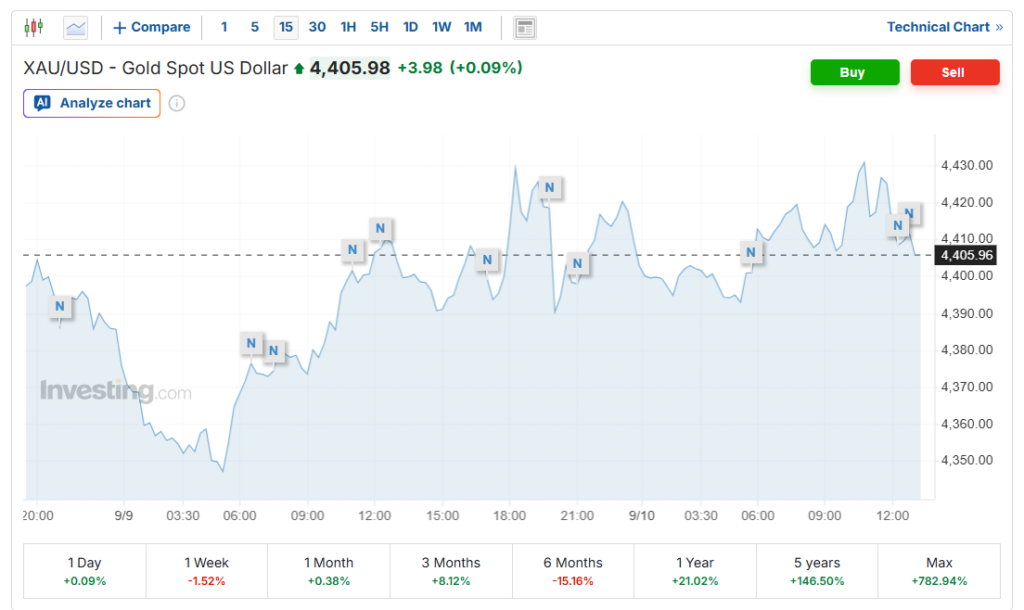
The immediate catalyst is the U.S. Producer Price Index due Thursday, followed by the Consumer Price Index on Friday. These reports will provide the Fed with fresh information on wholesale and consumer inflation before policymakers meet next week. Reuters reporting on Thursday put market-implied September hike odds at about 60%, down from the roughly 65% level reached after the stronger August employment report.
Treasury Yields Keep Pressure on Gold
The August employment report strengthened the case for tighter policy. U.S. employers added 162,000 jobs, while the unemployment rate held at 4.1%. The stronger labor data pushed rate-hike expectations higher and contributed to pressure on gold earlier this month.
Federal Reserve officials remain divided. Governor Christopher Waller has indicated that he could support keeping rates unchanged if inflation continues to moderate, while Chair Kevin Warsh has argued that inflation has not fallen sufficiently to remove policy concerns. The Fed’s target remains 2% inflation, making the upcoming CPI report particularly important.
For gold, the key transmission channel is straightforward: stronger inflation can increase expectations for higher interest rates, lifting Treasury yields and potentially supporting the dollar. That combination raises the opportunity cost of holding bullion.
Meanwhile, energy markets are adding another inflation risk. Brent crude has risen sharply as the U.S.-Iran conflict disrupts expectations for energy supply, increasing concern that higher fuel costs could slow the decline in inflation.
$4,537 Becomes Key Technical Level
Gold’s technical structure remains important after the metal pulled back from its recent record near $4,697. IG analyst Tony Sycamore has identified the 200-day moving average near $4,537 as a significant level. A sustained recovery above that threshold would strengthen the case that the correction has ended.
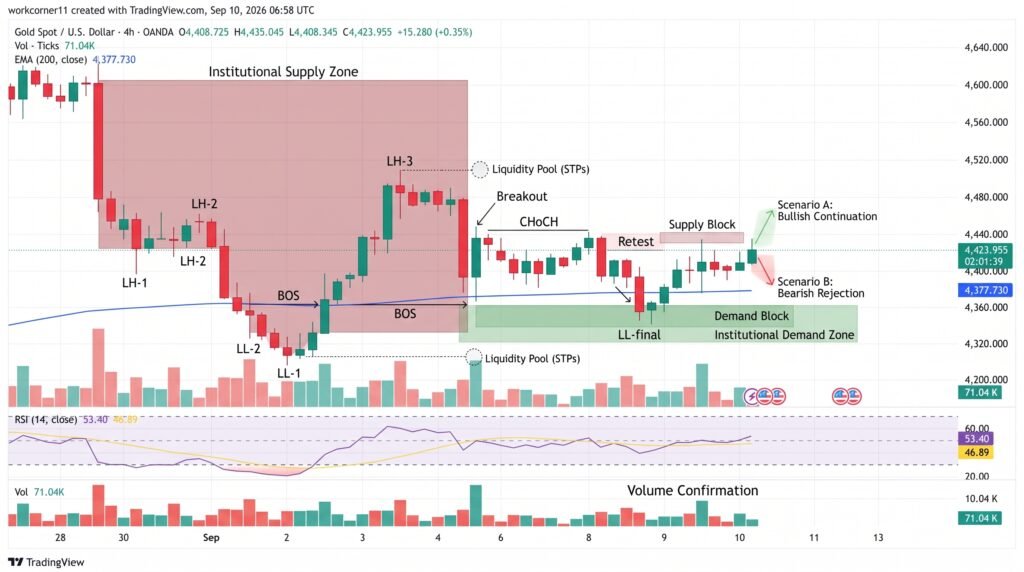
Conversely, failure to regain the moving average would leave gold exposed to further selling if inflation surprises to the upside and rate-hike expectations increase.
Investment demand remains a longer-term support. World Gold Council data showed global gold ETF holdings at 4,047 tonnes at the end of June, with first-half holdings still up 18 tonnes despite $8.9 billion of June outflows. The latest WGC data continues to provide evidence of substantial institutional participation in the gold market.
Conclusion:
Gold’s next major move will likely depend on whether PPI and CPI reinforce or weaken expectations for a September Fed hike. Softer inflation could reduce Treasury yields and revive buying toward $4,537, while a stronger reading could strengthen the dollar, lift yields and keep XAU/USD below its key technical resistance. With rate expectations and energy prices both volatile, the inflation data is now the clearest near-term catalyst for gold.
Sources & Methodology
Primary-source standard: Market-moving facts should link to original data releases, regulator notices, company filings or official project announcements whenever available. Secondary reporting is used for additional context, not as a substitute for original evidence.
Page last reviewed: