
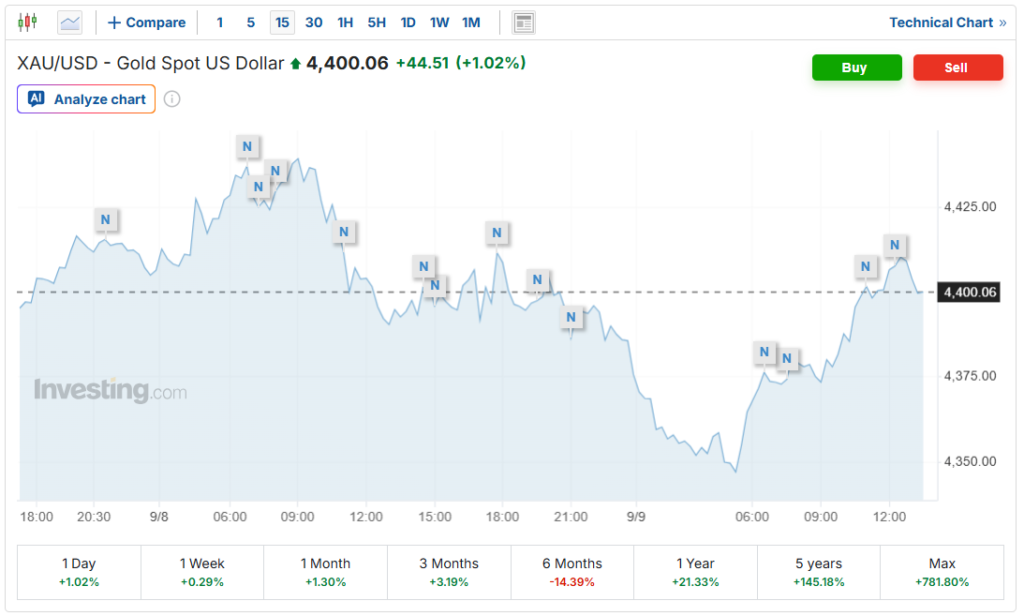
Gold recovered on Wednesday after three consecutive sessions of losses, with spot XAU/USD rising 0.4% to $4,374.32 per ounce in the latest cited session. The rebound followed a modest decline in the US Dollar Index, which eased to 98.82 and provided some relief for dollar-priced bullion.
The recovery remains limited. Gold had fallen 2.6% over the previous three sessions after stronger-than-expected U.S. employment data increased expectations that the Federal Reserve could keep monetary policy restrictive. Gold does not generate interest income, so higher bond yields can reduce its relative appeal.
The August employment report showed that U.S. employers added 162,000 jobs, while the unemployment rate held at 4.1%. The data strengthened expectations for a potential rate increase at the Fed’s September 15-16 meeting. Markets are now watching inflation data for confirmation of whether price pressures are strong enough to justify tighter policy.
The immediate focus is the U.S. Producer Price Index and Consumer Price Index. A hotter inflation reading could lift Treasury yields and support the dollar, while softer data could reduce rate-hike expectations and give gold more room to recover.
Oil Prices Keep Inflation Risks High
Gold is also being pulled in opposite directions by developments in the Middle East. Geopolitical tensions are supporting safe-haven demand, but the resulting increase in oil prices is creating a separate problem for bullion because higher energy costs can strengthen inflation expectations.
Brent crude moved toward $100 a barrel on Wednesday, reaching around $99.49 as renewed conflict in the Middle East increased concerns about energy supply and shipping disruptions.
Higher oil prices matter for the Fed because sustained energy inflation could make policymakers less willing to reduce interest rates. That creates upward pressure on yields and can limit gold’s gains even when geopolitical uncertainty generates demand for defensive assets.
The key factors for gold now include:
- Brent crude approaching $100 a barrel.
- Fed policy expectations following stronger U.S. employment data.
- U.S. PPI and CPI releases ahead of the September meeting.
- Continued central-bank purchases supporting longer-term demand.
Central Banks Support Longer-Term Demand
China is providing an important source of structural demand. The People’s Bank of China increased its gold reserves by 650,000 ounces, or about 20.2 metric tons, in August. That extended its accumulation streak to 22 consecutive months and represented its largest monthly addition since October 2023. Its holdings reached 76.73 million ounces at the end of August.
The buying is significant because it provides physical-market demand even when higher yields are pressuring prices. China’s purchases also form part of a broader trend of central banks increasing gold holdings amid geopolitical and currency risks.
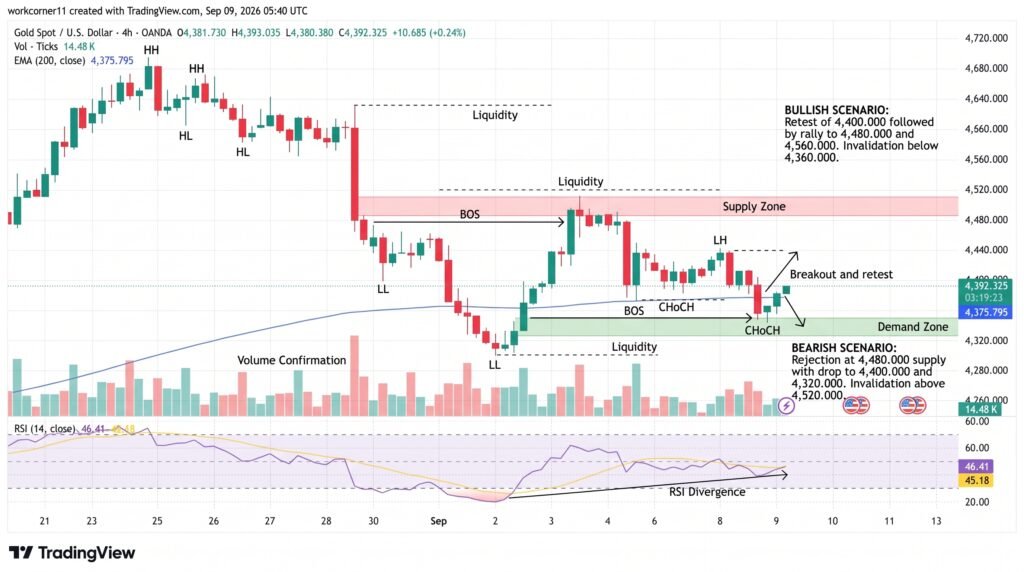
Gold has nevertheless remained below recent highs and is trading around a market where both macro forces and physical demand are important. The metal’s ability to hold above the $4,300-$4,400 region will depend heavily on upcoming U.S. inflation figures and movements in Treasury yields.
If inflation comes in hotter than expected, gold could face renewed selling as rate-hike expectations increase. A softer inflation reading, combined with a weaker dollar and falling yields, would improve the case for a sustained recovery.
Conclusion
Gold has regained ground near $4,374, but the rebound remains vulnerable to the Fed’s policy outlook. A softer dollar is supporting bullion, while oil near $100 and elevated inflation risks are limiting the upside. The next major catalyst is U.S. inflation data ahead of the Fed’s September 15-16 meeting. Longer term, China’s 650,000-ounce August purchase and its 22-month buying streak provide a significant demand cushion, but near-term direction will likely depend on yields, the dollar and inflation expectations.
Sources & Methodology
Primary-source standard: Market-moving facts should link to original data releases, regulator notices, company filings or official project announcements whenever available. Secondary reporting is used for additional context, not as a substitute for original evidence.
Page last reviewed: